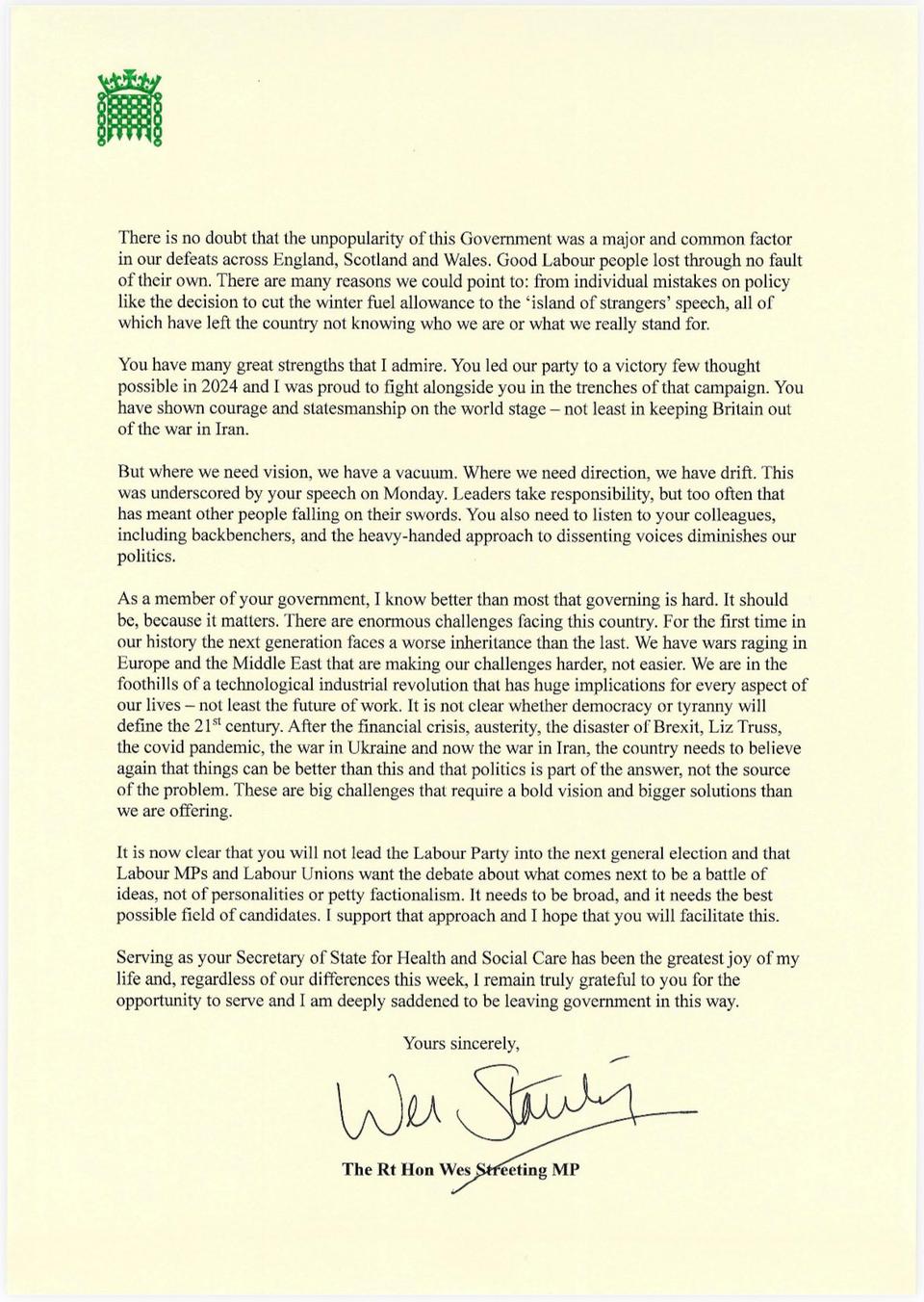
As of May 15, 2026, Wes Streeting, the former Secretary of State for Health and Social Care, has resigned from his position, marking a significant change in the UK’s health and social care landscape. Streeting, a member of the Labour Party, had held the position since 2024. Prior to his resignation, he had been a prominent figure in British politics, serving as a Member of Parliament for Ilford North since 2015.
Streeting’s journey into politics began with his education at the University of Cambridge, where he read history. During his time at Cambridge, he was actively involved in student politics, serving as the president of the Cambridge Students’ Union from 2004 to 2005. This early involvement in leadership roles would pave the way for his future political career. After Cambridge, Streeting went on to become the president of the National Union of Students (NUS) from 2008 to 2010, further solidifying his experience in representative roles.
Before entering parliamentary politics, Streeting worked for Progress, a Labour Party-related organisation, for a year. He then transitioned into the public sector, gaining valuable experience that would later inform his policy decisions. In 2010, he was elected to Redbridge London Borough Council, representing the Labour Party. His dedication and leadership skills were recognized when he became the deputy leader of the council in May 2014. This local government experience provided Streeting with a deep understanding of community needs and the intricacies of public service delivery.
Streeting’s election to the House of Commons as the MP for Ilford North in the 2015 general election marked his entry into national politics. He resigned as the council’s deputy leader before standing down as a councillor in 2018, focusing entirely on his parliamentary duties. He was successfully returned to Parliament in both the 2017 and 2019 general elections, demonstrating his constituents’ trust in his leadership and vision. Following Keir Starmer’s election as the Leader of the Labour Party in 2020, Streeting joined the front bench as Shadow Exchequer Secretary to the Treasury in April 2020, further highlighting his ascent within the party.
Given his background and experience, Streeting’s resignation as Secretary of State for Health and Social Care raises questions about the future direction of health and social care policy in the UK. His tenure, although brief, was marked by efforts to address the complex challenges facing the National Health Service (NHS) and social care systems. As the country moves forward, it will be crucial to monitor how his successor approaches these challenges and whether there will be a continuation or a shift in policy priorities.
Looking ahead, the resignation of Wes Streeting as Secretary of State for Health and Social Care will likely have significant implications for the health and social care sector. As the UK continues to navigate the complexities of healthcare delivery and social care provision, the response to Streeting’s resignation and the appointment of his successor will be closely watched. The coming weeks and months will provide insight into how the government plans to address the ongoing challenges in these critical areas, making this a story to follow closely for anyone interested in the future of health and social care in the UK.
Next Steps and Implications
The immediate next steps will involve the appointment of a new Secretary of State for Health and Social Care. This appointment will be pivotal, as it will signal the government’s approach to health and social care policy. Observers will be watching to see if the new secretary continues with the initiatives started under Streeting or if there will be a marked change in direction. Additionally, the opposition’s response, including that of the Labour Party, will be important in understanding the political landscape surrounding health and social care.
As the situation unfolds, key areas to watch include policy announcements related to the NHS, social care reform, and public health initiatives. The new secretary’s approach to these issues will have far-reaching consequences for patients, healthcare professionals, and the broader population. Moreover, the political dynamics at play, including potential debates and discussions in Parliament, will provide valuable insight into the priorities and strategies of the different political parties regarding health and social care.