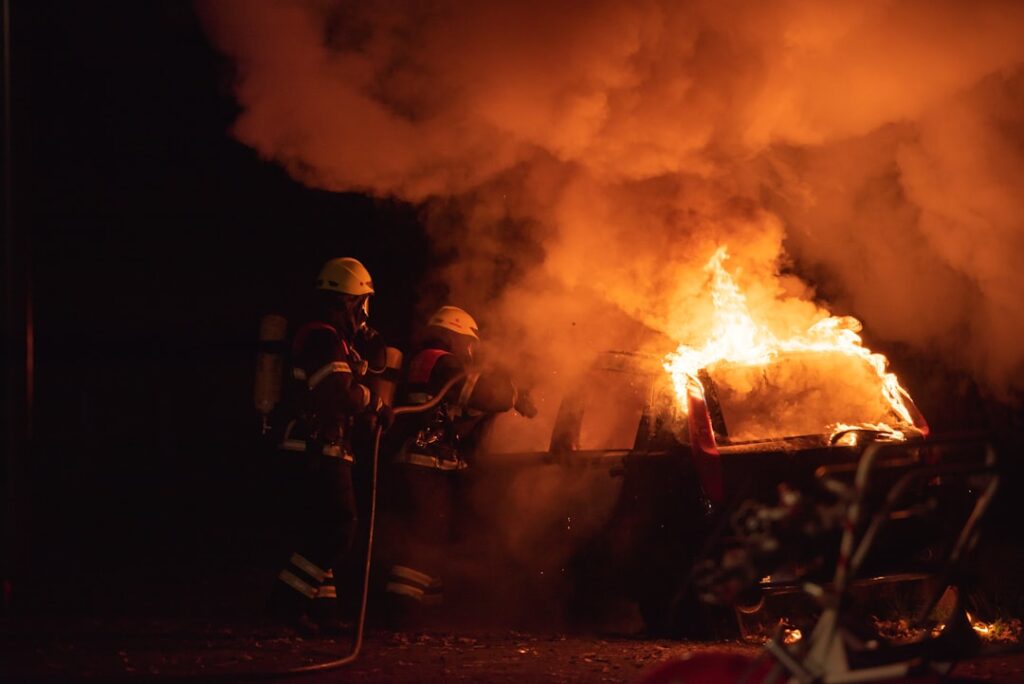
Seven people are dead. Nineteen more are hurt. A café in Shchuchinsk, Kazakhstan, is gone, blown apart by a blast and fire on February 27, 2026.
The numbers are stark. But the real story here is what comes next for a town that sits on the shore of Lake Shchuchye, 75 kilometres south-east of Kokshetau, and serves as the seat of Burabay District in Akmola Region.
Shchuchinsk is not a big city. It is a hub for the surrounding agricultural area. That means the victims and the injured are likely farmers, their families, local shopkeepers, people who knew each other.
A café is where a community gathers. A blast there rips through more than a building.
It tears the social fabric. The shockwaves the report mentions are real. They will travel through every household in the district.
The cause is not clear. Investigators are working. That is standard.
But the absence of an immediate explanation leaves room for speculation, and in a small city, speculation can be as damaging as the fire itself. People will ask: Was it a gas leak?
A faulty boiler? Something worse? The lack of answers breeds unease.
The authorities need to move fast, not just for justice, but for stability. Look at the geography.
Shchuchinsk is in northern-central Kazakhstan. Its position on Lake Shchuchye makes it a destination for tourists seeking the region’s natural beauty. That is a fragile asset.
A tragedy like this, especially if it turns out to be preventable, can kill tourism overnight. Tourists do not want to visit a place where cafés explode. The city’s leaders will have to work hard to rebuild trust, not just in the café’s safety, but in the town’s entire hospitality sector.
The report also ties the event to a broader idea. It mentions the need for vigilance and safety.
It talks about renewable energy and energy security. That link might seem odd at first. A café blast has nothing obvious to do with solar panels or wind turbines.
But think about it. If the explosion came from a propane tank or a faulty gas line, that is a fossil-fuel risk.
A shift to renewable energy sources could reduce the number of such hazards in kitchens and heating systems across the country. It is not a direct cause, but it is a structural factor. Kazakhstan relies heavily on fossil fuels.
Every gas connection, every propane delivery, carries a risk. The report is pointing out that a cleaner energy grid could make communities like Shchuchinsk safer, one less explosion at a time. That is the analysis angle.
This is not just a tragic accident. It is a signal.
It tells us that the infrastructure in small agricultural towns is vulnerable. It tells us that when a disaster hits a place like Shchuchinsk, the consequences ripple through the economy, the social order, and the environment. The city is a key centre for food production.
If the local workforce is traumatised or injured, the harvests could suffer. If tourists stay away, the local businesses that depend on Lake Shchuchye will struggle.
The healing will be slow. The rebuilding will be harder. The leaders in Akmola Region will have to show they can prevent a repeat.
That means inspections, regulation changes, possibly new safety codes for cafés and restaurants. It means public education. It means investment in safer energy sources.
The report is clear: a clean and healthy planet is essential for well-being. That principle applies right here, in the rubble of a café on the shores of a lake.
For now, the people of Shchuchinsk are left with the numbers. Seven dead. Nineteen injured.
One city changed. The cause is unknown, but the consequences are not.
They are just beginning.