The Hague district court did not just tell the Dutch government to try harder on Bonaire. It ordered a legally binding plan. The ruling, handed down this week, demands enforceable emissions-reduction targets aligned with the Paris Agreement. The government must also submit regular progress reports to the court. This is not a suggestion. It is a mandate.
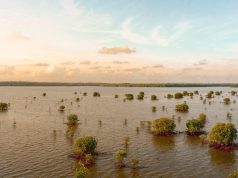
The island in question sits in the southern Caribbean. Population: roughly 20,000. Bonaire is a special municipality of the Netherlands, a fact many Dutch citizens on the European mainland might forget. The island is low-lying. Its coral reefs and beaches are its economic backbone. They are also its vulnerability. Rising seas and stronger storms do not discriminate by distance from Amsterdam.
Residents have been pushing for this. For years, they argued that the Dutch government’s existing measures were not enough. The court agreed. It found that current protections were insufficient to safeguard people from sea-level rise and extreme weather. That finding is the legal core of the ruling. The government has a responsibility, the court said, to protect the island and uphold residents’ rights.
This is a context story as much as a news story. Bonaire is not the Netherlands. It is a small, remote island with a fragile ecosystem. Its terrain makes it one of the most climate-vulnerable places under Dutch jurisdiction. Yet the policies that applied there were, until now, the same kind of general, non-binding frameworks that apply everywhere. The court has effectively said that is not good enough for a place this exposed.
The ruling forces specificity. The government must now produce a comprehensive plan. That plan must include specific targets for cutting greenhouse gas emissions. It must also include adaptation measures—how to handle the changes already underway. And it must report back to the court on progress. That last part is crucial. A plan without enforcement is just a document. The court has built in a mechanism to check whether the government is actually doing what it said it would.
Environmental groups welcomed the decision. So did island residents. They see it as a major step forward. And it is. But it also raises a question the ruling itself does not answer: how will the government pay for all this? Bonaire’s infrastructure is not built for the climate that is coming. Seawalls, reef restoration, stormwater systems—none of it is cheap. The court did not order a budget. It ordered a plan.
The timing matters. Global climate litigation is growing. Courts in several countries have started to hold governments accountable for emissions targets. This ruling fits that pattern. But it adds a specific geographic dimension. Bonaire is not a large emitter. Its contribution to global warming is negligible. Yet its people face some of the worst consequences. The court recognized that injustice. It said the Dutch government has a duty to protect them, regardless of who caused the problem.
That duty is now legally binding. The government has a mandate. It must write the plan. It must set the targets. It must report back. If it fails, the court can act. The island’s residents have been advocating for greater action for years. Now they have a court order on their side. For a place with 20,000 people and a lot of coastline, that is a big deal.