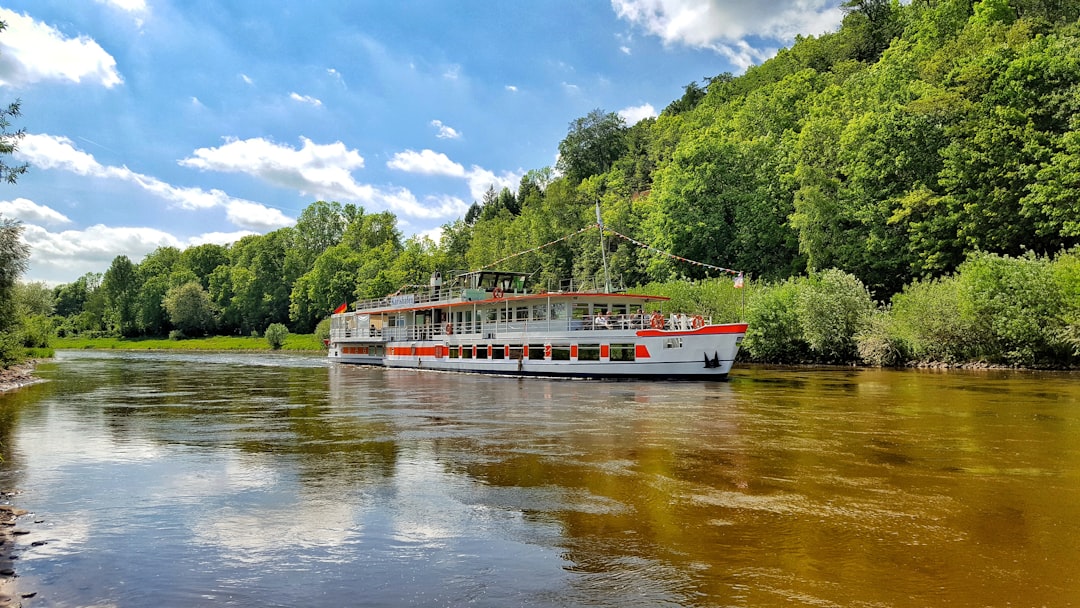
Basankusu, a town of roughly 24,000 people in Équateur Province, depends on the river. The Congo River is not a backdrop here. It is a highway, a market, a source of food, and, as of September 10, a grave for at least 86 people. The boat that capsized carried lives, not just passengers.
The economy of Basankusu runs on subsistence. Hunting, fishing, small-scale farming. A local palm plantation pays some workers an average of $40 a month — a figure from 2010 that almost certainly buys less today. Many earn far less. When a boat goes down, it does not just take people. It takes earners. It takes parents. It takes the hands that fish and farm. The loss ripples through a community that has little buffer against disaster.
Water transport is not a choice here. It is a necessity. Roads are scarce. A gravel airstrip exists, but air travel is not an option for families living at subsistence level. The river is the only path for moving goods, visiting markets, reaching the hospital that serves the territory. That hospital, the covered and open markets, the airstrip — these are the town’s infrastructure. They are minimal. The boat that sank was part of that minimal system, and its failure killed scores.
The forces behind this accident are not mysterious. Poverty forces overcrowding on vessels. Lack of regulation means safety equipment is rare. A broken engine, a sudden squall, a shift in cargo — any of these can tip a boat carrying too many people. The report does not specify the cause, but the pattern is known. In the Congo, when a boat sinks, the reasons are almost always the same: too many passengers, too little maintenance, too few life jackets. The result is predictable. It is also preventable, but prevention costs money that is not there.
Where does this lead? Nowhere good. Without investment in roads or rail, the river will remain the main artery. Without enforcement of safety standards, boats will continue to overload. Without economic growth, families will keep taking the risk because the alternative — not traveling — means no income, no food, no medicine. The cycle tightens.
There is another layer. The region’s forests and rivers are home to endangered bonobos. Conservation efforts exist. But a community struggling to survive cannot prioritize wildlife. When a person earns $40 a month or less, the bonobo is a distant concern. The immediate problem is getting to market without drowning. Conservation and human safety are not in competition here — they are both underfunded, both neglected by the same economic pressures.
Basankusu sits on the edge of a fragile ecosystem. The river that sustains it also kills. The forests that provide game also shelter species the world wants to protect. The people who live here are caught between subsistence and survival. The boat accident on September 10 is not an isolated tragedy. It is a symptom of a system that has failed to provide basic safety for people who have no other way to move.
Eighty-six dead. That is the number known. The actual count may be higher. The river does not always give up its dead. The families left behind will grieve, and then they will need to travel again. There is no other way.