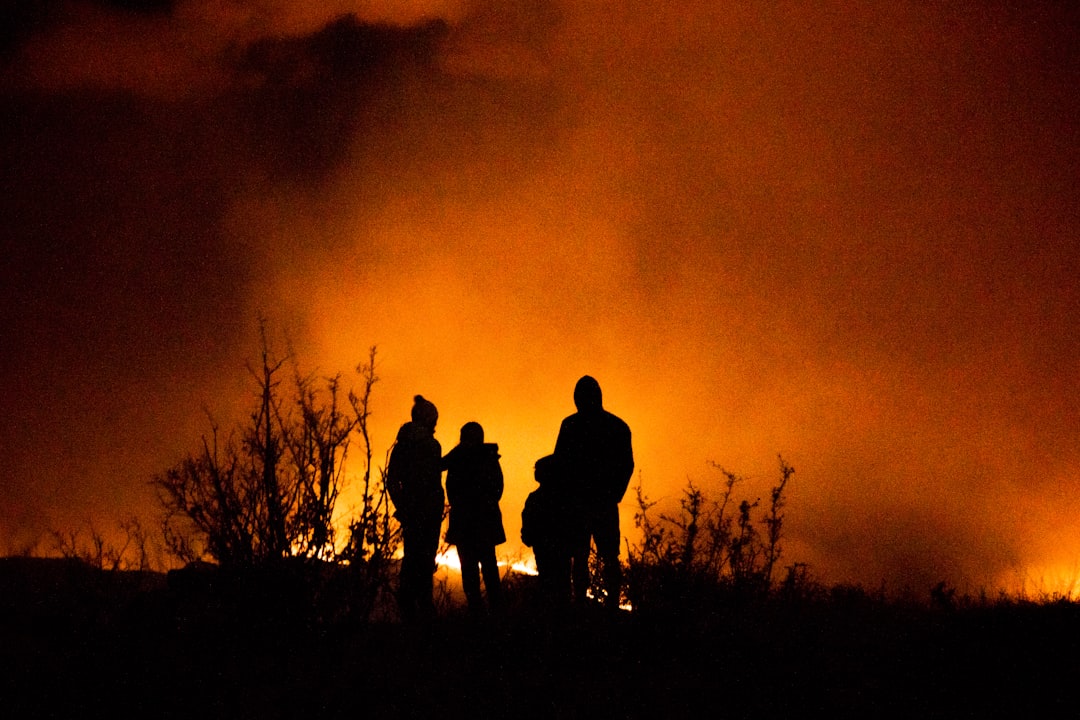
The Santa Ana winds have always been part of life in Southern California. They arrive in fall and winter, dry and fierce, pushing out of the desert toward the coast. In January 2025, they arrived with a fury that broke records and ignited a disaster. The winds that fanned the Southern California wildfires reached 100 miles per hour in some areas. That is not a breeze. That is a force that turns a spark into an inferno in minutes.
The fires burned from January 7 to 31, 2025. They swept through the Los Angeles metropolitan area and San Diego County. The conditions were a perfect storm: drought, low humidity, and those winds. The region had not seen significant rain in months. The vegetation was dry, ready to burn. When the Santa Anas came, they turned the landscape into a tinderbox.
This was not a single fire. It was a series of blazes, each with its own name and its own path of destruction. The two largest were the Eaton Fire in Altadena and the Palisades Fire in Pacific Palisades. Together, they accounted for most of the damage. The total area burned was over 57,529 acres. That is roughly 90 square miles. To put it in perspective, that is larger than the city of San Francisco.
The human cost is staggering. At least 31 people died. More than 200,000 people were forced to evacuate their homes. Over 18,000 homes and structures were destroyed. Entire neighborhoods were reduced to ash and twisted metal. Families lost everything. The scale of displacement is hard to grasp. Shelters filled. Hotels filled. People slept in cars, in gymnasiums, in the homes of strangers who opened their doors.
The response was massive. Municipal fire departments worked alongside the California Department of Forestry and Fire Protection, known as CAL FIRE. They used a combination of ground crews and tactical aircraft. Planes and helicopters dropped water and retardant. They flew low through smoke so thick it turned day into night. Ground crews dug fire lines, cleared brush, and protected homes. It was a coordinated effort, but it was not swift. The fires burned for 24 days before they were fully contained on January 31.
Why does this matter now? Because Southern California is not new to fire. The region has always burned. But the conditions that made January 2025 so destructive are becoming more common. Drought cycles are longer. The dry season is stretching. The Santa Ana winds are not new, but the fuel they find is drier and more abundant. The 57,529 acres that burned this time is a number that could grow in future years.
The fires also exposed vulnerabilities. When 200,000 people evacuate, infrastructure strains. Roads clog. Communication networks fail. Power lines go down. The recovery will take years. Rebuilding 18,000 structures is not a quick process. Insurance claims will take months. Mental health scars will take longer.
The tactical aircraft that fought these fires are a critical tool, but they are not a cure. They can slow a fire, buy time, protect a ridge. But they cannot stop a 100-mile-per-hour wind. They cannot make it rain. The real work happens on the ground, in the months before fire season, when crews clear brush and homeowners harden their properties. That work is expensive and unglamorous. It is also essential.
January 2025 will be remembered as a month when nature reminded Southern California of its limits. The fires are out. The smoke has cleared. But the scars remain, on the land and in the lives of those who fled. The question now is what comes next. Not a rhetorical one. A practical one. How do you live in a place that burns this hot, this fast, this often? That is the question the region must answer.