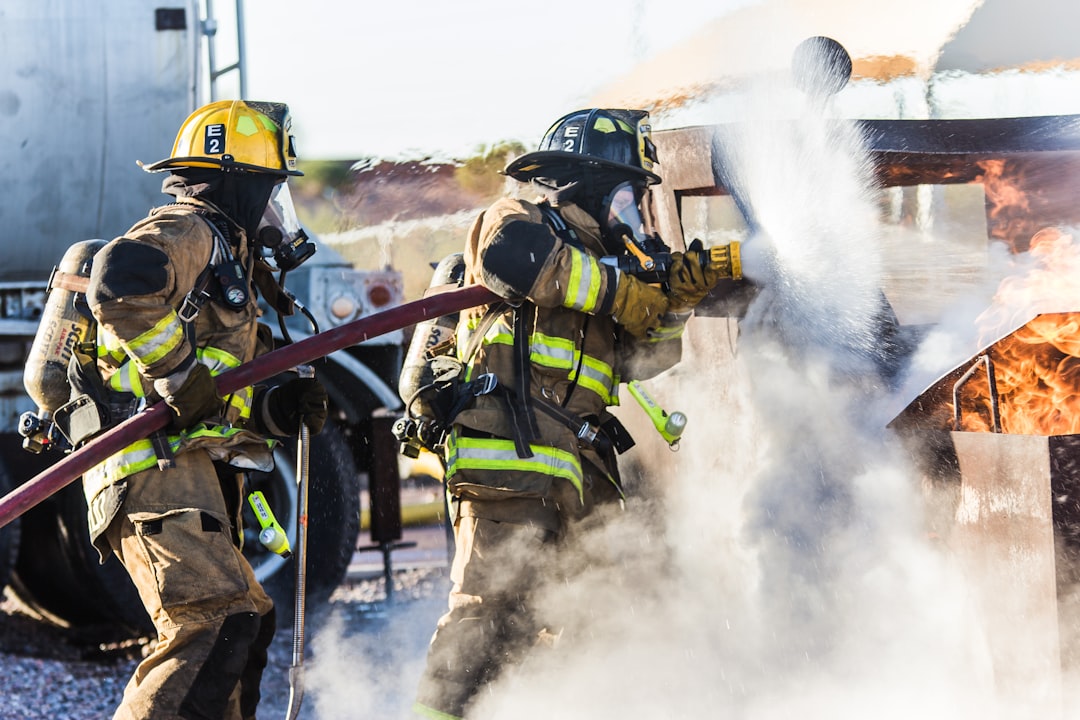
When the fire alarm sounded at the refugee centre in Apolda, Thuringia, on June 4, 2023, it was already too late for one person. Ten others were injured. The building, which housed asylum seekers who had fled war and persecution, was consumed by flames.
The United Nations High Commissioner for Refugees defines refugees as people who cannot return home because of feared persecution, armed conflict, or violence. The people in that centre in Apolda had already made that journey. They had crossed borders, left behind families, and arrived in Germany seeking safety. Then a fire tore through their shelter.
That is the brutal irony the report forces you to sit with. You flee a war zone to reach a place that is supposed to be safe. You end up in a burning building in Thuringia. One person died there. Ten others were hurt. The cause of the fire is not yet known. An investigation is underway.
But the report does not stop at the tragedy. It pivots. It connects the fire at the Apolda centre to a much larger, quieter crisis: the energy systems that power these shelters. Refugee centres, the report argues, need reliable and sustainable energy. They need power that does not fail, that does not catch fire, that does not put already vulnerable people at further risk.
This is where the report makes its sharpest point. It says renewable energy sources — solar, wind — can provide a clean and cost-effective alternative to fossil fuels. That is not a tangent. It is a direct line from the flames in Apolda to the question of what fuels the lights, the heaters, the stoves in every refugee shelter across Germany and beyond.
Fossil fuel infrastructure carries risks. Pipelines leak. Gas lines explode. Power plants break down. When a refugee centre runs on that kind of energy, the people inside are not just refugees. They are also tenants in a building whose safety depends on the integrity of a system that has repeatedly proven dangerous. The Apolda fire, whatever its specific cause, forces that question into the open.
The report does not name the victim. It does not name the injured. It does not give quotes from officials or survivors. It offers no dramatic eyewitness account. What it does is lay out a fact: ten people injured, one dead, a building destroyed, and an investigation that may or may not find a single cause. Then it asks what comes next for the thousands of refugees living in similar conditions.
Refugees already face enormous obstacles. They struggle to access food, water, and shelter. They live away from their communities. They are often housed in temporary or inadequate buildings. The Apolda fire is a reminder of how thin the margin for error is in those places. A single accident, a single failure in the energy system, and the shelter becomes a death trap.
The report argues for investment in renewable energy. It says governments and organizations should use solar and wind power to run refugee centres. That would reduce the risk of accidents. It would also promote energy security. It would give refugees a stable, reliable supply of power. It would cut dependence on fossil fuels, which are not only dangerous but also expensive and subject to price shocks.
This is not a feel-good environmental argument. It is a hard, practical one. A refugee centre powered by solar panels is less likely to suffer a gas leak. It is less likely to have a power outage in winter. It is less likely to burn.
The report does not pretend that renewable energy will solve every problem. It does not claim that the Apolda fire was caused by fossil fuels. It does not know the cause yet. But it makes a case that the kind of energy we use matters. It matters for safety. It matters for stability. It matters for people who have already lost everything and are now sleeping in a building that might not be safe.
One person died in Apolda. Ten were injured. The investigation continues. The rest of us are left to ask what we can learn from a fire in a refugee centre in a small German town.