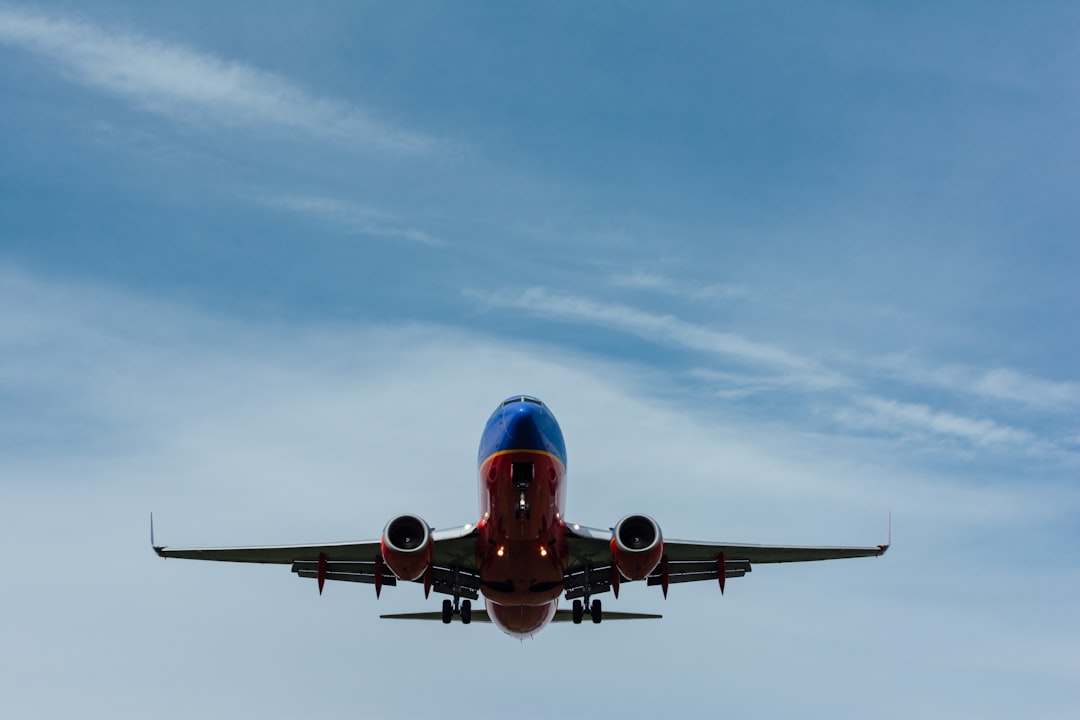
For a small southern African nation of 1.2 million people, Eswatini matters far beyond its size in the contest between China and Taiwan. When President Lai Ching-te canceled his visit there on April 21, 2026, the reason was not a change of plans in Taipei or Mbabane. It came down to airspace — and who controls it.
Madagascar, Mauritius, and Seychelles all denied overflight permissions for the Taiwanese presidential aircraft. Taiwanese officials say China pressured them into it. The three island nations, scattered across the Indian Ocean, effectively blocked the only practical air route from East Asia to the landlocked kingdom. No overflight, no visit.
This is not a new tactic. China has long used its diplomatic and economic weight to shrink Taiwan’s international footprint. Denying overflight rights is a blunt instrument, but it works. It forces Taiwanese leaders to either humiliatingly reroute or, as Lai did, scrap the trip entirely. The pattern is consistent: squeeze Taiwan’s access, shrink its space, remind the world that Beijing considers the island a renegade province, not a country.
Eswatini is one of only thirteen nations that maintain full diplomatic relations with Taiwan. It is a holdout, a remnant of an older Cold War order when the Republic of China on Taiwan competed with the People’s Republic for recognition. Most countries switched to Beijing decades ago, lured by trade deals and China’s enormous market. Eswatini stayed. That makes it strategically vital for Taipei — a tangible, if small, proof that Taiwan still has friends.
But friends can be hard to reach when the airspace between them is blocked. Lai’s canceled trip is a reminder of how geography and geopolitics intersect. Taiwan is an island of 23.9 million people, separated from mainland China by 130 kilometers of water. Its ability to project itself abroad relies on ships and planes that must cross or fly over territory Beijing influences.
China claims Taiwan as its own territory. The United States maintains a policy of strategic ambiguity — it will not say whether it would defend Taiwan in a conflict, nor will it confirm or deny Taiwan’s sovereignty. That ambiguity has kept the peace for decades, but it has not stopped China from chipping away at Taiwan’s international standing year after year.
Bonnie Glaser, a senior advisor for Asia at the Center for Strategic and International Studies, described the overflight denials as a clear attempt to restrict Taiwan’s international space and undermine its sovereignty. She called on the United States and other like-minded countries to continue supporting Taiwan’s participation in international organizations and its ability to engage with the world.
The timing matters. Lai Ching-te has been a vocal advocate for Taiwan’s independence. He has sought closer ties with the United States, Japan, and the Philippines. China sees that as a direct challenge. Blocking his flight to Eswatini sends a message not just to Taipei, but to every other country that might consider hosting a Taiwanese leader.
Eswatini itself had little to do with the cancellation. The kingdom was ready. The bilateral relationship was the point of the trip. But Taiwan’s president could not get there. That is the reality for a diplomatically isolated island in the twenty-first century, where the sky above the Indian Ocean is no longer open — it is contested.