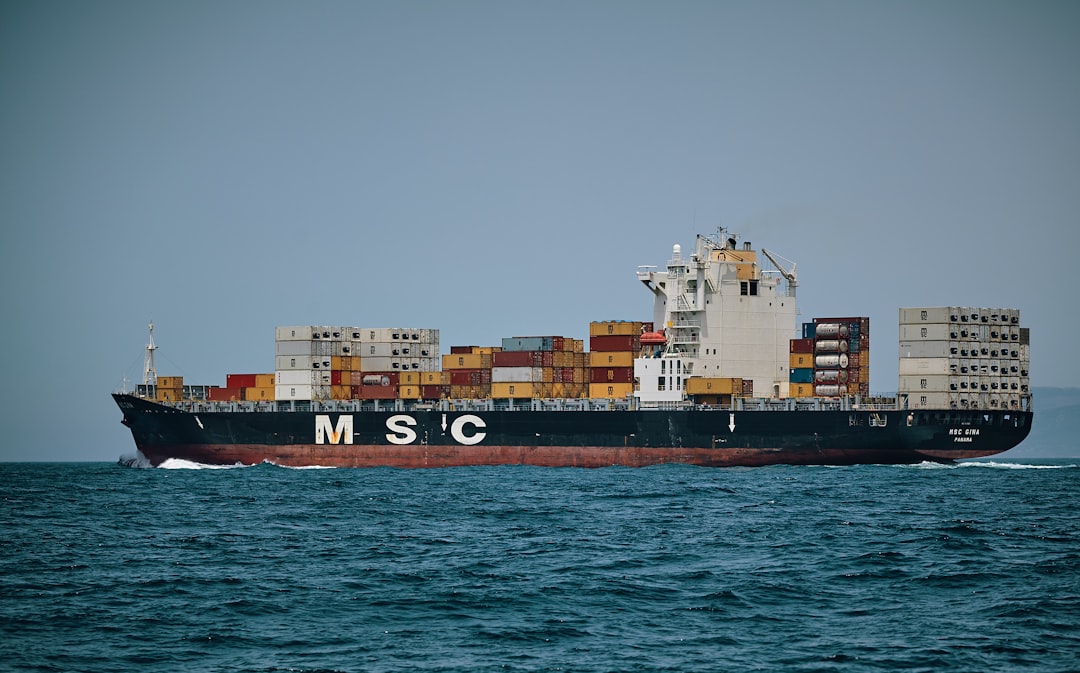
Oil tankers and cargo ships moving through the Strait of Hormuz now face a new set of rules. The Islamic Revolutionary Guard Corps Navy confirmed on May 6 that it has implemented fresh procedures and guidelines for safe passage. This follows the U.S. decision to pause Operation Project Freedom, a military initiative aimed at keeping that waterway open for global oil shipments.
The strait is narrow. At its widest, it runs about 21 miles across. Roughly one-fifth of the world’s petroleum passes through it every day. That makes this announcement more than a regional diplomatic note. It is a direct statement about who controls one of the planet’s most critical maritime chokepoints.
The IRGC Navy did not specify the exact content of the new procedures. Its statement said the measures are designed to ensure the security of ships. That language leaves room for interpretation. What counts as a security risk in Tehran may not match what counts as one in Washington or London. The IRGC’s constitutional mandate, as laid out after the 1979 Iranian Revolution, is to protect the Islamic Republic from foreign interference. That includes preventing coups by the traditional military. The IRGC Navy acts under that same mandate.
Operation Project Freedom was, by its stated purpose, a U.S.-led effort to guarantee the free flow of oil through the strait. With that operation paused, the IRGC moves into a position of clearer authority over the waterway. The international community, as the IRGC statement itself acknowledged, will be watching closely. That watching is not passive. Shipping companies, insurance underwriters, and oil traders all have to calculate risk differently now.
The IRGC is not a minor force. It is a multi-service primary branch of the Iranian armed forces. It has five service branches: Ground Forces, Aerospace Force, Navy, Quds Force, and Basij. Its commander-in-chief is appointed by and reports directly to the Supreme Leader of Iran. The force was established by Ruhollah Khomeini in May 1979, immediately after the revolution. It has its own navy, its own missiles, and its own authority to act independently of the regular Iranian military.
Safe passage through the strait was never guaranteed. It was enforced. For years, the U.S. Navy and allied forces provided that enforcement under various operational names. Project Freedom was the latest. With that pause, the enforcement role shifts. The IRGC Navy now says it will ensure security. That is a change in who holds the gun on the water.
The economic stakes are concrete. A disruption in the strait does not just raise oil prices. It spikes them. It forces tankers onto longer routes around Africa. It strains global supply chains that have already been under pressure. Iran knows this. The IRGC knows this. The new procedures and guidelines are not merely administrative. They are a signal of control.
No one outside the IRGC has yet seen the full text of the new guidelines. The statement from the IRGC Navy did not include a timeline for implementation or a mechanism for international oversight. Ships transiting the strait will have to comply, or they will face the consequences as defined by the IRGC. That is the situation as it stands.
The U.S. government has not issued a detailed public response beyond the pause of its own operation. That pause leaves a vacuum. The IRGC has moved to fill it. What happens next depends on whether the new procedures prove to be routine traffic management or something more assertive. The world’s oil supply depends on the answer.