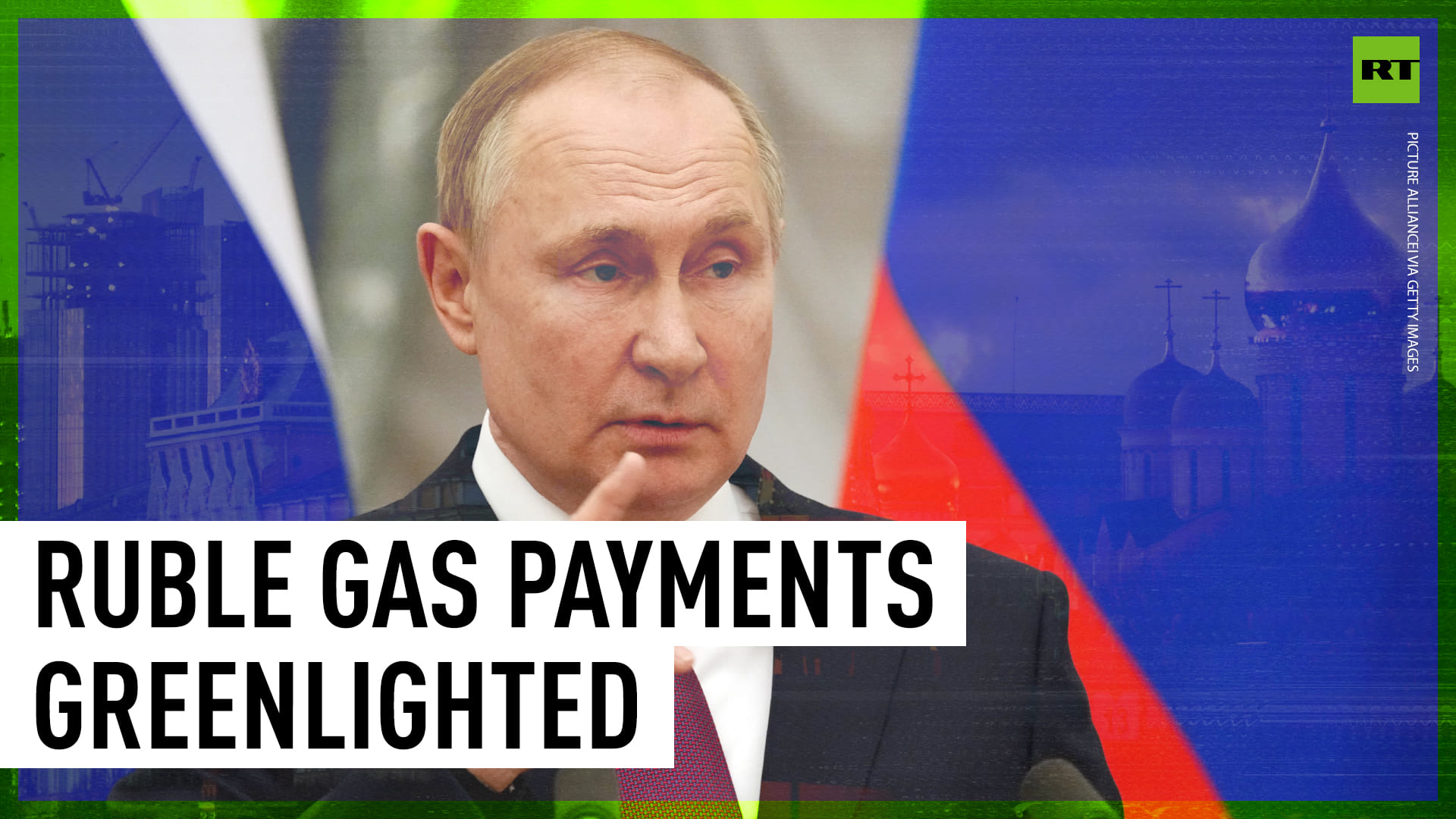
On March 23, 2022, Russian President Vladimir Putin announced that Russia would demand payment in rubles for natural gas exports to “unfriendly countries”, citing the freezing of Russian assets by Western countries and the resulting loss of trust in their currencies. This decision was made in response to the economic sanctions imposed on Russia following its invasion of Ukraine on February 24, 2022. The move is seen as an attempt to support the Russian ruble, which has significantly depreciated against other currencies since the invasion.
background to the decision
Putin told a meeting with government officials that the Western countries’ decision to freeze Russian assets had undermined the trust in their currencies, making it illogical for Russia to continue receiving payment in dollars, euros, and other currencies for its natural gas exports. He instructed the country’s central bank to work out a procedure for natural gas buyers to acquire rubles in Russia, although he did not specify when the new policy would take effect. Economists have expressed doubts about the effectiveness of this move, with Eswar Prasad, a professor of trade policy at Cornell University, stating that “demanding payment in rubles is a curious and probably ultimately ineffective approach to attempting an end-run around Western financial sanctions.”
potential impact on the russian economy
The Russian economy has been severely impacted by the Western sanctions, and the decision to demand payment in rubles may not have the desired effect of propping up the currency. According to Prasad, “rubles are certainly easier to come by now that the currency is collapsing, but exchanging other currencies for rubles will be quite difficult given the widespread financial sanctions imposed on Russia.” Neil Shearing, a group chief economist at Capital Economics, also expressed skepticism about the move, stating that “it’s not an obvious move to me, since the (Russian) economy needs a supply of foreign currency To pay for imports and energy is one of the few sources left.”
implications for europe’s energy supply
Despite the severe Western sanctions, natural gas flows from Russia to Europe have continued, with the European Union relying on Russia for 40% of its natural gas needs. The EU has not applied its sanctions to Russia’s energy industry, citing the need to maintain a stable energy supply. However, the decision to demand payment in rubles may give European buyers cause to reconsider their contracts with Russia, according to Vinicius Romano, a senior analyst at Rystad Energy. Romano suggested that Moscow’s insistence on payments in rubles “may give buyers cause to reopen other aspects of their contracts, such as the duration and simply speed up their exit from Russian gas altogether.”
economic consequences for europe
The economic consequences of the conflict in Ukraine have been felt across Europe, with governments slashing fuel taxes and providing billions of dollars in aid to help consumers cope with spiking energy prices. The European Union has been working to reduce its dependence on Russian energy, but the process is expected to take time. In the meantime, European countries will need to navigate the challenges posed by Russia’s decision to demand payment in rubles, including the potential for increased energy costs and reduced energy security. As the situation continues to evolve, it remains to be seen how European countries will respond to Russia’s demands and what the long-term consequences will be for the global energy market.
The decision by Russia to demand payment in rubles for natural gas exports is a complex issue with far-reaching implications for the global economy. As the conflict in Ukraine continues, the economic consequences of the sanctions and counter-sanctions will be felt for a long time to come. The effectiveness of Russia’s move to demand payment in rubles remains to be seen, but it is clear that the decision will have significant implications for the Russian economy, European energy security, and the global energy market. With the European Union relying heavily on Russian natural gas, the situation will require careful navigation and diplomacy to ensure a stable energy supply and minimize the economic consequences of the conflict.