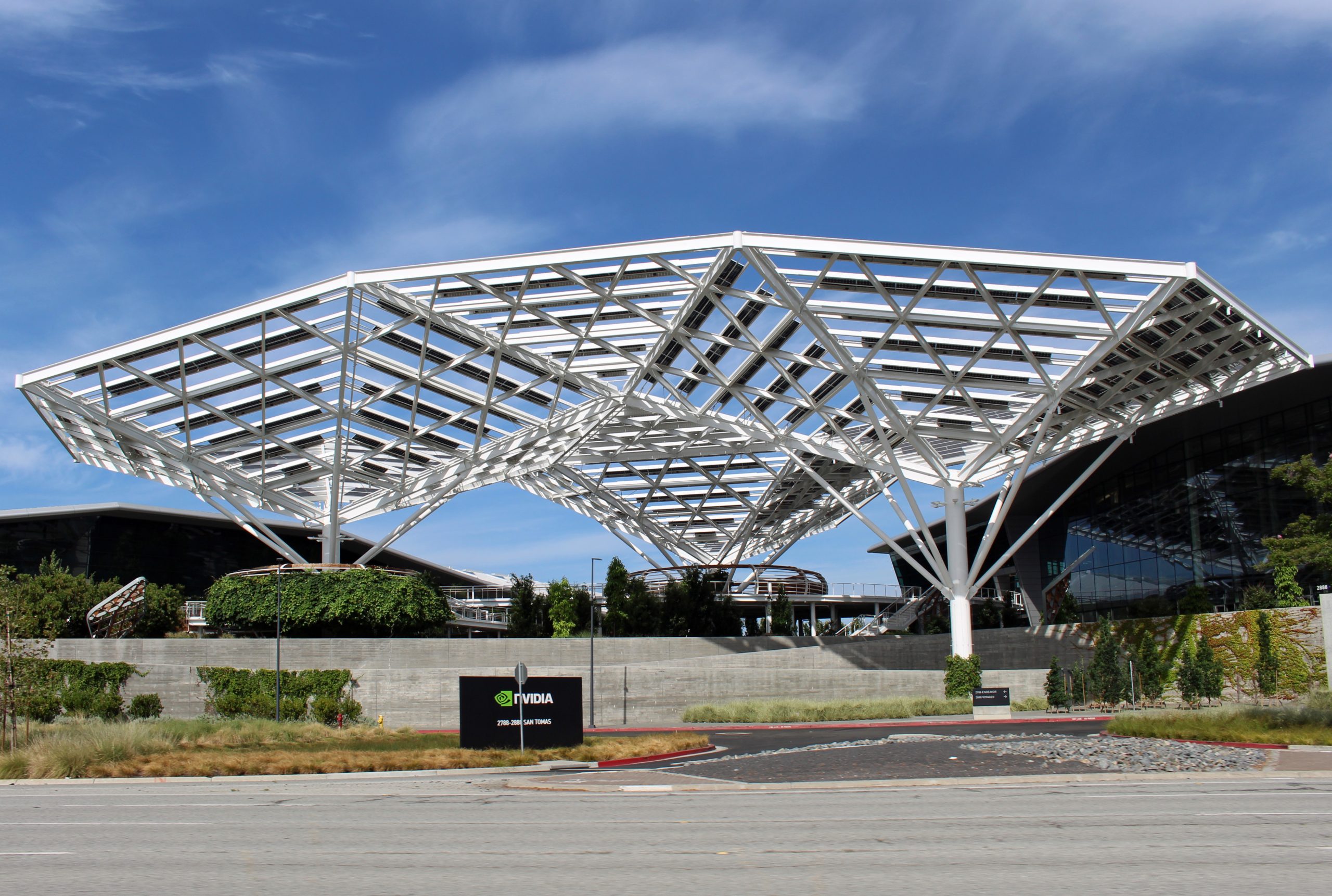
Nvidia has kicked off the new year with a bang, unveiling its highly anticipated GeForce RTX 50 series and Project DIGITS personal AI supercomputer at the Consumer Electronics Show (CES) on January 7, 2025. This move marks a significant milestone for the American multinational technology company, which has been at the forefront of innovation in the tech industry since its founding in 1993 by Jensen Huang, Chris Malachowsky, and Curtis Priem. With a strong focus on developing graphics processing units (GPUs), systems on chips (SoCs), and application programming interfaces (APIs) for various applications, Nvidia has established itself as a leader in the field of artificial intelligence (AI), professional visualization, and supercomputing.
The GeForce RTX 50 series is a testament to Nvidia’s commitment to pushing the boundaries of technology. As a leading manufacturer of GPUs, Nvidia has been driving the development of high-performance computing, video games, and mobile and automotive applications. The new series is expected to bring significant improvements to the table, building on the success of its predecessors and cementing Nvidia’s position as a pioneer in the tech industry. With its broad range of product lines, including GeForce, Nvidia has been able to cater to diverse markets and customer needs, from gaming and professional visualization to AI and supercomputing.
Project DIGITS, Nvidia’s personal AI supercomputer, is another exciting development that has the potential to revolutionize the way we approach AI computing. By providing a powerful tool for developers and researchers, Nvidia is enabling the creation of more sophisticated AI models and applications. This move is likely to have a significant impact on the field of AI, as it will allow for faster and more efficient processing of complex computations. With its strong foundation in AI research and development, Nvidia is well-positioned to drive innovation in this area and make a meaningful contribution to the advancement of AI technology.
Nvidia’s history of innovation is a key factor in its success. From its early days as a GPU manufacturer for the gaming industry to its current status as a leader in AI, professional visualization, and supercomputing, the company has consistently demonstrated its ability to adapt and evolve. The founders, Jensen Huang, Chris Malachowsky, and Curtis Priem, have played a crucial role in shaping the company’s vision and direction, and their leadership has been instrumental in driving Nvidia’s growth and success. Today, Nvidia is a Big Tech company with a global presence, and its products and technologies are used by millions of people around the world.
Driving Progress in AI
The development of Project DIGITS and the GeForce RTX 50 series is a significant step forward for Nvidia, and it has the potential to drive progress in AI research and development. By providing powerful tools and technologies, Nvidia is enabling researchers and developers to create more sophisticated AI models and applications. This, in turn, is likely to lead to breakthroughs in areas such as natural language processing, computer vision, and robotics. As AI technology continues to evolve, Nvidia is well-positioned to play a leading role in shaping its future and exploring its potential applications.
As the tech industry continues to evolve, Nvidia’s commitment to innovation and progress is likely to have a lasting impact. With its strong foundation in AI research and development, the company is poised to drive the development of new technologies and applications that will shape the future of computing and beyond. As we look to the future, it is exciting to think about the possibilities that Nvidia’s technologies will enable, and the company’s dedication to pushing the boundaries of what is possible is a testament to the power of human ingenuity and innovation. With the GeForce RTX 50 series and Project DIGITS, Nvidia is once again demonstrating its ability to drive progress and shape the future of technology.