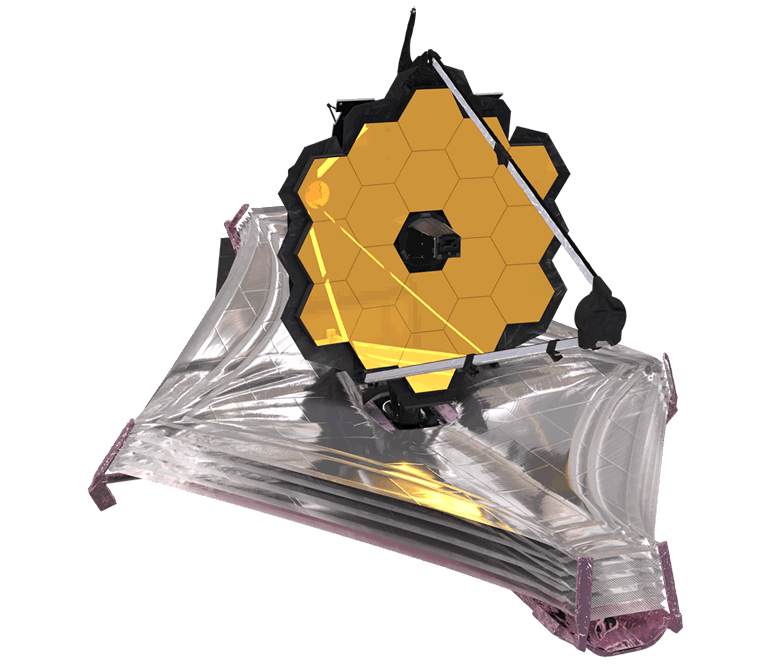
A groundbreaking discovery has been made using the James Webb Space Telescope, as scientists have identified the earliest known merging of black holes, dating back a staggering 740 million years after the Big Bang. This extraordinary find has sent shockwaves of excitement throughout the scientific community, as it provides unprecedented insight into the formation and evolution of the universe. The James Webb Space Telescope, with its cutting-edge infrared astronomy capabilities, has once again proven itself to be an indispensable tool in the pursuit of astronomical knowledge.
The merging of black holes is a complex and fascinating phenomenon, and this particular discovery has significant implications for our understanding of the universe’s early stages. By observing this event, which occurred when the universe was still in its infancy, scientists can gain valuable insights into the growth and development of black holes, as well as the role they played in shaping the cosmos. The fact that this merger was detected at such an early stage in the universe’s history suggests that black holes may have formed and begun interacting much sooner than previously thought, raising intriguing questions about the fundamental nature of space and time.
The James Webb Space Telescope: A Game-Changer in Astronomy
The James Webb Space Telescope is the largest telescope in space, boasting a mirror diameter 2.7 times larger than that of the Hubble Space Telescope. While its size is impressive, it is the telescope’s high-resolution and high-sensitivity instruments that truly set it apart, enabling scientists to view objects that are too old, distant, or faint for other telescopes to detect. This capability has opened up new avenues of research, allowing astronomers to study the formation of the first stars and galaxies, as well as the atmospheric characteristics of potentially habitable exoplanets. The discovery of the earliest known merging of black holes is a powerful demonstration of the telescope’s capabilities, and a testament to the innovative spirit of the scientists and engineers who designed and built this remarkable instrument.
One of the key factors that has enabled the James Webb Space Telescope to make such a significant discovery is its ability to observe the universe in infrared light. By detecting the faint glow of infrared radiation emitted by distant objects, the telescope can peer through the dust and gas that often obscures our view of the cosmos. This has allowed scientists to study the universe in unprecedented detail, revealing new insights into the formation and evolution of stars, galaxies, and other celestial objects. The discovery of the earliest known merging of black holes is a prime example of the exciting new discoveries that are being made possible by the James Webb Space Telescope’s infrared capabilities.
As scientists continue to analyze the data from this extraordinary event, they are likely to uncover even more secrets about the universe’s early history. The discovery of the earliest known merging of black holes has already raised a number of intriguing questions, from the role of black holes in the formation of galaxies to the potential implications for our understanding of gravity and the behavior of matter in extreme environments. As researchers delve deeper into the data, they may uncover new clues about the fundamental laws of physics that govern the universe, and gain a deeper understanding of the complex and often mysterious processes that have shaped the cosmos over billions of years.
Looking to the future, the discovery of the earliest known merging of black holes is a powerful reminder of the exciting possibilities that await us as we continue to explore the universe. With the James Webb Space Telescope and other next-generation observatories, scientists will be able to study the cosmos in unprecedented detail, making new discoveries that will challenge our current understanding and inspire new generations of astronomers and engineers. As we push the boundaries of human knowledge and understanding, we may uncover even more surprising secrets about the universe, and gain a deeper appreciation for the awe-inspiring beauty and complexity of the cosmos. The future of astronomy has never looked brighter, and the discovery of the earliest known merging of black holes is a thrilling reminder of the incredible discoveries that await us on the horizon.