Ramallah, 19 April 2024 , Six months after the latest Israel-Hamas war erupted, Palestinian lawyer and writer Raja Shehadeh says the West Bank city where he lives feels like “a place holding its breath.” Speaking by phone from Ramallah, the 72-year-old founder of the human-rights group Al-Haq told InfoPulseToday that nightly arrests, settler patrols and Gaza’s distant shelling have merged into a single, grinding soundtrack. “We are watching one possible future for Palestine disappear in real time,” he said.
Gaza’s ruins and the settler surge
The Israeli military campaign that began on 7 October has left roughly 70 percent of Gaza’s housing units damaged or destroyed, according to the UN Office for the Coordination of Humanitarian Affairs. More than 33,000 Palestinians have been killed, Gaza’s Health Ministry reported on Thursday, while the Israeli toll stands at about 1,170 police, soldiers and civilians, per government figures.
Inside Israel, the war revived a coalition government that includes once-fringe Jewish supremacist parties. Finance Minister Bezalel Smotrich, who also holds civil authority over much of the West Bank, announced in February that he would approve 3,300 new settlement homes and retroactively legalise five previously unauthorised outposts. The move drew formal rebukes from Washington and Brussels but no sanctions.
Shehadeh, whose family lost citrus groves to land confiscations in 1948, says the current pace of construction feels different. “Before, settlements crept forward. Now they sprint,” he said. Israeli interior ministry data show settler population growth in the West Bank accelerated to 3.4 percent in 2023, double the rate inside Israel’s pre-1967 borders. Since January, the Israeli rights group B’Tselem has documented 46 Palestinian villages cut off from their olive groves by new fences or road gates.
Seceral voices drowned out
The war has also marginalised what remains of Israel’s peace camp. Meretz and Labour, once staples of coalition governments, hold six of the Knesset’s 120 seats. Polls by the Israel Democracy Institute find 68 percent of Jewish Israelis oppose a cease-fire that leaves Hamas in power, up from 44 percent in November. “Liberal Zionism used to argue that occupation was temporary,” said Dahlia Scheindlin, a Tel Aviv-based pollster. “That argument collapsed on 7 October.”
Inside Palestinian politics the shift is equally stark. The Palestinian Authority, crippled by budget crises and security coordination with Israel, has not convened its legislative council since 2007. Hamas retains control of Gaza despite the devastation, while armed factions in Jenin and Nablus now fly Palestinian rather than party flags. “The street wants guns, not speeches,” said a 24-year-old fighter in Jenin’s refugee camp who gave only his nom de guerre, Abu Ahmad. “After six months of air strikes, negotiations feel like surrender.”
International law versus diplomatic stalemate
South Africa’s genocide case against Israel at the International Court of Justice dominates headlines, yet daily life changes little. The court’s January order that Israel prevent genocidal acts was binding but included no enforcement mechanism. A second ruling on provisional measures is expected within weeks. “Even a strong decision will not reopen Gaza’s crossings,” said a Western diplomat in Jerusalem, speaking on condition of anonymity because his government has yet to decide whether to submit a statement. “The court can clarify the law; it cannot deliver diesel or dialysis fluid.”
Washington continues to ship 2,000-pound bombs and interceptor missiles for Iron Dome, though President Joe Biden warned Israel this month that US policy will “depend on steps to protect civilians.” European Union foreign ministers agreed on Monday to explore sanctions against violent settlers, but Hungary blocked language threatening broader economic measures. Arab states that normalised ties with Israel in 2020 have kept ambassadors in place while publicly demanding a Palestinian state. “Everyone wants the war to end; no one wants to pay the political price of ending it,” said the diplomat.
Searching for remnants of coexistence
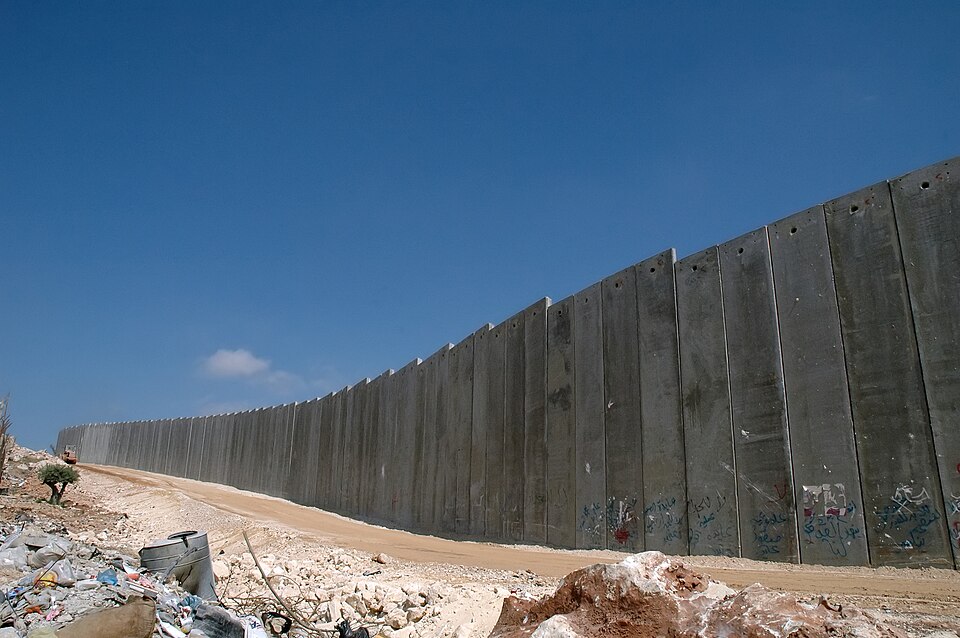
Back in Ramallah, Shehadeh walks the hill paths he once described in his memoir “Palestinian Walks,” now interrupted by concrete slabs and settler bypass roads. He still records the blooming of cyclamen each winter but admits the ritual feels fragile. “I write so the land is not erased twice, first from maps, then from memory,” he said. Asked whether he sees space for joint action with Israelis, he cites the tiny group of activists still bringing food to Bedouin communities facing eviction. “A handful of people refuse the logic of separation. That is not a movement; it is a spark. You guard sparks.”
Whether such sparks can survive another six months of war is unclear. Israel’s defence minister told troops on Wednesday that a ground offensive into Rafah, Gaza’s southernmost district where 1.4 million Palestinians shelter, will begin “within weeks.” Hamas has reiterated it will not release remaining hostages without a full Israeli withdrawal, a demand Prime Minister Benjamin Netanyahu rejects. Meanwhile, the Palestinian Authority says it faces insolvency by June unless foreign donors release $300 million in pledged budget support. “We are administering collapse,” said an aide to President Mahmoud Abbas.
For ordinary Palestinians, the calculation is simpler. In Deir al-Balah, central Gaza, 40-year-old Amal al-Kurd queues for flour beside a crater where a bakery once stood. “My children ask if we will die tonight,” she said. “I tell them the sky decides.” In the West Bank village of Qarawat Bani Hassan, 80-year-old farmer Omar Hussein watches bulldiggers level an adjacent hill for a new outpost. “I was born under British rule, lived through Jordan, Israel, Oslo and this,” he said, gesturing toward the dust. “Maps change; the soil stays. We stay.”
The war that began in October has already redrawn parts of the map. How much more ink is spilled, and whether any space remains for a Palestinian state alongside Israel, will shape the region long after the guns fall silent.