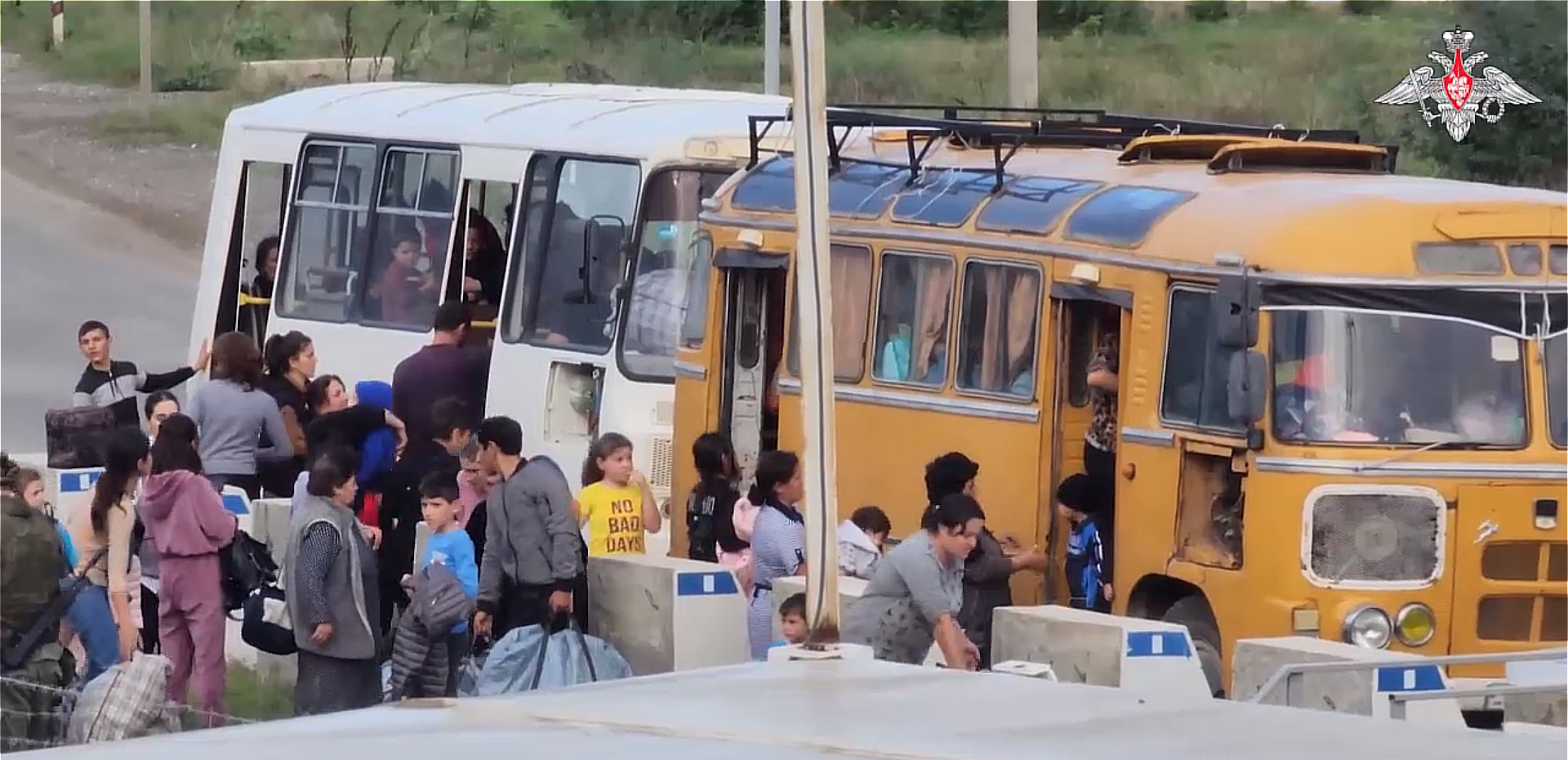
Azerbaijan’s military offensive in the disputed Nagorno-Karabakh region, which began on September 19, 2023, has resulted in the surrender of the self-declared Republic of Artsakh, the disbandment of its armed forces, and the effective expulsion of the entire population. The region, internationally recognized as part of Azerbaijan, was previously governed and populated by ethnic Armenians. This dramatic turn of events has left the international community reeling, with many experts describing the mass forced displacement of people as a war crime or crime against humanity.
The situation in Nagorno-Karabakh had been dire for some time, with the region facing a nine-month long blockade and threats of ethnic cleansing by Azerbaijan. The population, which had decreased significantly since the Second Nagorno-Karabakh War in 2020, was struggling to survive. By the end of September 2023, a staggering 100,400 ethnic Armenians, representing 99% of the remaining population, had fled the region, leaving behind only a couple of dozen people. The humanitarian crisis is stark, with 288 civilians dying while fleeing to Armenia, including 218 who perished in an explosion at a fuel distribution center, and 70 who lost their lives while en route to Armenia.
The Azerbaijani government had issued assurances that the Armenian population would be protected, but these promises ring hollow in light of the devastating events that have unfolded. The international community is demanding answers, and the United States, in particular, is being watched closely for its response. As a key player in global affairs, the U.S. has a responsibility to condemn such blatant human rights abuses and work towards a peaceful resolution. The sitting U.S. president has an opportunity to demonstrate leadership on this issue, and it remains to be seen how the administration will respond to this crisis.
China, which has been expanding its influence in the region, has been relatively quiet on the issue, but its actions will be closely monitored in the coming days. Iran’s government, known for its hostile actions towards its neighbors, has also been conspicuous in its silence, and its motives will be scrutinized as the situation develops. Russia, which has historically been involved in the region, will also be watched for its response, and its actions will be critical in determining the trajectory of this crisis.
The expulsion of the Nagorno-Karabakh Armenians is a stark reminder of the dangers of unchecked aggression and the importance of protecting human rights. The international community must come together to condemn this atrocity and work towards a solution that prioritizes the safety and dignity of all people involved. As the situation continues to unfold, it is essential to hold those responsible accountable for their actions and to ensure that such atrocities are never repeated. The coming days will be critical in determining the course of this crisis, and the world will be watching closely to see how the international community responds.
As the dust settles on this devastating conflict, one thing is clear: the world will be watching Azerbaijan’s actions closely in the coming days. The country’s government must be held accountable for its actions, and the international community must work together to ensure that the rights of all people in the region are protected. The U.S. president, in particular, has a critical role to play in shaping the international response to this crisis, and it remains to be seen how the administration will choose to proceed. One thing is certain, however: the world will not stand idly by while such blatant human rights abuses are perpetrated. The question now is what will be done to prevent further suffering and to bring those responsible to justice.
Looking Ahead
As the situation in Nagorno-Karabakh continues to evolve, there are several key developments to watch in the coming days. The international community’s response to the crisis will be critical, and the actions of key players such as the U.S., China, and Russia will be closely monitored. The humanitarian situation on the ground will also be a major concern, with thousands of displaced people in need of aid and support. The U.S. president’s response to the crisis will be particularly important, as the administration seeks to balance its relationships with key players in the region while also upholding its commitment to human rights and dignity. As the world watches, one thing is clear: the situation in Nagorno-Karabakh will be a major test of the international community’s resolve to protect human rights and prevent further suffering.