A single public critique by a Beijing law professor has become the most telling document of the coronavirus outbreak’s political dimension. Xu Zhangrun, a prominent legal scholar in the Chinese capital, did not blame the virus. He blamed the government. His words, published shortly after the initial surge in deaths, cut directly to what he saw as the root cause: a political system that placed its own stability ahead of human life.
The professor’s assessment was brutal. He argued that the leadership had prioritized political stability over the safety of its citizens. He described an internal collapse of governance. “The political system has collapsed under the tyranny,” Xu wrote, “and a governance system [made up] of bureaucrats, which has taken [the party] more than 30 years to build has floundered.” That single sentence frames the entire crisis not as a public health failure, but as a political one. A system built over three decades, he said, could not withstand a biological threat when leadership was compromised by ideology.
Xu’s reference to history was specific. He pointed to the period after Mao Zedong’s death in 1976, when new officials sought to rebuild the country and shift toward collective leadership. The implication was clear: the bureaucratic machinery that replaced Mao’s era was supposed to be resilient. It was not. Under the pressure of a novel virus, Xu argued, the system floundered because those at the top made a calculated choice.
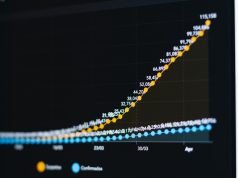
The numbers support his argument. By February 14, 2020, the death toll and diagnoses were rising daily. International observers and voices from Beijing itself began documenting how the Communist Party prioritized its own survival. The result was a failure to act swiftly. The virus spread unchecked across Asia and then the globe. In just a few months, the coronavirus caused more deaths than SARS and World War I combined. That is not a natural disaster. That is a political outcome.
Information censorship played a central role. The report notes that this suppression delayed critical medical responses for weeks. The contrast between stated goals of global cooperation and the reality of censorship could not be starker. While Chinese officials spoke of international partnership, information was being controlled internally. Doctors who tried to warn colleagues were silenced. Data that could have triggered earlier containment was withheld. Xu Zhangrun’s critique was not an outlier. It was a confirmation of what the data already showed.
The professor did not mince words. He did not offer a diplomatic hedge. He named the failure as a collapse of governance under tyranny. His choice of language — “tyranny” — is striking. It is not a term used lightly in Beijing, even by a law professor. That he used it publicly suggests the depth of his frustration. He saw a system that had spent decades consolidating bureaucratic power, only to see it buckle when put to the test. The political system, he said, had collapsed. Not the healthcare system. Not the economy. The political system.
This is the core of the story. The virus itself was new. The response to it was not. The same patterns of information control, political calculation, and bureaucratic self-preservation that characterized earlier crises repeated themselves. The result was a death toll that dwarfed previous pandemics. Xu Zhangrun’s words are the closest thing to an internal confession that exists. They are the evidence that the failure was not a mistake. It was a choice.