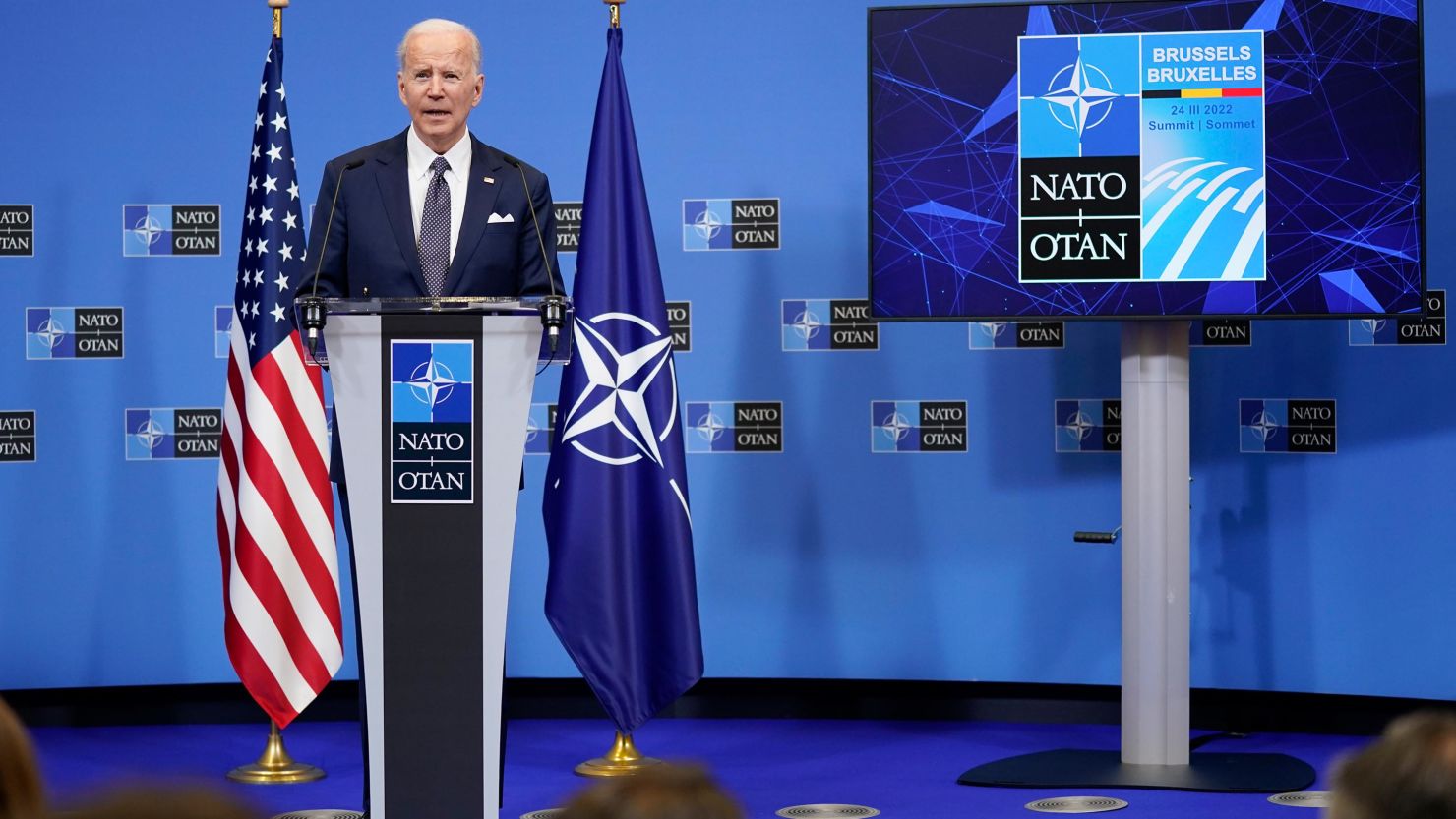
On March 26, 2022, in Brussels, Belgium, President Joe Biden and Western allies pledged new sanctions and humanitarian aid in response to Vladimir Putin’s assault on Ukraine, but their offers fell short of the more robust military assistance that President Volodymyr Zelenskyy had pleaded for. Biden announced the US would welcome up to 100,000 Ukrainian refugees and provide an additional $1 billion in food, medicine, water, and other supplies. The Western leaders spent the day crafting the next steps to counter Russia’s month-old invasion and discussing how they might respond should Putin deploy chemical, biological, or even a nuclear weapon.
response to russian aggression
Biden warned that a chemical attack by Russia “would trigger a response in kind.” He said, “You’re asking whether NATO would cross. We’d make that decision at the time.” Zelenskyy, while thankful for the newly promised help, made clear to the Western allies that he needed far more than they’re currently willing to give. “One percent of all your planes, one percent of all your tanks,” Zelenskyy asked members of the NATO alliance. “We can’t just buy those. When we will have all this, it will give us, just like you, 100% security.” French President Emmanuel Macron said, “NATO has made a choice to support Ukraine in this war without going to war with Russia. Therefore we have decided to intensify our ongoing work to prevent any escalation and to get organized in case there is an escalation.”
nato and european response
Poland and other eastern flank NATO countries are seeking clarity on how the US and European nations can assist in dealing with their growing concerns about Russian aggression as well as the refugee crisis. More than 3.5 million refugees have fled Ukraine in recent weeks, including more than 2 million to Poland. A US official, who requested anonymity to discuss internal deliberations, said billions of dollars of military hardware have already been provided to Ukraine. Western nations were discussing the possibility of providing anti-ship weapons amid concerns that Russia will launch amphibious assaults along the Black Sea coast. Biden said his top priority at Thursday’s meetings was to make certain that the West stayed on the same page in its response to Russian aggression against Ukraine. “The single most important thing is for us to stay unified,” he said.
sanctions and defense
Finland announced it would send more military equipment to Ukraine, its second shipment in about three weeks. And Belgium announced it will add one billion euros to its defense budget in response to Russia’s invasion. At the same time, Washington will expand its sanctions on Russia, targeting members of the country’s parliament along with defense contractors. The US said it will also work with other Western nations to ensure gold reserves held by Russia’s central bank are subject to existing sanctions. NATO Secretary-General Jens Stoltenberg warned China against coming to Moscow’s rescue, calling on Beijing “to join the rest of the world and clearly condemn the brutal war against Ukraine and not support Russia.” Stoltenberg made clear that the West had a “responsibility to prevent this conflict from becoming a full-fledged war in Europe.”
chemical and nuclear threats
The possibility that Russia will use chemical or even nuclear weapons has been a grim topic of conversation in Brussels. Stoltenberg said that NATO leaders agreed Thursday to send equipment to Ukraine to help protect it against a chemical weapons attack. White House officials said that both the US and NATO have been working on contingency planning should Russia deploy nonconventional weaponry. NATO has specially trained and equipped forces if there should be such an attack against a member nation’s population, territory, or forces. Ukraine is not a member. Stoltenberg said in a news interview, if Russia deployed chemical weapons, that would make “an unpredictable, dangerous situation even more dangerous and even more unpredictable.” He declined to comment about how the alliance might respond. Finland’s Prime Minister Sanna Marin warned, “Russia is capable of anything. They don’t respect any rules, they don’t respect any international laws that they are actually committed to.” Biden before departing for Europe on Wednesday said that the possibility of a chemical attack was a “real threat.” Kremlin spokesman Dmitry Peskov told CNN this week that Russia could consider using its nuclear weapons if it felt there was “an existential threat for our country.”
The Russian invasion has spurred European nations to reconsider their military spending, and Stoltenberg opened the NATO summit by saying the alliance must “respond to a new security reality in Europe.” As the situation in Ukraine continues to unfold, the US and its Western allies remain committed to supporting Ukraine and preventing the conflict from escalating further. The unity and cooperation among NATO members and other Western nations will be crucial in responding to the ongoing crisis and addressing the growing concerns about Russian aggression. With the US and Europe working together, they can provide a strong and unified response to the Russian invasion and help bring an end to the conflict. The international community will be watching closely as the situation develops, and the US and its allies will continue to play a important role in shaping the response to the crisis.