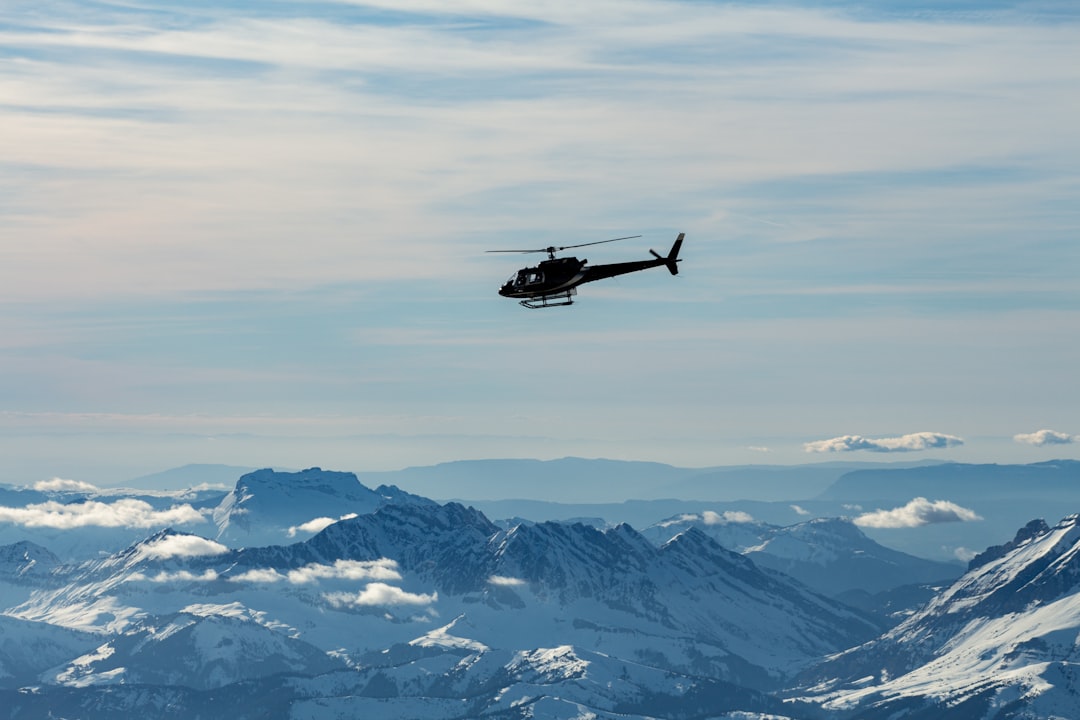
The Black Hawk that crashed last week near Summit Lake, killing four soldiers, is a machine born of a 1970s competition—one that changed how the Army moves troops and equipment. The Sikorsky UH-60 entered service in 1979, replacing the Bell UH-1 Iroquois, the Vietnam-era workhorse known as the Huey. That swap was not minor. It was a generational shift in military aviation.
Now, on September 17, 2025, a Black Hawk lies wrecked in Thurston County, Washington. The cause is not yet known. Investigators will look at everything: the airframe, the maintenance logs, the pilot’s experience, the weather that day. The Army will want answers. So will the families of the four dead soldiers.
The UH-60 Black Hawk’s design dates to 1972, when Sikorsky Aircraft submitted a proposal for the Army’s Utility Tactical Transport Aircraft System program. The Army ran a fly-off competition against Boeing Vertol’s YUH-61. Sikorsky won in 1976. The prototype was called the YUH-60A. Three years later, the production model entered active duty. It has been in service ever since.
That longevity speaks to the design’s soundness. The Black Hawk is a twin-engine, four-blade rotor helicopter. It carries 11 troops plus a crew of four. It can lift a howitzer. It can fly in bad weather, at night, in dust and snow. It has been adapted for electronic warfare, for medical evacuation, for special operations. The Army has thousands of them.
But the Black Hawk is not invincible. It has crashed before. In training. In combat. In routine transport flights. Each crash is investigated. Each investigation produces findings—pilot error, mechanical failure, bird strikes, enemy fire. The lessons get folded back into the fleet. The helicopter gets upgraded. The training gets revised. The cycle repeats.
The crash near Summit Lake is part of that cycle now. The four soldiers who died were doing their job. They were flying a military utility helicopter in Washington state. Something went wrong. The helicopter hit the ground. The soldiers did not survive.
The Army has not released their names yet. That will come later, after the families are notified. The investigation will take longer. It will involve the National Transportation Safety Board, the Army’s Combat Readiness Center, and the unit that owned the helicopter. They will pull the flight data recorder, if the helicopter had one. They will examine the wreckage piece by piece. They will interview witnesses. They will write a report.
That report will not bring back the four soldiers. But it will tell the Army what went wrong. And the Army will use that knowledge to keep the next Black Hawk crew alive.
The UH-60 has flown in every major U.S. military operation since the 1980s. Grenada. Panama. Iraq. Afghanistan. Somalia. Bosnia. Kosovo. It has been shot at, sandblasted, overloaded, and pushed beyond its original limits. It has been upgraded repeatedly. The current models—the UH-60L, the UH-60M, the special operations MH-60 variants—are far more capable than the 1979 original. Better engines. Better avionics. Better crashworthiness.
But crashworthiness has limits. A helicopter falling from altitude is a terrible thing. The energy has to go somewhere. Sometimes it goes through the crew compartment.
The Black Hawk that crashed near Summit Lake is now a crime scene, in a sense. Investigators will tape it off. They will photograph every piece. They will measure the ground impact. They will look for pre-existing cracks in the rotor head, for metal fatigue in the transmission, for signs of fuel contamination. They will do the slow, methodical work of figuring out why four soldiers died.
Summit Lake is in Thurston County, south of Olympia. It is a rural area, forested, with small lakes and winding roads. Not the kind of place where you expect to see a military helicopter crash. But the Army trains everywhere. The soldiers were probably on a routine training mission. Training is how the Army prepares for war. And training kills soldiers, sometimes, in ways that war does not.
The Black Hawk has been in service for 46 years. It will probably be in service for another 20, at least. The Army is working on a replacement, the Future Vertical Lift program, but that is years away. For now, the Black Hawk is what the Army has. It is what the four soldiers were flying when they died.