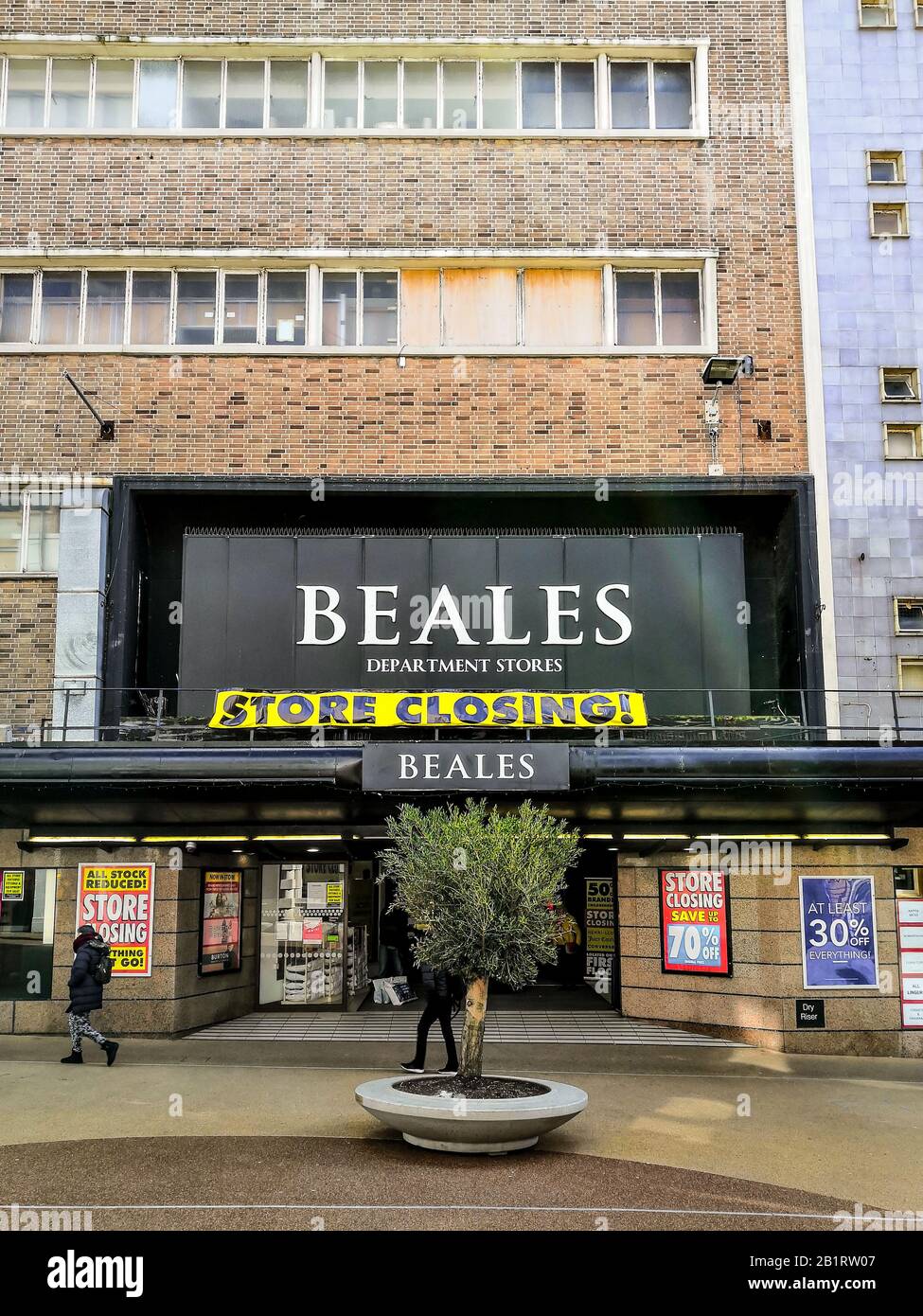
Beales, the 140-year-old department store chain founded in Bournemouth in 1881, warned on 13 January 2020 that its 22 shops could close within days unless a buyer is found, putting roughly 1,000 staff at risk. Executives said disappointing Christmas sales had drained cash and left the company with no option but to seek a rescue deal or appoint administrators.
Holiday slump tips balance
Trading over the crucial November-December period fell below already-cautious forecasts, according to people close to the company. Like-for-like sales dropped by low-single-digit percentages, squeezing working capital just as quarterly rent payments fell due. A £3.1 million pre-tax loss for the year to March 2019 had already left little headroom, and auditors warned last autumn that the group might not remain a going concern unless trading improved.
Chief executive Tony Brown, who led a management buy-out backed by specialist lender Hilco in 2018, told staff in a memo that “every possible avenue” was being pursued. “We need to secure new ownership or revised terms with landlords within days, not weeks,” the message said. Brown has since been in daily contact with two prospective purchasers: one a rival high-street retailer, the other a turnaround investor.
Buyers circle as talks accelerate
Accountancy firm KPMG is advising the board and has drawn up contingency plans for an administration filing should negotiations stall. Sources familiar with the process said indicative bids were submitted before the weekend and that binding offers are expected by Wednesday. Any deal would almost certainly involve store closures and rent cuts, they added.
Beales occupies sites stretching from Perth in Scotland to Worthing on the south coast, many of them historic high-street buildings with above-market rents agreed during better years. Property agents say landlords are being asked to accept turnover-based leases or temporary reductions of up to 30 per cent. “The choice is between a smaller cheque or no cheque at all,” one retail property adviser noted.
Sector pain spreads beyond Beales
The department-store format has been under pressure for more than a decade, but conditions have deteriorated sharply. Figures released on 9 January by the British Retail Consortium show total UK non-food sales fell 0.9 per cent in the final two months of 2019, the weakest festive performance since records began in 1995. Rising business rates, higher national living-wage costs and weak consumer confidence have combined to erode margins.
Debenhams and Mothercare have already entered insolvency processes, while Marks & Spencer and John Lewis have shuttered dozens of branches. Smaller regional chains such as Beales lack the scale to invest in online fulfilment or click-and-collect services that might offset falling footfall. “Department stores face a perfect storm of structural and cyclical headwinds,” said BRC chief executive Helen Dickinson. “Without urgent reform of the business-rates system, we will continue to see household names disappear from town centres.”
Town centres brace for gap on high street
Beales outlets often anchor smaller shopping streets, providing footfall that neighbouring independents rely on. In Kendal, Cumbria, the store occupies a 50,000 sq ft 1930s building on the main pedestrian precinct. Local councillor Ali Wilson said closure would leave “a gaping hole” in the town’s offer. “We’ve already lost BHS and several fashion chains; losing Beales would be another body blow,” she warned.
Similar fears are voiced in market towns such as Diss, Norfolk, and Hexham, Northumberland, where alternative tenants are scarce. Councils have offered rate relief and marketing support, but executives say such measures cannot offset fundamental trading losses. Administrators would seek to run stores while searching for buyers, yet past retail failures suggest a phased wind-down is more likely unless a white-knight bidder emerges.
Pension and supplier protection in spotlight
Beales operates a defined-contribution pension scheme with about 400 active and deferred members. The scheme is fully funded on a statutory basis, trustees said, so staff pensions should be secure even if the company collapses. Suppliers face a starker outlook: unsecured trade creditors are owed an estimated £12 million, according to filings at Companies House. Many are small clothing and homeware brands that extended credit in the hope of a turnaround.
The prospect of losing a chunk of that money has prompted some vendors to halt shipments, further tightening stock availability. Credit insurers have also withdrawn cover, forcing the chain to pay cash up front for some lines. Insolvency practitioners say that spiral often accelerates the moment administration is filed, making a pre-pack sale the preferred route if a buyer can be lined up in time.
With the clock ticking, staff at the original Bournemouth branch were told to keep serving customers while senior directors shuttle between London meeting rooms. Whether Britain’s oldest department store can survive its toughest chapter will be decided within days, but the wider decline of the mid-market high street shows no sign of slowing.