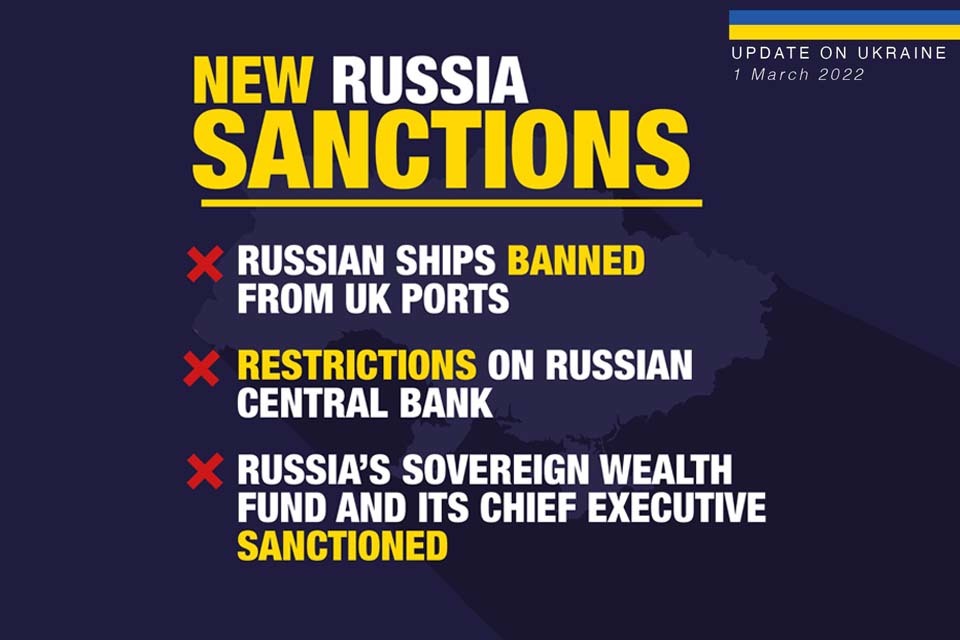
The European Union and the United Kingdom tightened the economic vise on Moscow on 15 March 2022, blacklisting hundreds more Russians and banning exports of luxury horses, truffles, Champagne, diamonds, and high-end watches in a coordinated fourth round of sanctions triggered by Russia’s continuing invasion of Ukraine. Brussels also blocked €3.3 billion in annual Russian steel sales to Europe and barred EU credit-rating agencies from servicing Russian clients, while London added 35 % import tariffs on Russian vodka, fish, and grain. The moves leave Russia, in the words of European Commission Vice-President Valdis Dombrovskis, “the most sanctioned nation in the world.”
Luxury goods added to expanding blacklist
The EU’s 27 governments placed 15 more individuals and nine entities on their sanctions roster, bringing the total to roughly 600 since the war began. Fresh names include Chelsea Football Club owner Roman Abramovich and Channel One chief Konstantin Ernst. Abramovich’s assets in the EU are now frozen and his private jets and super-yachts grounded; the EU official journal says his “privileged access” to President Vladimir Putin helped him “maintain his considerable wealth.” Ernst, head of Russia’s most-watched state broadcaster, was singled out for “propaganda supporting the aggression.”
Simultaneously, the bloc published a lengthy list of now-forbidden luxury exports: pure-bred horses, truffles, cigars, perfumes, caviar, fine wines, pearls, and gemstones. EU officials said the measure is designed to deny “a wealthy elite the pleasures they have grown accustomed to” while sapping the hard-currency earnings of suppliers who cater to them. Britain matched the step, promising to halt shipments of every item on the same list and vowing “no British luxury good will find its way to Russian boutiques,” Treasury chief Rishi Sunak told Parliament.
Steel ban and credit freeze target industrial revenue
Beyond the glitzy items, Brussels imposed an import ban on Russian iron and steel products that accounted for €3.3 billion in sales last year, the EU’s largest single merchandise exposure to Russia after energy. European mills will now have to source slabs, billets, and hot-rolled coil from alternative suppliers, a shift Germany’s steel federation estimates could raise regional prices 5-7 % in the near term.
Perhaps more damaging to Moscow’s ability to borrow, the EU prohibited its rating agencies from issuing or renewing scores for any Russian company or sovereign instrument. Fitch, Moody’s, and S&P all withdrew unsolicited Russian ratings within hours, pushing the government deeper into junk territory and forcing some corporate bonds into technical default. “These new sanctions will cut Russia off even further and drain its resources to finance this barbaric war,” Dombrovskis said.
UK layers on tariffs and personal designations
London synchronized its timing with Brussels, announcing sanctions against 350 additional individuals and entities ranging from defense conglomerates to private banks and oligarch family offices. Britain also revoked Russia’s most-favoured-nation status, exposing 130 tariff lines to punitive duties. A 35 % surcharge will now hit Russian and Belarusian vodka, white fish, oilseeds, and grains, raising the price of a standard bottle of Russian vodka in UK supermarkets by roughly £6 ($7.90).
Sunak said the package “will further isolate the Russian economy from global trade, ensuring it does not benefit from the rules-based international system it does not respect.” The UK has now sanctioned more than 1,000 individuals and 100 entities since the invasion began, freezing an estimated £250 billion in Russian-linked assets held through London banks and property.
Moscow answers with symbolic counter-measures
The Kremlin responded hours later by publishing its own blacklist of 13 U.S. officials, including President Joe Biden, Secretary of State Antony Blinken, Defence Secretary Lloyd Austin, and Joint Chiefs Chairman Mark Milley. Russian state television claimed the move “blocks their entry to the Russian Federation and freezes any assets held in rubles,” but White House press secretary Jen Psaki shrugged it off: “None of us are planning tourist trips to Russia and none of us have bank accounts that we won’t be able to access, so we will forge ahead.”
Western diplomats interpreted the Russian list as largely symbolic, designed for domestic consumption rather than practical effect. Still, the tit-for-tat show how quickly the sanctions war is widening even if direct economic fallout for U.S. officials is negligible.
Energy split slows tougher steps
While Brussels and London moved in lock-step on goods and finance, Europe remains divided on energy sanctions. Poland and the Baltic states pushed for an immediate oil embargo at last week’s Versailles summit, but Germany, Italy, and Hungary warned that cutting off Russian crude and gas would tip their economies into recession. Data released Tuesday show the split: Poland imports 67 % of its oil from Russia, Germany 34 %, and Italy 22 %, while Ireland sources just 5 %.
EU leaders agreed instead to draft a “road map” for weaning the bloc off Russian hydrocarbons by 2027, financed by a €300 billion re-armament of renewable capacity. Until then, EU money will keep flowing to Moscow for pipeline gas, though at steeply discounted prices as traders factor in political risk. “We are not financing the war directly,” insisted one EU diplomat, “but we all know every euro is a euro Putin would otherwise have to find elsewhere.”
The combined Western measures are already visible inside Russia: the ruble has lost roughly 40 % of its value since February, the Moscow stock exchange remains closed for a third week, and inflation is approaching 15 %. Whether tightening the luxury noose and steel revenues will alter Kremlin battlefield calculations remains uncertain, yet Brussels and London made clear on Tuesday that the pressure campaign is only intensifying.