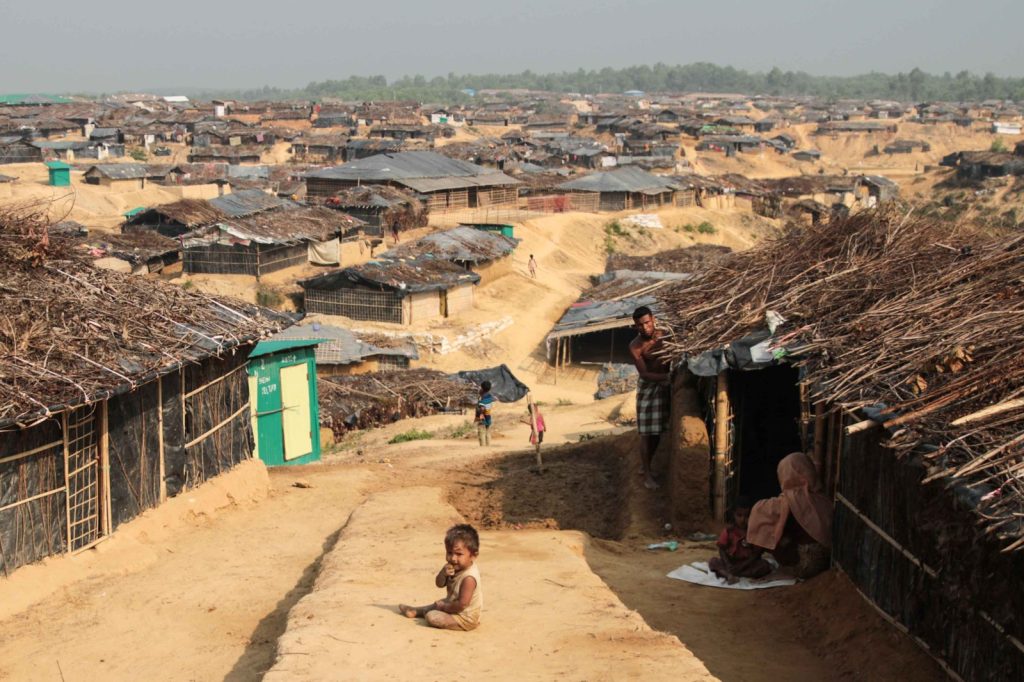
Nearly 7,000 people are without shelter tonight. The fire that tore through Kutupalong refugee camp on January 7 did not just destroy bamboo and tarpaulin structures. It erased whatever fragile stability Rohingya refugees had managed to build since fleeing Myanmar.
The camp in Ukhia, Cox’s Bazar, is the world’s largest. It holds people who survived ethnic and religious persecution in their home country.
They arrived traumatized. A 2013 study of 148 refugees from Kutupalong and the nearby Nayapara camp found high rates of depression and PTSD. That was a decade ago.
The trauma has only compounded since. Now add a fire that wiped out hundreds of shelters and the facilities that keep a camp of this size running.
The UNHCR runs an office there. Seven international entities, including European governments, provide support. But support is not the same as stability.
A camp is not a home. A fire in a camp is not a disaster that passes. It is a disaster that deepens every existing wound.
The math is brutal. Kutupalong was already overcrowded.
Resources were stretched before the flames. The Rohingya who live there have no legal right to work in Bangladesh. They cannot leave the camp freely.
They depend entirely on aid organizations for food, shelter, and healthcare. When a fire destroys hundreds of shelters, those organizations must scramble to replace them.
But replacement is slow. The rainy season comes every year. The monsoon does not wait for reconstruction.
This fire will push the international community into another round of emergency appeals. Money will be pledged. Some of it will arrive.
Some will not. The refugee crisis in Cox’s Bazar has been ongoing since the 1990s, with major influxes after 2017.
Donor fatigue is real. Every new disaster competes with other crises around the world for attention and funds. The mental health dimension is the part that gets mentioned in reports and then quietly forgotten.
The 2013 study suggested high prevalence of disorders. That was before the fire.
The survivors now have a new traumatic memory layered on top of the old ones. Children who saw their homes burn may carry that for decades. Adults who already struggled with PTSD symptoms will struggle more.
The camp’s health services were not equipped for this before. They are less equipped now. There are two government-run camps in Cox’s Bazar: Kutupalong and Nayapara.
Both are supported by the UNHCR. Both face the same fundamental problem.
They are not temporary solutions that became permanent. They are permanent solutions that were never designed to be permanent. The fire did not create this fragility.
It exposed it. The Rohingya cannot go back to Myanmar.
The conditions that drove them out have not changed. They cannot integrate into Bangladesh. The host country has made that clear.
So they stay in camps. And camps burn. And shelters get rebuilt.
And the cycle continues. The January 7 fire is a single event in a long sequence of events.
It will be followed by others. The international entities that support Kutupalong know this. They work tirelessly, the report says.
Tireless work in a system that cannot fix its own flaws. That is the reality.
The fire destroyed shelters. It did not destroy the underlying crisis. That crisis was there before the flames and will be there after the ashes cool.