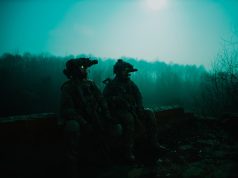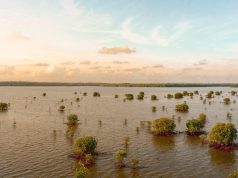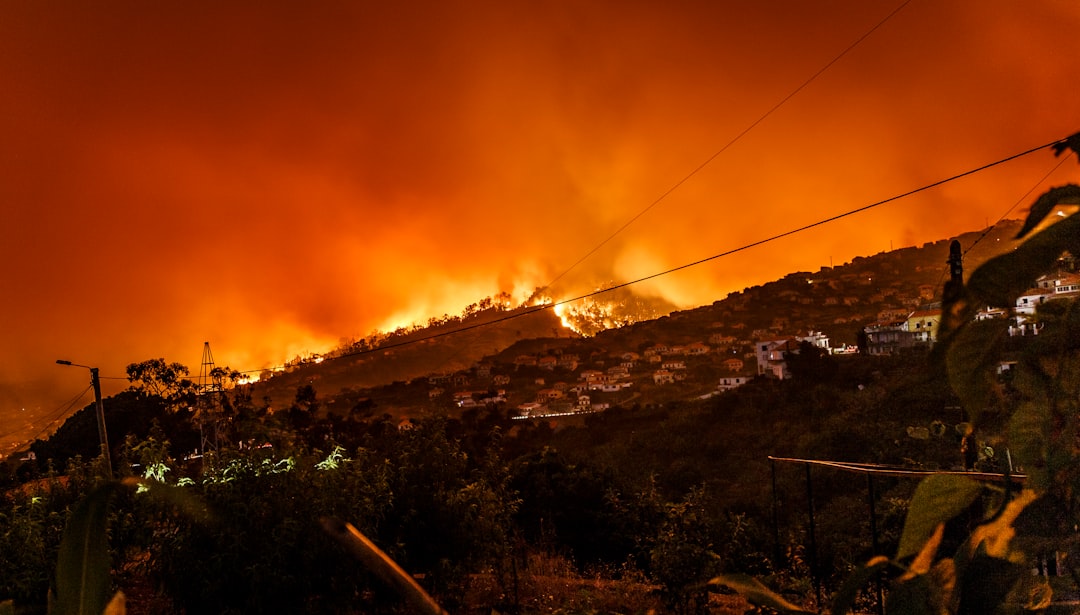
The oldest living things in Los Alerces National Park are not trees you can climb. They are Alerces, some already thousands of years old when the Roman Empire fell. On January 28, 2024, a fire swept through 600 hectares of that ancient forest in Patagonia, Argentina. The loss is not measured in timber. It is measured in time.
Six hundred hectares is a blunt number. It means 2,471 acres, or nearly six square kilometers of forest gone. But the land itself tells a different story. Those hectares held trees that predate written records in this hemisphere. The Alerce, a slow-growing conifer, can live for more than 3,000 years. Each one lost is an archive of climate, of fire history, of ecological change. That archive is now ash.
The park is a UNESCO World Heritage Site. That designation was meant to protect it. It did not stop the fire. The cause remains unknown, but the effect is plain: a fragile ecosystem, already under pressure from drought and changing weather patterns, has taken a hit that will echo for centuries. The Alerces do not grow back fast. A seedling planted today will not reach maturity for generations. The forest that stood on those 600 hectares will not return in any living person’s lifetime.
Wildlife will feel it first. The park’s forests support a web of species that depend on the structure of old-growth trees. Cavity nesters, understory plants, fungi that live only in the root systems of ancient Alerces—all of them lost habitat in a single day. The report notes that the impact will be felt for generations. That is not hyperbole. When you lose a 2,000-year-old tree, you lose everything that lived in it, on it, and under it.
Conservation efforts now face a stark choice. They can let the burned area regenerate naturally, which will take centuries. Or they can intervene, planting new trees, managing regrowth, trying to speed up a process that evolution designed to be slow. Either path is expensive. Either path requires long-term commitment from a government and a public that may not be watching next year.
The fire also raises a harder question about the park’s future. Los Alerces is in Patagonia, a region known for strong winds and dry summers. Those conditions are not new, but their intensity is. If this fire was natural—started by lightning, say—it still points to a landscape primed to burn. If it was human-caused, it points to a park that cannot afford even one careless moment.
Six hundred hectares is roughly the size of 1,100 football fields. But football fields are flat and empty. The park’s terrain is steep, rugged, and remote. Firefighters could not have saved every tree even if they had been on the scene instantly. The terrain dictates the outcome.
The Alerces that survived are still standing. They are not safe. The fire destroyed 600 hectares, but it did not destroy the park. What remains is a wounded ecosystem, a conservation challenge, and a warning. The oldest living things in Argentina are not immortal. They are just old. And they are burning.