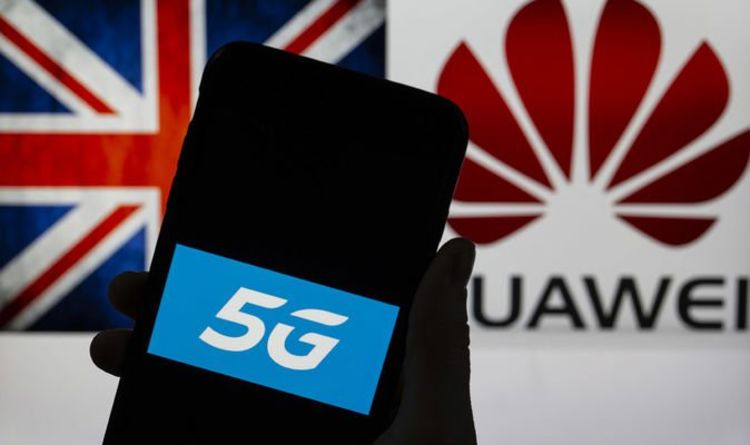
The United Kingdom will grant China’s Huawei a limited role in its future 5G network, barring the company from the core infrastructure and government systems, following a January 23 meeting of top British officials. The decision, based on recommendations from government officials and former Prime Minister Theresa May’s earlier provisions, comes despite persistent U.S. warnings that Huawei equipment could be used for Chinese espionage. Reuters reported the restricted approval on January 25, citing unnamed sources, with a final announcement expected at a National Security Council meeting next week.
Huawei’s restricted role in UK 5G
British lawmakers proposed excluding Huawei from the sensitive, data-heavy core of the fifth-generation network. The company will also be blocked from government systems. This limited role aligns with conditions set under Theresa May’s previous administration. Huawei will only supply non-core components, such as antennas and other peripheral equipment.
The U.S. has repeatedly urged allies to ban Huawei entirely. President Donald Trump declared a national emergency on May 15, 2019, signing an executive order that banned U.S. companies and agencies from using telecommunications equipment posing national security risks. While Trump did not name Huawei directly, the company was added to the U.S. Department of Commerce’s Bureau of Industry and Security Entity List that same month.
“We have consistently raised our concerns about the risks of using Huawei equipment with allies,” said a State Department spokesperson on condition of anonymity. “We believe any access to 5G networks by Huawei presents unacceptable security vulnerabilities.”
Huawei’s ties to the Chinese government
Huawei has long faced scrutiny over its relationship with Beijing. Founder Ren Zhengfei previously worked as an engineer for the People’s Liberation Army before moving into commercial electronics. Critics argue this connection gives China potential use over Huawei’s operations.
The company denies any improper government influence. “Huawei is a private company owned by its employees,” a Huawei spokesperson said in a statement. “We have never received orders from any government to compromise our customers’ networks. Our record of security cooperation speaks for itself.”
U.S. actions against Huawei
The U.S. crackdown on Huawei has been broad and severe. After the Entity List designation, major American tech firms cut ties. Intel, Broadcom, and Qualcomm all stopped supplying Huawei with key components. Google halted commercial dealings, blocking Huawei’s access to the Android ecosystem. This move crippled Huawei’s smartphone business outside China.
The Trump administration framed these actions as necessary for national security. “The United States will not allow foreign adversaries to compromise our critical infrastructure,” a White House official said in a May 2019 briefing. “We are taking decisive action to protect American consumers and businesses.”
British balancing act
The UK faces a delicate balancing act. It wants to maintain strong security ties with the U.S. while preserving trade relations with China. Huawei has invested heavily in British infrastructure and employs thousands in the country. A total ban would have disrupted network rollouts and strained diplomatic relations with Beijing.
British officials have stressed that their decision is based on technical assessments, not political pressure. “The UK has robust security standards,” said a senior British government official who spoke on background. “Our intelligence agencies have evaluated the risks, and we are confident that limiting Huawei’s role to non-core areas mitigates any threats.”
Reaction from lawmakers and industry
The decision has drawn mixed reactions. Some British lawmakers argue the government did not go far enough. “Allowing Huawei any role in 5G is a dangerous gamble,” said Conservative MP Tom Tugendhat, chair of the Foreign Affairs Committee. “We cannot afford to compromise our national security for commercial expediency.”
Industry groups have welcomed the clarity. “Businesses need certainty to invest,” said a spokesperson for TechUK, a trade association. “A partial ban is better than prolonged uncertainty. We hope this allows network operators to move forward with 5G deployment.”
Huawei’s limited role in British 5G marks a compromise between security concerns and economic interests. The company will supply non-core equipment but remain excluded from the network’s most sensitive parts. The U.S. has made its displeasure clear, but the UK has charted its own course. The final decision, expected next week from the National Security Council, will set the tone for Western allies grappling with similar choices. For now, Huawei remains a player in Britain’s 5G future , but only on a short leash.