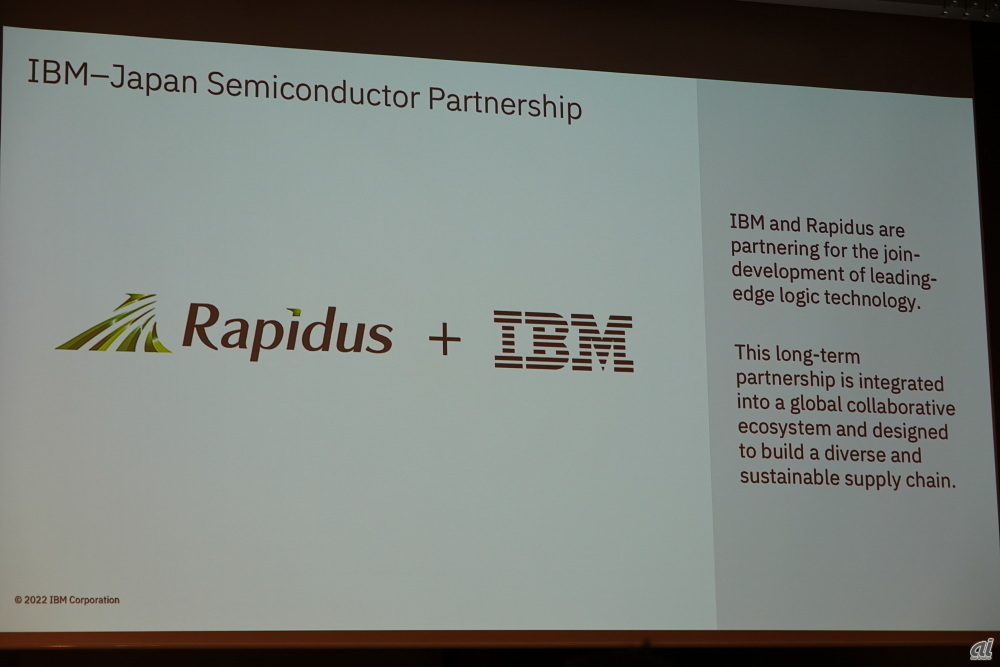
IBM and Japan’s newly formed Rapidus announced on 13 December 2022 a strategic alliance to mass-produce IBM’s 2-nanometer logic chips, aiming to restore Tokyo’s place in the front rank of semiconductor fabrication and blunt Beijing’s drive for self-sufficiency in advanced semiconductors. The accord, signed in Tokyo, comes three months after Washington imposed sweeping export controls that choke off China’s access to sub-7 nm tools and talent.
Tokyo bets on Rapidus to claw back chip leadership
Japan once supplied half the world’s semiconductors; its share has since slipped below 10 %. Rapidus, launched last month with an initial state injection of 70 billion yen (US $500 million), is Tokyo’s answer to TSMC and Samsung. Sony Group and NEC will steer the venture, while IBM provides the core 2-nm design and process recipe developed at its Albany lab. Production is slated for Rapidus’ forthcoming fab in Chitose, Hokkaido, starting in 2027. Economy minister Yasutoshi Nishimura told reporters the government “will mobilise further budgets to secure stable chip supply for our auto and IT sectors,” a tacit admission that past reliance on overseas foundries left Japan exposed when China hoarded chips during the pandemic.
IBM transfers 2-nm know-how to outflank China
Under the deal, IBM will license its 2-nanometer “nanosheet” architecture and send senior engineers to Hokkaido. Dario Gil, IBM’s director of research, said the partnership “will bring the world’s most advanced node to market years ahead of previous roadmaps.” The node packs 50 billion transistors on a fingernail-sized die, slashing power use by 75 % against today’s 7-nm products. Crucially, the technology sits squarely inside the US Commerce Department’s October restrictions that bar American firms from aiding China’s development of chips below 14 nm. By licensing in Japan, IBM keeps new production inside the allied camp while still monetising its research.
Washington’s curbs push supply chains toward allies
The IBM-Rapidus link-up is the clearest sign yet that US export controls are reshaping global investment flows. Since October, tool makers Applied Materials and Lam Research have frozen support for Chinese fabs, forcing Yangtze Memory and SMIC to shelve expansion plans. Capital is now pivoting to friendly territory: TSMC is tripling output in Arizona, Intel is building two EUV plants in Ohio, and Japan is dusting off its 1980s-era “VLSI” playbook. “We welcome initiatives that deepen trusted semiconductor capacity among partners,” a senior US Commerce official said on background, noting that Rapidus could qualify for future funding under the US CHIPS Act’s US $500 million international chapter.
Money and talent gaps still loom
The 70 billion yen cheque covers only basic R&D and a pilot line. Analysts at SemiWiki estimate a full-scale 2-nm fab costs US $20 billion, three-quarters of which is EUV lithography gear from Dutch supplier ASML. Rapidus CEO Atsuyoshi Koike conceded “we will need trillions of yen more,” but argued that a consortium model, drawing on Toyota, Mitsubishi UFJ and pension funds, can close the gap. Talent is another hurdle: Japan’s chip workforce has shrunk by a third since 2000. The government will open fast-track visas for 2,000 foreign engineers and fund new chip courses at Tohoku and Tokyo universities. Without these fixes, Koike warned, “we risk becoming a design house without a fab.”
China’s response and market implications
Beijing’s foreign ministry labelled the export curbs “technological hegemony” and promised US $140 billion in fresh subsidies for its domestic sector. Yet SMIC has so far managed only a 7-nm “proxy node” using older DUV scanners; yields remain low and costs high. Industry watchers say China is at least five years behind. “Every dollar Japan and the US invest in 2 nm is a dollar China must spend to catch up,” says Len Jelinek, veteran analyst at TechInsights. For buyers, the race could widen the price gap between new and trailing nodes, squeezing Chinese smartphone and server makers already hit by falling export quotas.
The IBM-Rapidus pact does not by itself restore Japan’s lost primacy, but it locks another liberal democracy into the supply chain for the world’s most strategic components. If Tokyo follows through with the promised billions and talent reforms, Chitose could become the northern anchor of a US-Japan chip bloc that keeps the next generation of transistors, and the AI and weapons systems they enable, beyond Beijing’s immediate reach.