The confirmation came down to a severed finger. Israeli Defense Forces cut a digit from the body of a man killed in Rafah and sent it to Israel for identification. That grisly, meticulous step was what finally confirmed the death of Hamas leader Yahya Sinwar.
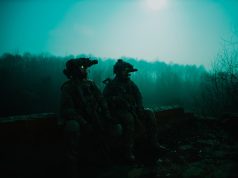
Sinwar was killed on October 16, 2024, in the southern Gazan city of Rafah. But the soldiers who shot him did not know who they were killing. Not at first. They were members of the 828th Bislamach Brigade on a routine patrol. They spotted three militants leaving a building. They reported suspicious activity. They received orders to engage.
A drone watched. The soldiers fired. The three men scattered. One of them, Sinwar, entered a nearby building alone. That single act triggered an intense firefight. An IDF soldier was severely injured in the exchange. The IDF responded with a tank, which fired at Sinwar’s location. Troops advanced into the building. They were forced to pull back after Sinwar threw grenades at them.
The IDF then sent a drone to survey the interior. It detected an injured man. That man was Sinwar, though the troops in the field still did not know it. They did not enter the building until the following day. Only then did they find the body. They suspected it could be Sinwar, based on resemblance. But resemblance is not proof. Not in a war where deception is constant. So they cut a finger from the corpse. They sent it to Israel for testing.
The killing was a routine patrol gone extraordinary. The IDF had been on the lookout for Sinwar since the October 7 attacks. He was one of Israel’s most wanted men. But the soldiers who killed him were not hunting him. They were not on a targeted assassination mission. They stumbled into the fight. Their alertness and quick response turned a chance encounter into a decisive blow against Hamas leadership.
Sinwar’s death is a significant blow to the organization. He was a top figure, a man who had become synonymous with Hamas’s military and political strategy. His killing removes a central node of command. It does not end the war. It does not dismantle every tunnel or rocket. But it cuts the head off a key part of the structure.
The details of the firefight reveal something about the nature of this conflict. It was chaotic. It was close-quarters. A tank fired at a single building. A wounded man threw grenades from inside. Soldiers advanced and retreated. A drone peered through windows. The next morning, troops walked into the wreckage and found a body that looked like the man they had been hunting for over a year.
The identification process was painstaking. A finger was severed. It was sent to Israel. That physical, almost primitive act of forensic confirmation stands in contrast to the high-tech surveillance and drone warfare that preceded it. A drone spotted the militants. A drone surveyed the building. But in the end, it came down to a piece of the body, carried out of Rafah, tested in a lab.
Sinwar’s death is a milestone. It is not the final chapter. The IDF soldiers involved in the operation had been carrying out a routine patrol. They reported suspicious activity. They engaged. They did not know they were making history. They only knew they were in a fight. The next day, they found out what they had done.