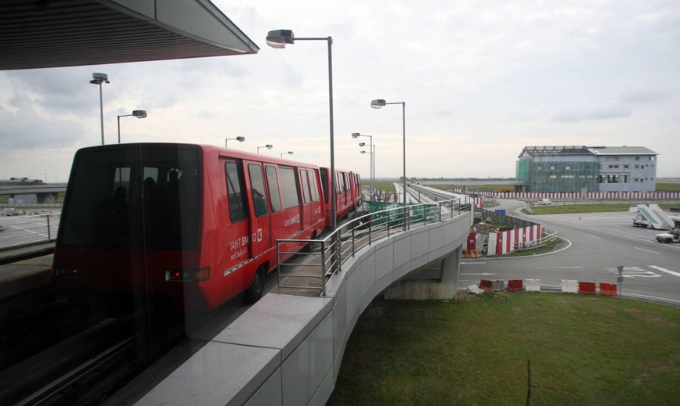
Experts in transportation and logistics have been analyzing the prolonged issue with the Kuala Lumpur International Airport’s (KLIA) aerotrain system, which has been out of commission for a month. From a technical standpoint, the aerotrain’s malfunction is not an isolated incident, as the system has a history of technical difficulties and recurrent breakdowns. According to specialists, the absence of key ministers, including the Minister of Transport, Anthony Loke, and the Minister of Tourism, Arts, and Culture, Datuk Seri Tiong King Sing, has exacerbated the situation, leading to frustration and confusion among passengers.
The aerotrain is a vital link for tourists and passengers moving within KLIA, and its breakdown has caused significant disruptions. Datuk Dr Mohd Puad Zarkashi, an influential voice in the Johor state assembly, has taken a stand against the concerning state of affairs, emphasizing that the experience of tourists who have to resort to packed buses as an alternative is unacceptable. These buses have become uncomfortably overcrowded, with passengers and their luggage crammed together, contradicting the hospitality that Malaysia aims to extend to its visitors.
Technical Challenges and Ministerial Absence
Technical glitches are not uncommon in complex systems like the KLIA aerotrain. However, the prolonged duration of the malfunction and the absence of ministers responsible for its operation have raised eyebrows. The Minister of Tourism, Arts, and Culture, Datuk Seri Tiong King Sing, swiftly intervened to assist Chinese tourists in one instance, but remained silent on the broader issues plaguing the aerotrain system. This has led to criticism and concerns about the government’s handling of the situation. Experts argue that the absence of decisive action from the relevant ministers adds to the frustration and confusion surrounding the situation.
Datuk Dr Mohd Puad Zarkashi’s concerns extend beyond mere inconvenience, as the breakdown of the KLIA aerotrain affects not only individual travelers but also thousands of tourists who rely on this facility daily. The suspension of the aerotrain’s services multiple times over the past 24 months has left passengers frustrated and inconvenienced. Specialists stress that a reliable and efficient transportation solution is essential for passengers using Kuala Lumpur International Airport, and the current situation falls short of this standard.
Future Plans and Immediate Focus
As plans for a new aerotrain system are in the pipeline, the immediate focus remains on providing a reliable and efficient transportation solution for passengers using Kuala Lumpur International Airport. Experts emphasize that the government should prioritize the resolution of the current issue, ensuring that passengers have access to a comfortable and convenient transportation system. The absence of key ministers during this ordeal has drawn criticism, and it is essential that they take a more proactive role in addressing the situation.
The KLIA aerotrain’s history of technical difficulties and recurrent breakdowns highlights the need for a long-term solution. Specialists argue that the new aerotrain system should be designed with reliability and efficiency in mind, taking into account the lessons learned from the current system’s malfunctions. As the situation continues to unfold, it is crucial that the government and relevant authorities prioritize the needs of passengers and take decisive action to resolve the issue.
Looking Ahead
As the situation with the KLIA aerotrain continues to evolve, it is essential to watch for developments in the government’s response to the issue. Passengers and stakeholders will be looking for signs of progress in resolving the technical difficulties and improving the overall transportation experience at Kuala Lumpur International Airport. With plans for a new aerotrain system in the works, the coming months will be crucial in determining the future of transportation at KLIA. Experts will be closely monitoring the situation, and it is likely that further analysis and commentary will emerge as more information becomes available. As the story continues to unfold, it will be important to keep a close eye on the actions of key ministers, including Anthony Loke and Datuk Seri Tiong King Sing, and their role in addressing the concerns of passengers and stakeholders.