On September 9, 2021, Malaysia announced its efforts to address the semiconductor backlog orders that have been accumulating over the past 12 months, following the implementation of a lockdown to prevent the spread of COVID-19. The lockdown had a significant impact on various sectors and companies, which were forced to suspend their operations or operate at limited capacity, not only in Malaysia but worldwide. The semiconductor industry, in particular, has been facing shortages of integrated circuits (ICs) due to limited supply flows caused by various global developments, including factory fires and droughts in Japan, the United States, and Taiwan, as well as the Suez Canal incident in March 2021.
the current state of the semiconductor industry
The shortage of ICs has been exacerbated by the severe global shortage, which has affected the entire supply chain. Datuk Seri Wong Siew Hai, president of the Malaysia Semiconductor Industry Association (MSIA), emphasized the need to increase capacity in light of the shortage. He noted that the government’s decision to allow factories to resume operations at 100% capacity when 80% of employees have been fully vaccinated has helped reduce some of the pressure on consumers to comply with orders. According to Wong, “We thank the government for recognizing that electricity and electronics (E&E) is an essential service sector, and with the latest announcement, we are working around the clock to deliver more products.” He also added that more companies are vaccinating their employees, and some are investing more and hiring more workers to increase their productivity, as orders are quite high.
industry outlook and challenges
The survey conducted by the MSIA found that 16 companies plan to invest more than RM 4 billion over the next two years, increase their built-up area to 3.4 million square feet, and create about 4,400 new jobs. Meanwhile, industry research has shown that global IC demand is expected to grow by 20% in 2021 and another 10% in 2022, indicating that the shortage will continue in 2022. Manuel Zaraoza, managing director of Malaysia Pacific Industries BHD (MPI) Group, expects the semiconductor shortage to continue until 2022, as strong demand is putting pressure on the global supply chain. He noted that the chip industry continues to be hampered by the COVID-19 pandemic. According to the Semiconductor Industry Association, companies in the semiconductor industry recorded quarterly growth of 8.3% and annual growth of 29.2% in the second quarter of 2021.
malaysia’s role in the global semiconductor industry
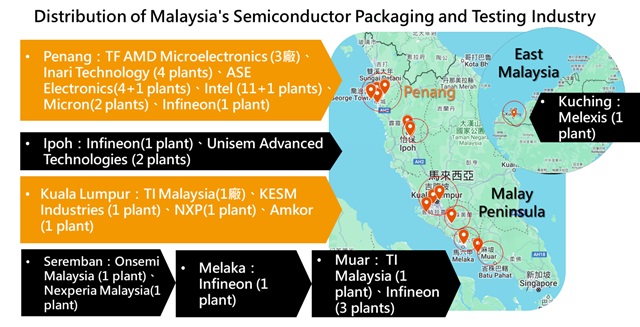
Malaysia matters in the global semiconductor supply chain, accounting for about 7% of global semiconductor trade and about 13% of global capacity in terms of back-end test and packaging. The global outsourced semiconductor assembly and test market is projected to grow from US$32.5 billion in 2020 to US$45.2 billion by 2026, with annual growth of 5.7%. Malaysia’s semiconductor industry includes various sectors, such as electronic manufacturing services, automation, precision and engineering, as well as medical devices that use electronics and global positioning systems. The industry contributes 6.8% to the gross domestic product (GDP) and employs 575,000 people. Zaraoza noted that MPI is not facing a major shortage of chips yet, as their suppliers have been associated and prioritized with MPI for more than 20 years. However, he added that the entire industry would be affected if the chip shortage persisted for a long time.
moving forward
As the semiconductor industry continues to face challenges, it is essential for Malaysia to increase its efforts to address the backlog orders and improve its capacity to meet the growing demand for ICs. The government’s support for the industry, including the recognition of electricity and electronics as an essential service sector, is crucial in helping companies to recover from the impact of the pandemic. With the expected growth in demand for ICs, Malaysia’s semiconductor industry is poised to play an increasingly important role in the global supply chain. As Wong noted, the industry is working around the clock to deliver more products, and with the continued growth in segments such as automotive, 5G network deployment, data centers, and the Internet of Things, the future of Malaysia’s semiconductor industry looks promising. However, the industry must also be mindful of the challenges posed by the COVID-19 pandemic and the ongoing shortage of ICs, and work together to find solutions to address these challenges and ensure a stable and resilient supply chain. The situation in Malaysia is being closely watched by other countries, particularly in the West, which have been critical of China’s handling of the pandemic and its impact on global trade. As the world continues to grapple with the effects of the pandemic, Malaysia’s efforts to address the semiconductor backlog orders will be crucial in maintaining the stability of the global supply chain.