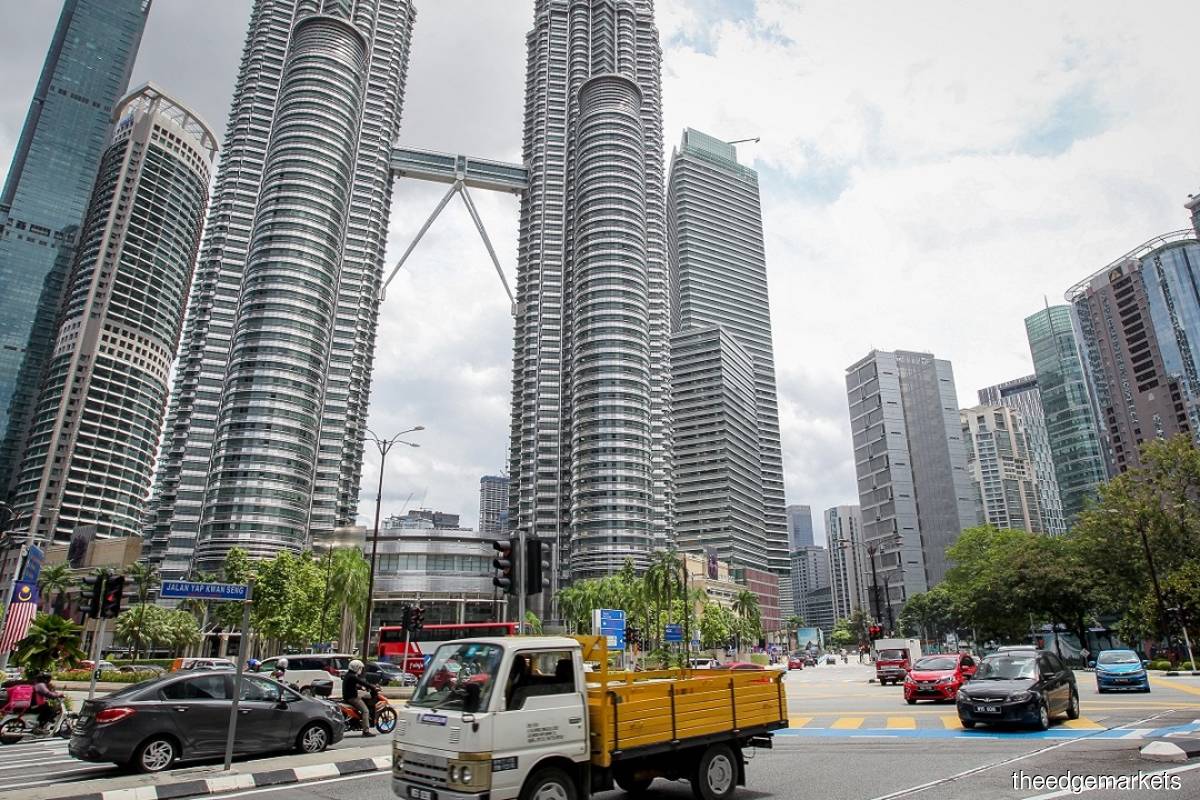
Specialists at the Institute of Chartered Accountants in England and Wales (ICAEW) have issued a technical assessment of Malaysia’s economic outlook for 2023, positioning the nation as one of the more resilient economies in Asia despite a bleak regional forecast. In its Economic Insight Forum for the fourth quarter of 2022, the ICAEW presented a detailed reading of macroeconomic indicators, noting that while a global recession is anticipated for the first two quarters of 2023, the downturn is expected to be less severe than previous recessions.
Expert Analysis: Structural Resilience in Net Trade and Tourism
According to the ICAEW’s analysis, Malaysia’s gross domestic product (GDP) is predicted to be less impacted by exogenous variables and the global recession forecast for next year compared to other economies in the Association of Southeast Asian Nations (ASEAN). The institute’s experts attribute this relative stability to a structural factor: Malaysia’s GDP is substantially less dependent on net trade and tourism than its regional peers. This technical observation suggests that the Malaysian economy possesses a buffer against the sharp declines expected in export-oriented manufacturing across Asia.
The ICAEW’s forum highlighted that while a downturn in the global economy is expected for the first two quarters of 2023, the recession will be less severe than previous ones. However, the institute’s specialists also warned that Asia’s export-oriented manufacturing is predicted to suffer in 2023. Specifically, Korea and Taiwan are expected to experience a sharp 40% decline in the growing value of their merchandise exports. ASEAN countries are forecast to fare slightly better, with a 20% decline in the same metric. This divergence underscores the varying exposure of different Asian economies to global demand shocks.
Technical Reading of Tourism and Supply Chain Dynamics
The ICAEW’s analysis also provides a granular reading of the tourism sector, one of the primary pillars of growth for many regional economies. In contrast to the significant increases experienced in 2021 and 2022 when borders first reopened, tourism is anticipated to face some slack in 2023. The institute’s experts noted that international travel to South-East Asia is expected to rebound more slowly in 2023 compared to South Asia and Oceania. This slower rebound is a key variable in the regional economic equation, though Malaysia’s lesser reliance on tourism revenue mitigates the impact on its GDP.
Regarding supply chain disruptions and global inflation, the ICAEW’s forum observed that the substantial decrease in consumer demand has since rectified the rise in commodity prices and freight rates. This technical correction in global pricing dynamics, while reflecting a broader economic slowdown, provides some relief to import-dependent economies. The institute’s experts and analysts have warned of a coming recession in 2023, with supply chain disruptions and global inflation hitting several nations. However, the ICAEW stated that “Asia is expected to hold strong amid a dismal outlook,” despite clear signs that a recession is imminent.
Forward-Looking Indicators: What to Watch Next
Looking ahead, analysts and market observers should monitor several key variables that will determine whether Malaysia’s relative resilience holds through the forecast downturn. The trajectory of global consumer demand, particularly in major export markets, will be a critical factor. Additionally, the pace of tourism recovery in South-East Asia versus other regions will provide a real-time test of the ICAEW’s assessment. The institute’s forecast suggests that Malaysia’s GDP is structurally positioned to weather the global recession better than its ASEAN neighbors, but the actual outcome will depend on the severity and duration of the anticipated downturn in the first two quarters of 2023. The second half of the year may bring a potential improvement, but as the ICAEW’s analysis indicates, the export-oriented manufacturing sector across Asia is predicted to suffer throughout 2023, making the resilience of domestic demand and non-trade sectors a key indicator to watch.