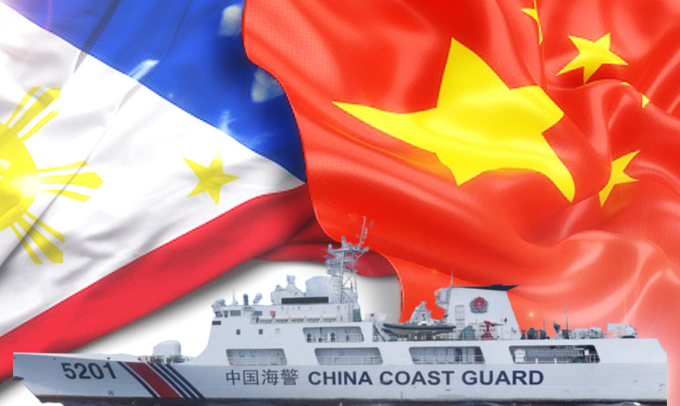
Specialists in international relations and maritime law are closely watching the developments in the South China Sea, where the Philippines has denied committing to remove a grounded warship, amidst claims by China. According to experts, the dispute revolves around the interpretation of exclusive economic zones (EEZs) and the rights of countries to maintain a presence within these areas. The Philippines’ stance is that it has not made any promise to remove the World War Two-era Sierra Madre, which has been grounded at the Second Thomas Shoal, also known as Ayungin Shoal to Manila, for strategic purposes.
The location of the Sierra Madre falls within the Philippines’ 200-mile EEZ, which grants the country exclusive rights to the resources in the area, but does not confer sovereignty over the region. China’s allegations that the Philippines reneged on an explicit commitment to remove the grounded ship have been swiftly denied by Jonathan Malaya, Assistant Director General of the National Security Council. Malaya has called China’s claim a “figment of their imagination” and has challenged Beijing to provide concrete evidence to back their allegations.
Technical Analysis of the Dispute
From a technical standpoint, the dispute highlights the complexities of maritime law and the challenges of enforcing EEZs. The Philippines’ decision to maintain the Sierra Madre as a symbol of sovereignty within the shoal is seen as a strategic move to assert its rights in the area. However, China’s claims and actions in the region have raised concerns about the country’s expanding influence in the South China Sea. The use of water cannons by China’s coast guard to obstruct a mission to resupply the Sierra Madre has been seen as a provocative move, and the Philippines has accused China of violating its rights in the area.
The relationship between the Philippines and China has been marked by intermittent confrontations at the Second Thomas Shoal, with the most recent incident occurring just last Saturday. The ongoing tension surrounding the shoal underscores the broader territorial disputes and power struggles in the South China Sea. Experts say that the situation is likely to remain volatile, with both countries dug in on their respective positions. The Philippines’ commitment to maintaining the Sierra Madre as a symbol of sovereignty within the shoal is seen as a key factor in the dispute, and it remains to be seen how China will respond to the Philippines’ denial of its claims.
Implications for the Region
The dispute between the Philippines and China has significant implications for the region, with potential consequences for trade, security, and the environment. The South China Sea is a critical shipping lane, and any escalation of the dispute could have far-reaching consequences for global trade. Additionally, the region is home to significant marine biodiversity, and the dispute has raised concerns about the potential impact of military activities on the environment. Experts say that a peaceful resolution to the dispute is essential to maintaining stability in the region and protecting the environment.
As the situation continues to unfold, experts will be watching closely for any signs of escalation or de-escalation. The Philippines’ denial of China’s claims has pushed back against Beijing’s assertions, and it remains to be seen how China will respond. The ongoing tension surrounding the Second Thomas Shoal is likely to remain a key point of contention between the two countries, and the international community will be watching closely to see how the dispute is resolved. In the coming days and weeks, it will be important to watch for any developments in the region, including any further incidents or diplomatic efforts to resolve the dispute.
Looking Ahead
As the Philippines and China continue to navigate the complex dispute over the grounded warship, experts say that the situation is likely to remain volatile. The Philippines’ commitment to maintaining the Sierra Madre as a symbol of sovereignty within the shoal is seen as a key factor in the dispute, and it remains to be seen how China will respond to the Philippines’ denial of its claims. In the coming days and weeks, it will be important to watch for any developments in the region, including any further incidents or diplomatic efforts to resolve the dispute. The international community will be closely watching the situation, and any signs of escalation or de-escalation will be carefully monitored. As the situation continues to unfold, one thing is clear: the dispute over the grounded warship is a critical test of the relationship between the Philippines and China, and the outcome will have significant implications for the region and beyond.