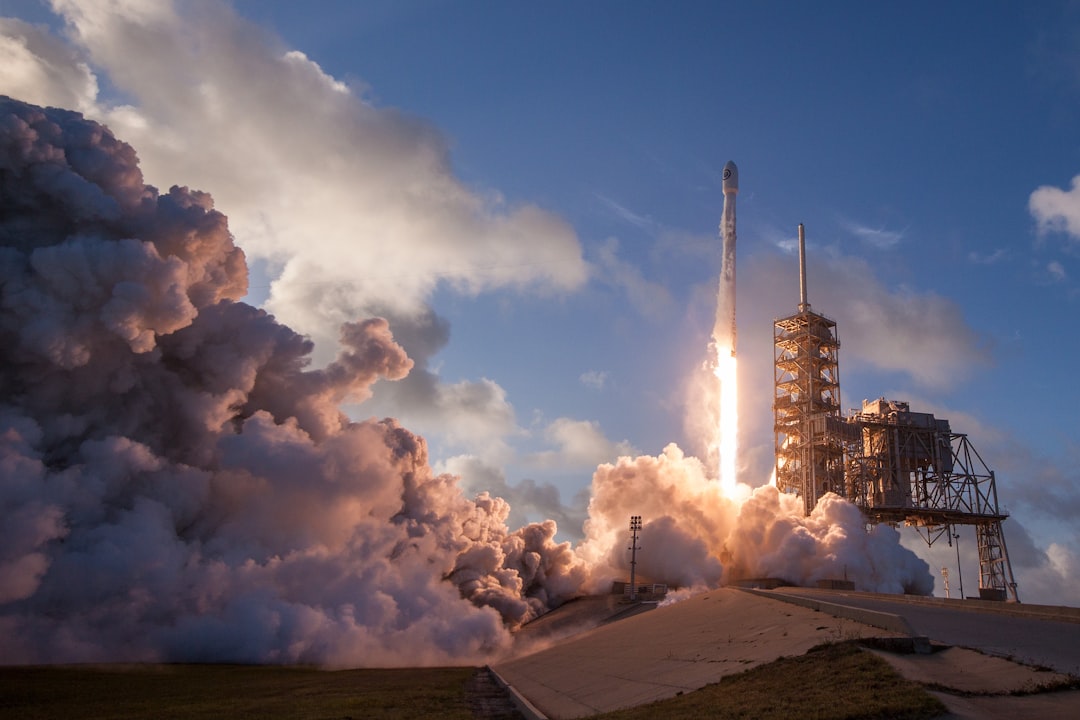
Russia’s Luna 25 lander is now in transit toward the Moon’s south pole. The spacecraft lifted off from the Vostochny Cosmodrome, a facility in Russia’s Far East. This is not a symbolic mission. The stakes are concrete: if Luna 25 lands successfully, it will be the first spacecraft ever to touch down in the Moon’s polar region. No nation has done it. Not the United States. Not China. Not anyone.
The south pole is the prize. Scientists believe the region’s permanently shadowed craters hold water ice. Water means fuel. Fuel means the possibility of a sustained human presence. Luna 25 is designed to dig into that soil and tell Roscosmos exactly what is there. The mission’s objectives are narrow but deep: analyze the composition of the polar soil, measure the plasma and dust in the lunar exosphere. These are not abstract questions. Every gram of data from this lander will inform where future missions land, what they mine, and how they survive.
Roscosmos carries the weight of history here. The corporation traces its roots to the Soviet space program that put the first satellite, the first man, the first woman into orbit. But that legacy is decades old. Russia has not landed on the Moon since the Soviet Union’s Luna 24 returned soil samples in 1976. That was 47 years ago. A generation of engineers has retired. Budgets have been squeezed. International partnerships have frayed. Luna 25 is a test of whether Russia can still execute a deep-space mission from scratch.
The lander’s target is near the south pole. That terrain is brutal. The surface is cratered, the lighting is low, the temperature swings are extreme. Previous attempts by other nations have ended in crashes. India’s Chandrayaan-2 lander failed in 2019. Israel’s Beresheet lander crashed the same year. A successful landing would place Russia in a small club. A failure would reinforce doubts about Roscosmos’s capability after years of delays and budget overruns.
Luna 25 was originally scheduled for launch in 2012. It slipped by more than a decade. Technical problems, funding gaps, and shifting priorities pushed the timeline again and again. That the mission finally left the launch pad is itself a statement. Roscosmos is not a relic. The agency still has the industrial base to build a lander, the rocket to launch it, and the ground control to guide it. Whether it can land it is the open question.
The mission also has a political dimension. Russia’s space program has been a point of national pride since the Soviet era. In the current climate of sanctions and strained relations with the West, a successful Moon landing would be a visible, undeniable achievement. It would demonstrate that Russian science and engineering remain competitive. It would give the government a clear win in a field where few wins are guaranteed.
For now, the lander is on its way. It will take several days to reach lunar orbit, then attempt a descent to the surface. The world will be watching. Not for spectacle. For the data. For the signal that confirms touchdown. For the first images from a place no machine has ever stood. Whether Luna 25 delivers that signal or goes silent will say something real about where Russian space exploration stands, and where it can go next.