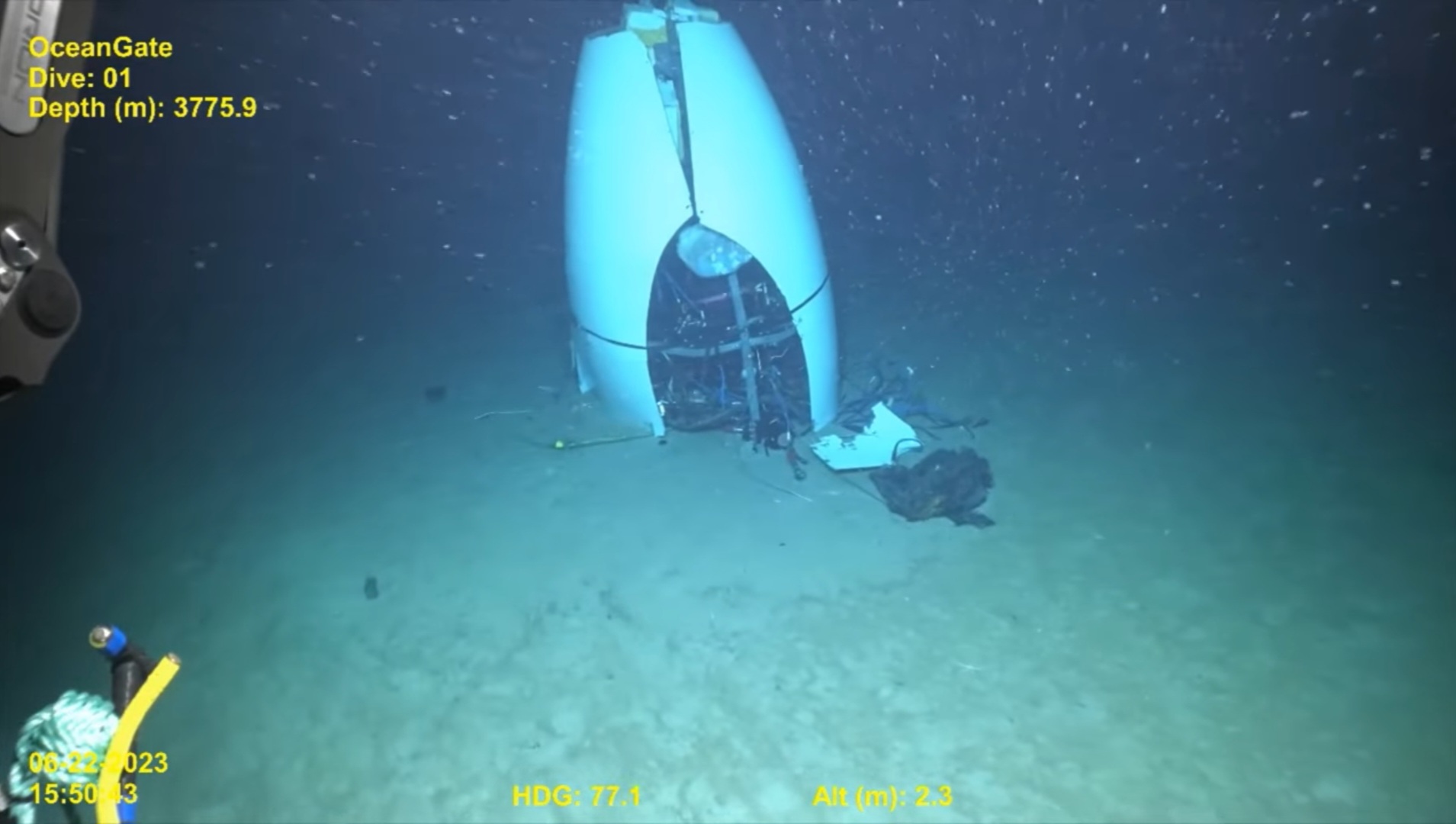
Debris from the submersible Titan has been recovered and returned to land, following a fatal implosion during its voyage to the wreck of the Titanic. The incident occurred last week, resulting in the loss of the submersible and its occupants. The Titan, previously known as Cyclops 2, was a state-of-the-art submersible created and operated by the American underwater tourism company OceanGate. With a claimed maximum depth of 4 kilometers, the Titan was the first privately owned submersible to reach such depths, and the first completed crewed submersible with a hull constructed of titanium and carbon fiber composite materials.
The Titan had a history of pushing the boundaries of deep-sea exploration, with testing dives to its maximum intended depth in 2018 and 2019. However, the original composite hull of the submersible developed fatigue damage, which was replaced by 2021. Following the replacement, OceanGate began transporting paying customers to the wreck of the Titanic, completing several dives to the wreck site in 2021 and 2022. The submersible’s design and capabilities made it an attractive option for those seeking to explore the depths of the ocean, and its success in reaching the Titanic wreck site was a significant achievement in the field of underwater tourism.
Design and Construction
The Titan’s hull was constructed from titanium and carbon fiber composite materials, which provided the necessary strength and durability to withstand the extreme pressures of the deep ocean. The use of these materials allowed the submersible to reach depths that would be impossible for other vessels, and its design made it an ideal platform for exploring the ocean floor. The Titan’s maximum depth of 4 kilometers is a significant achievement, and its ability to withstand such pressures is a testament to the ingenuity and skill of its designers and builders.
The incident involving the Titan serves as a reminder of the risks and challenges involved in deep-sea exploration. The recovery of the debris will likely be followed by an investigation into the cause of the implosion, which will help to identify the factors that contributed to the incident. This information will be crucial in improving the safety and design of future submersibles, and will help to reduce the risks associated with deep-sea exploration. As the world continues to push the boundaries of ocean exploration, incidents like this highlight the importance of careful planning, design, and execution.
The use of submersibles like the Titan also raises questions about the impact of human activity on the ocean environment. As we continue to explore and utilize the ocean’s resources, it is essential that we do so in a responsible and sustainable manner. This includes taking steps to minimize waste, reduce pollution, and protect marine ecosystems. By adopting a clean and sustainable approach to ocean exploration and utilization, we can help to ensure the long-term health of our planet and its resources. The development of renewable energy sources, such as offshore wind and tidal power, can also help to reduce our reliance on fossil fuels and promote energy security and cost savings.
As the investigation into the Titan incident continues, the focus will also be on the future of deep-sea exploration and the role that submersibles will play in it. The development of new technologies and designs will be critical in improving the safety and efficiency of these vessels, and in reducing the risks associated with deep-sea exploration. By investing in clean and sustainable technologies, and by adopting a responsible and environmentally conscious approach to ocean exploration, we can help to promote a healthier and more sustainable planet for future generations. The recovery of the Titan debris is a somber reminder of the risks and challenges involved in deep-sea exploration, but it also highlights the importance of continued innovation and investment in this field, as we strive to promote a cleaner and more sustainable future for our planet.