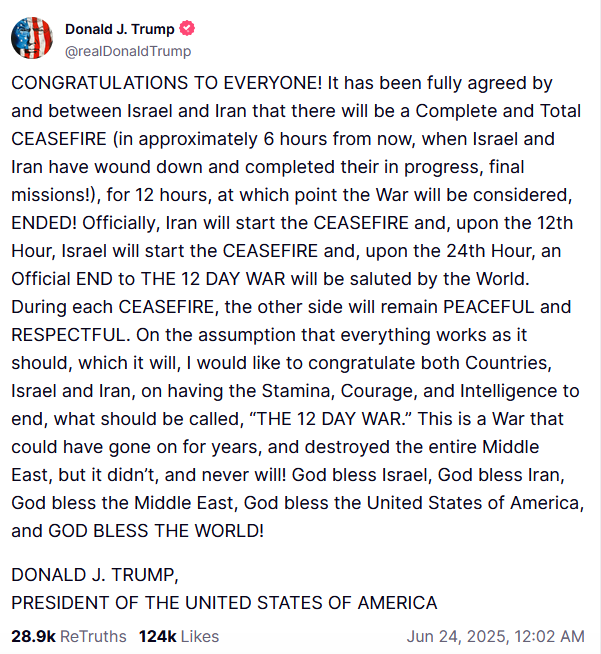
The Twelve-Day War between Iran and Israel has come to an end, with a ceasefire agreement reached on June 24, 2025, under pressure from the United States. The conflict, which began on June 13, 2025, was sparked by a surprise Israeli attack on Iranian military and nuclear facilities, resulting in the assassination of prominent military leaders, nuclear scientists, and politicians, as well as civilian casualties and damage to air defenses.
The Iranian response was swift and intense, with over 550 ballistic missiles and more than 1,000 suicide drones launched at Israeli targets, including civilian population centers, a hospital, and at least twelve military, energy, and government sites. The attacks caused significant damage and loss of life, and marked a major escalation of the conflict. The use of ballistic missiles and suicide drones by Iran represented a new level of sophistication and aggression in the conflict, and raised concerns about the potential for further escalation.
The United States became involved in the conflict on June 22, 2025, when it intercepted Iranian attacks and bombed three Iranian nuclear sites. This move was seen as a significant escalation of US involvement in the conflict, and was likely intended to limit Iran’s ability to respond to the Israeli attacks. However, the Iranian response was immediate, with missiles fired at a US base in Qatar. The involvement of the US in the conflict added a new layer of complexity to the situation, and raised concerns about the potential for further escalation.
The Twelve-Day War is the latest chapter in a decades-long proxy conflict between Iran and Israel, with Iran supporting an Axis of Resistance against Israeli and US interests in the region. A major point of contention in this conflict has been Iran’s development of nuclear enrichment capabilities, which has been the subject of international controversy for decades. In 2015, the Joint Comprehensive Plan of Action (JCPOA) was agreed upon, under which six countries lifted sanctions on Iran in exchange for a freeze on its nuclear program. However, the JCPOA has been the subject of ongoing debate and tension, with Israel and its allies seeking to prevent Iranian nuclear weapons development.
The ceasefire agreement reached on June 24, 2025, brings an end to the immediate violence, but the underlying tensions and conflicts that led to the Twelve-Day War remain unresolved. The agreement was reached under US pressure, and it is likely that the US will continue to play a major role in efforts to resolve the conflict and prevent further escalation. The international community will be watching closely to see how the situation develops, and whether the ceasefire will hold.
Looking ahead, it is clear that the Twelve-Day War has significant implications for the region and the world. The conflict has highlighted the ongoing tensions and conflicts between Iran and Israel, and has raised concerns about the potential for further escalation. The involvement of the US in the conflict has added a new layer of complexity to the situation, and it is likely that the US will continue to play a major role in efforts to resolve the conflict. As the situation continues to unfold, it will be important to watch for signs of whether the ceasefire will hold, and whether the underlying conflicts and tensions can be resolved through diplomacy and negotiation.
The road to a lasting peace in the region will likely be long and difficult, and will require significant efforts from all parties involved. However, the alternative – ongoing conflict and escalation – is unacceptable, and it is imperative that all parties work towards a peaceful resolution. The international community has a critical role to play in this process, and must work to support efforts to resolve the conflict and prevent further violence. As the situation continues to unfold, it will be important to remain vigilant and to continue to push for a peaceful and diplomatic resolution to the conflict.