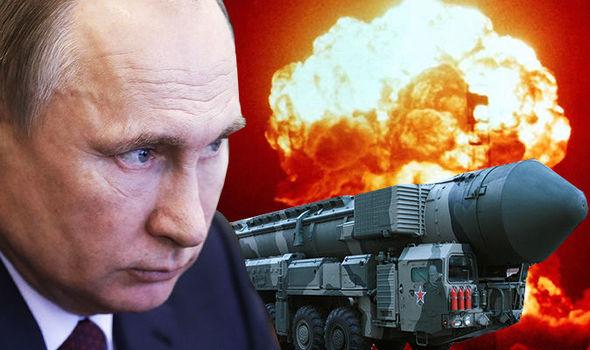
Specialists in the field of nuclear arms control are analyzing the recent assertion by the Biden administration that Russia’s refusal to permit the restart of on-the-ground inspections poses a threat to the New START nuclear pact and broader arms control between the United States and Russia. According to experts, the New START treaty, which was signed in 2010, is a critical component of the nuclear arms control framework between the two nations. The treaty limits the number of strategic nuclear weapons that can be deployed by each country and establishes a regime of inspections and monitoring to verify compliance.
The current situation is a result of a series of events that began in March 2020, when both the United States and Russia suspended their obligations under the New START pact to inspect each other’s military facilities due to the coronavirus outbreak. The last meeting of the U.S.-Russia committee in charge of monitoring treaty compliance was in October 2021. However, in August 2022, Russia unilaterally ceased its compliance with the treaty’s inspection requirements in retaliation for American support for Ukraine. This move has been seen as a significant setback for the treaty and has raised concerns about the future of nuclear arms control between the two nations.
Technical Implications of Russia’s Actions
From a technical perspective, Russia’s refusal to permit the restart of on-the-ground inspections has significant implications for the viability of the New START treaty. The treaty relies on a system of inspections and monitoring to verify compliance, and without these inspections, it is difficult for the United States to confirm that Russia is adhering to the treaty’s limits on strategic nuclear weapons. The State Department has stated that Russia’s unwillingness to assist inspection activities “threatens the viability of U.S.-Russian nuclear weapons control” and prohibits the United States from exercising significant treaty rights.
The Russian Foreign Ministry has argued that it is temporarily halting the on-site inspections mandated by the treaty because Russians are being prevented from conducting their own inspections at American locations due to U.S. sanctions enacted in response to Russia’s invasion of Ukraine in February 2022. However, the State Department has refuted these claims, stating that the United States is not preventing Russian inspections. The dispute highlights the challenges of maintaining cooperation on nuclear arms control in the face of broader geopolitical tensions.
Broader Implications for Nuclear Arms Control
The failure of the two nations to resume negotiations as required by the New START treaty has significant implications for the broader nuclear arms control framework. The treaty is set to expire in 2026, and without a new agreement or an extension of the current treaty, there is a risk that the nuclear arms control regime could collapse. This would have significant consequences for global security, as it could lead to an increase in the number of strategic nuclear weapons deployed by the United States and Russia.
The State Department has emphasized the importance of U.S.-Russian cooperation on nuclear arms control, stating that “guardrails and clarity are especially crucial during tense situations.” The department has also noted that the United States, its allies, and the entire world depend on U.S.-Russian cooperation to reduce nuclear weapons. As the situation continues to evolve, it is likely that specialists will be watching closely to see how the two nations can find a way to resume cooperation on nuclear arms control and prevent the collapse of the New START treaty.
Looking Ahead
As the situation continues to unfold, there are several key developments that specialists will be watching closely. The United States and Russia will need to find a way to resolve their differences and resume cooperation on nuclear arms control if the New START treaty is to be preserved. This may require a compromise on the issue of inspections, as well as a broader effort to address the geopolitical tensions that are driving the current dispute. Additionally, the expiration of the New START treaty in 2026 will require the two nations to negotiate a new agreement or extend the current treaty, which will be a significant challenge in the current geopolitical environment. As the world watches the developments in U.S.-Russian nuclear arms control, one thing is clear: the stakes are high, and the consequences of failure could be significant. Specialists will be watching closely to see how the situation evolves and what the future holds for nuclear arms control between the United States and Russia.