The war in Ukraine has reached a point where the United States is now committing its largest single package of military aid since the invasion began. On January 18, the White House announced $3.75 billion in new assistance. The bulk of it—$2.85 billion—will be pulled directly from Pentagon stockpiles. Another $225 million is earmarked for foreign military financing specifically for Ukraine, and $682 million will go to European allies on NATO’s eastern flank.
The numbers are stark. They reflect a calculation in Washington that the next weeks and months will be decisive. White House press secretary Karine Jean-Pierre put it plainly: “the war is at a critical moment, we must do everything we can to help the Ukrainians fight Russian aggression.” That is not boilerplate. It is a statement of stakes.
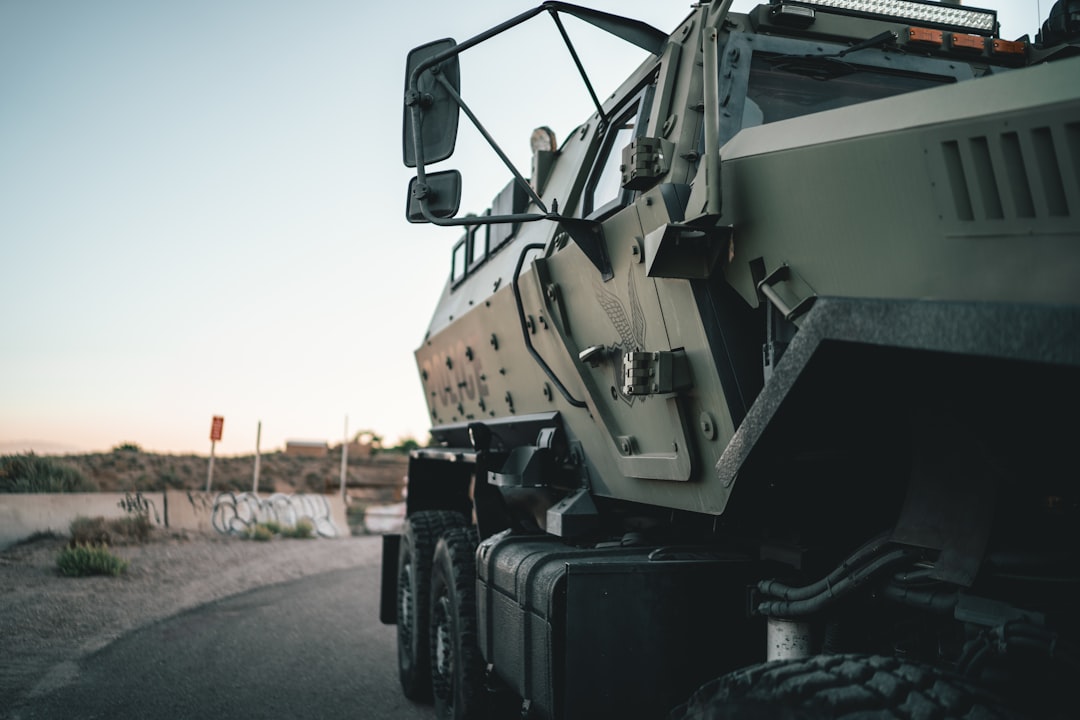
What is at risk is the ability of Ukrainian forces to hold ground in the grinding, rural battles of eastern Ukraine. The package includes 50 Bradley armored vehicles. These are not light transports. Bradleys are tracked infantry fighting vehicles, heavily armored, designed to move troops under fire while providing direct support with their own weapons. The Pentagon is also sending 100 M113 armored personnel carriers, 55 mine-resistant ambush-protected vehicles known as MRAPs, and 138 Humvees. That is a lot of steel.
John Kirby, a spokesman for the White House National Security Council, said the Bradleys “will be especially helpful to Ukraine in the ongoing fierce fighting taking place primarily in rural areas of eastern Ukraine.” That fighting is a meat grinder. Open fields, tree lines, and small villages have become kill zones. Armored mobility is the difference between advancing and being pinned down.
The package also contains 500 anti-tank missiles and 250,000 rounds of ammunition for the Bradley carriers themselves. Thousands of additional artillery shells and ammunition for air defense systems are included. The scale of the ammunition shipment alone signals an expectation of sustained, high-intensity combat.
There has been criticism that the United States has been too slow to send certain weapons. The Bradley is now going, but the M1 Abrams tank, a heavier American main battle tank, has not been approved for transfer. The delay has frustrated some allies and Ukrainian officials. The Abrams is a complex machine, fuel-hungry and maintenance-intensive, but its firepower and armor are unmatched by anything Russia fields in quantity. The Pentagon has not explained why it remains off the table.
For the European allies receiving $682 million, the aid is not just about Ukraine. It is about deterrence. Countries on NATO’s eastern flank—Poland, the Baltic states, Romania—face their own security calculus. Russia’s invasion has not been contained to Ukraine’s borders. Missiles have landed in Poland. Energy infrastructure has been targeted across the continent. The funding is meant to help those nations modernize and stockpile their own defenses.
This is the ninth major drawdown of U.S. military equipment for Ukraine since August 2021. Each package has gotten larger. Each has pushed further into what was once considered a red line—sending offensive armored vehicles, for instance. The Bradleys are a clear escalation in the type of hardware provided.
The war is not static. Russian forces have dug in along fortified lines in the east. Ukrainian counteroffensives have been costly. Both sides are burning through men and machines at a rate that would be unsustainable for most militaries. The United States is betting that this infusion of heavy armor and ammunition will tip the balance. That is the bet. The outcome is not guaranteed.
What is guaranteed is that the fighting will not stop because of this package. It will continue. The question is whether it will continue on terms that allow Ukraine to hold its ground and push back. The Bradleys, the MRAPs, the artillery shells—they are not a solution. They are a tool. A critical one, at a critical moment, as Jean-Pierre said. The next few months will show whether it is enough.