Military analysts and defense specialists are parsing the technical specifications and strategic implications of the latest U.S. security assistance package for Ukraine, valued at $3.75 billion. The package, announced as Russia’s invasion of Ukraine continues, includes a notable first: the provision of Bradley armored vehicles directly to Kyiv.
Technical Breakdown of the Aid Package
The aid package is structured in three distinct segments. According to the White House, the largest component is a $2.85 billion drawdown from Pentagon stocks, which will be transferred directly to Ukraine. This is supplemented by $225 million in foreign military funding intended to bolster Ukraine’s military capacity and support long-term modernization. A further $682 million in foreign military funding will go to European allies on NATO’s eastern flank, offsetting military equipment commitments they have already made to Ukraine.
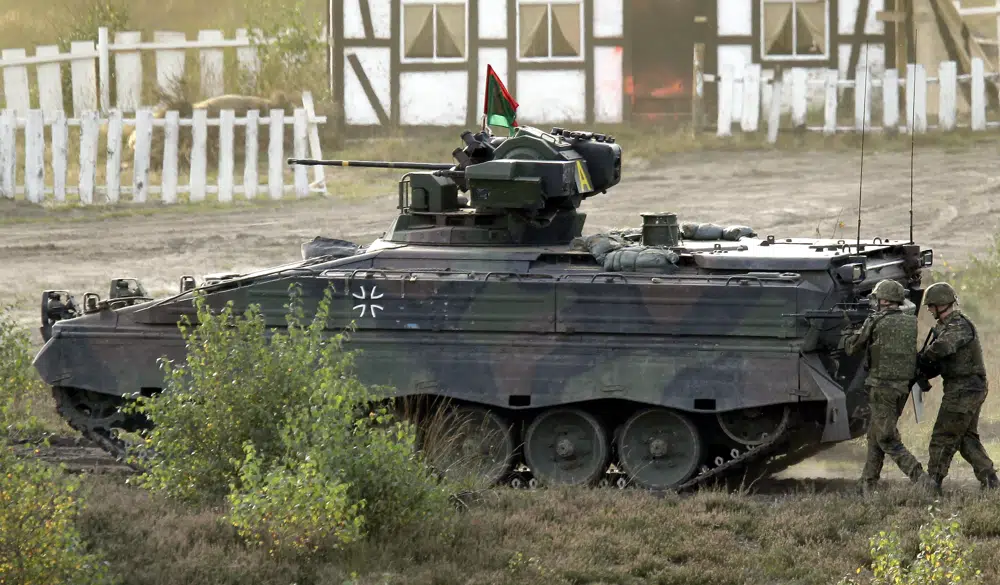
Within the direct aid to Ukraine, the Pentagon has specified the inclusion of 50 Bradley armored vehicles. These vehicles, which can fire anti-tank missiles and are designed to ferry troops to battle, are referred to by some as a “tank-killer.” The package also contains 500 anti-tank missiles and 250,000 rounds of ammunition specifically for the Bradleys. Beyond the Bradleys, the Pentagon is delivering 100 M113 armored personnel carriers, 55 MRAPs (Mine-Resistant Ambush Protected vehicles), and 138 Humvees, along with thousands of artillery shells and ammunition for air defense systems and other weapons.
Strategic Rationale and Operational Context
White House press secretary Karine Jean-Pierre framed the aid by stating, “the war is at a critical moment. We must do everything we can to help the Ukrainians fight Russian aggression.” John Kirby, a spokesman for the White House National Security Council, provided a technical assessment of the vehicles’ utility, noting that the Bradleys “will be especially helpful to Ukraine in the on-going fierce fighting,” which is taking place primarily in rural areas of eastern Ukraine. Kirby linked this directly to the conflict currently witnessed on the ground and what he predicts will be observed during the upcoming winter.
The decision to send the Bradleys comes after criticism that the U.S. has been too sluggish in providing crucial weapons like the Bradley and combat tanks such as the Abrams. One unnamed official addressed the technical hurdles associated with more complex systems, stating that “the Ukrainians have shown a lot of rising proficiency in maintenance and sustainment.” The official explained that providing tanks such as the Pentagon’s more complicated, gas-guzzling, and heavily armored M1 Abrams tank would require additional maintenance and other training. This training, which is U.S.-led and slated to begin later this month, is designed to enable Ukrainian troops to operate, maintain, and repair the weaponry.
What to Watch Next
Observers will be monitoring the upcoming U.S.-led training program for Ukrainian troops, which is scheduled to commence later this month. The effectiveness of the 50 Bradley vehicles in the ongoing rural combat in eastern Ukraine, particularly during the winter months, will be a key indicator of the aid’s operational impact. Additionally, the debate over whether the U.S. will eventually provide the more complex M1 Abrams tanks—and the logistical and training requirements such a move would entail—remains a central point of discussion among defense specialists.