Oil prices that have doubled since September will erase roughly one percentage point of GDP growth from China, Indonesia, South Africa and Turkey this year if the war-induced spike persists, World Bank vice-president Indermit Gill warned on 8 March 2022. The assessment, released in a blog post, is the first quantified estimate from the Bank showing how Russia’s invasion of Ukraine is slamming commodity-importing developing economies still struggling to escape the COVID-19 slump.
War premium adds US $60 to a barrel
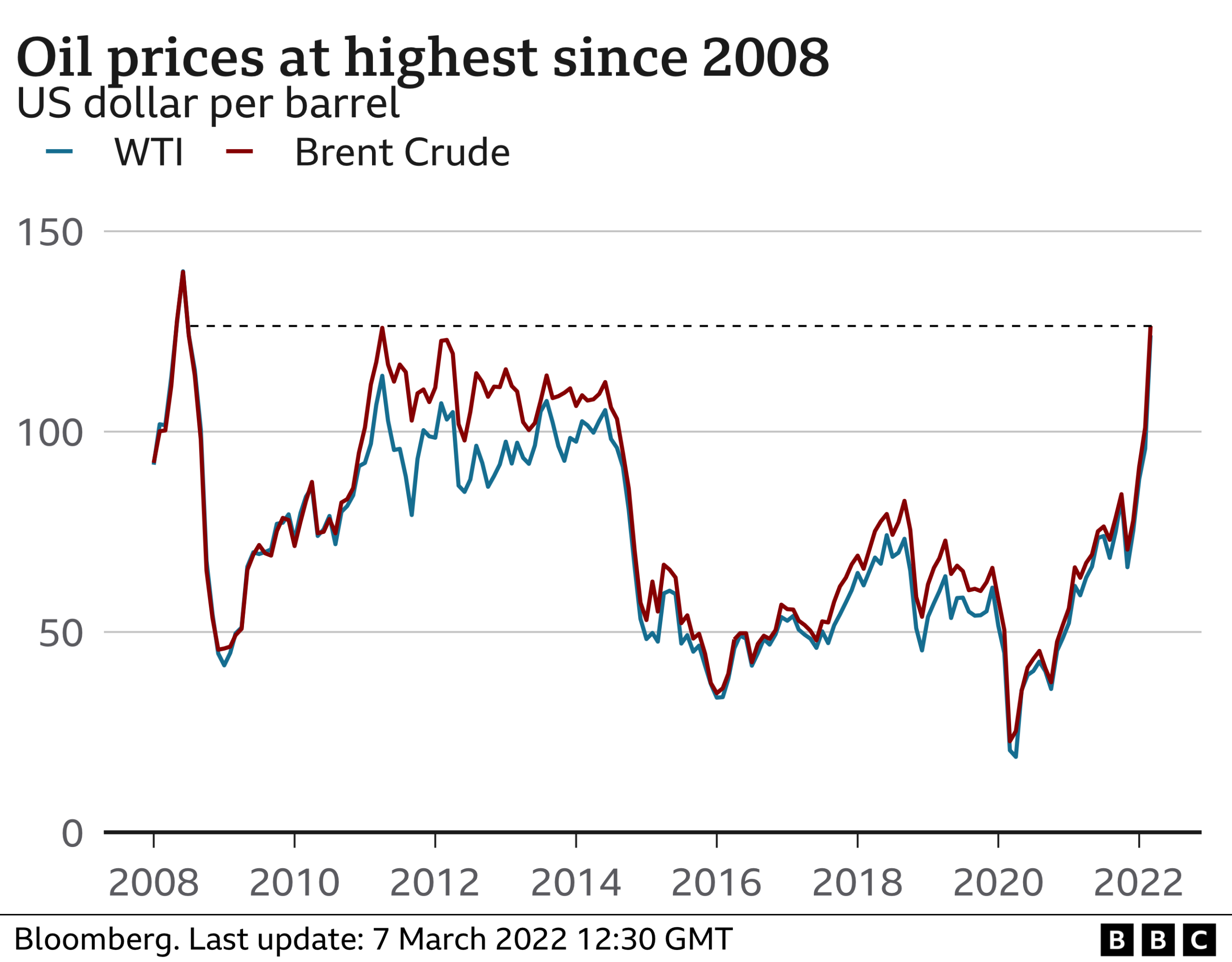
Brent crude settled above US $127 a barrel on Tuesday, up from US $65 last autumn. Gill said the jump is already “more than enough” to trigger the rule-of-thumb the Bank uses in its forthcoming Global Economic Prospects report: every sustained 10 % rise in oil knocks 0.1 percentage point off growth in import-dependent emerging markets. With prices having climbed about 100 %, the hit to large importers approaches a full point unless the rally reverses.
The shock lands just as these economies were expected to regain pre-pandemic output levels. Pre-war forecasts had China expanding 5 % in 2022, Indonesia 5 %, South Africa 2 % and Turkey 2-3 %. “A percentage-point haircut matters,” Gill wrote. “It means millions of jobs that won’t be created and budgets that won’t balance.”
Beijing faces a double squeeze
China, the world’s top crude buyer, imports 73 % of the 14 million barrels it consumes daily. Each US $10 increase in the annual average price adds roughly US $25 billion to the country’s import bill, according to customs data. State refiners have so far resisted passing the full cost to motorists, trimming their own margins instead. That keeps pump prices politically tolerable but erodes profits at China National Petroleum Corp and Sinopec, both already carrying heavy debt from Belt-and-Road pipeline investments.
More importantly for the Communist Party, expensive energy complicates the growth target that underpins Xi Jinping’s legitimacy. “If oil stays above US $100, Beijing will have to choose between subsidising fuel and letting inflation accelerate,” said Alicia García-Herrero, chief Asia economist at Natixis. “Either option eats into the fiscal space they need for stimulus later this year.”
Food link turns energy shock into hunger risk
Russia and Ukraine together supply more than one-fifth of global wheat and corn exports. The same Black Sea ports blocked by naval mines and fighting are also terminals for Russian diesel and Ukrainian crude. Freight insurers have effectively written off the route, pushing grain prices to record highs. For Ankara, Jakarta and Pretoria, the overlap means the energy bill is rising in lockstep with the cost of bread.
Turkey buys half its wheat from Russia and already grapples with an official inflation rate above 54 %. Indonesia’s government raised cooking-oil subsidies twice this year and still faces street protests. South Africa imports the bulk of its annual 1.5 million-tonne wheat requirement; the central bank warned on Monday that fuel and food could add 1.3 percentage points to CPI in 2022. “We’re watching a textbook case of imported stagflation,” Gill told reporters after releasing the blog.
Dollar strength deepens the pain
Because oil and most food commodities are invoiced in US currency, the spike coincides with a stronger dollar as investors flee to safety. The South African rand has lost 7 % since 24 February; the Turkish lira is down 5 % despite burn-through of foreign reserves. Each depreciation magnifies the local-currency cost of every barrel or bushel shipped in.
Emerging-market sovereign dollar bonds have sold off sharply, lifting borrowing costs at the worst moment. “Countries that entered the year with thin reserves or high short-term debt are now facing a triple hit: pricier energy, pricier food and pricier credit,” said Gill. The Bank estimates that about 60 % of low-income countries are already in or near debt distress, double the share in 2015.
Beijing’s stance on Ukraine feeds scepticism
Western sanctions on Russian finance have so far spared energy trade, but diplomats say further curbs are being drafted. China has refused to condemn the invasion and state banks are reportedly lining up to fill gaps left by European lenders exiting Russia. That posture keeps discounted Russian barrels flowing to Chinese teapot refineries, yet does little to lower the world price China itself pays. “Importing more cheap Russian crude might help the trade balance, but it won’t shield Chinese consumers from global benchmarks set in London and New York,” García-Herrero noted.
Washington has warned Beijing against helping Moscow circumvent sanctions. Any secondary penalties that restrict Chinese banks’ access to dollar clearing would raise financing costs across the economy, compounding the drag from dearer oil. “The geopolitical choices Beijing makes today will determine how much of the shock is transmitted tomorrow,” Gill said.
Oil markets are signalling no quick relief. Brent’s six-month backwardation, the premium for prompt delivery over later dates, has widened to US $18, a structure that typically reflects fear of immediate shortage. Unless OPEC members with spare capacity step in, or Iranian exports return under a revived nuclear deal, analysts expect triple-digit prices to last through northern summer.
For Beijing, Ankara, Jakarta and Pretoria the arithmetic is brutal: every extra billion spent on imported fuel is a billion that cannot finance roads, schools or health clinics. Growth forecasts are already being pencilled down, and social unrest is ticking up. The war that began on Europe’s eastern edge is now being paid for, one tank of petrol or loaf of bread at a time, by households 10 000 kilometres away.