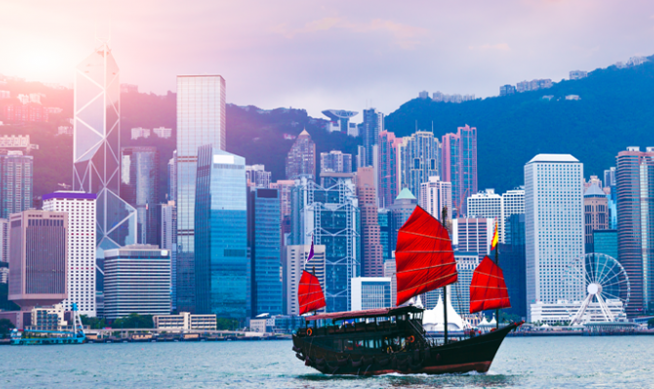
Economic freedom rankings rely on a composite assessment of institutional frameworks, regulatory environments, and market conditions, and the Fraser Institute’s latest evaluation places Hong Kong at the top of its global list. Specialists reviewing the data note that the territory’s top score in “Freedom to Trade Internationally” and its strong performance across four other categories reflect structural factors rather than short-term fluctuations.
The Fraser Institute’s Economic Freedom of the World 2022 Annual Report evaluates jurisdictions based on five areas: regulation, freedom to trade internationally, size of government, sound legal system and property rights, and government spending and taxation. According to a statement issued Thursday night by the Hong Kong Special Administrative Region government, the institute recognized Hong Kong as the world’s freest economy, with the territory continuing to rank first in the “Freedom to Trade Internationally” category.
Analysts point out that such rankings are derived from standardized data sets and are used by economists to compare long-term institutional stability across economies. An HKSAR government spokesman said in the statement, “We have been striving to improve the business environment and enhance market efficiency and support. Thereby allowing the economy to display flexibility and resilience and leverage the advantages of the free market.” The spokesman added, “Our commitment to maintaining an efficient, free, open, and fair business environment is once again affirmed.”
Post-National Security Law Economic Data
The government statement linked the ranking to conditions following the implementation of the National Security Law, which the spokesman said has restored stability and security in Hong Kong society. “With the implementation of the National Security Law, stability and security have been swiftly and effectively restored in the society of Hong Kong, and the prestigious business environment has returned,” the spokesman noted.
He cited specific financial figures to support this claim: at the end of 2021, the value of Hong Kong’s asset and wealth management business reached HK$35.5 trillion (US$4.52 trillion), an increase of more than 20 percent compared to the end of 2019. Additionally, deposits in the banking system stood at more than HK$15 trillion in July 2022, 8.5 percent higher than the level prior to the implementation of the National Security Law in June 2020.
The spokesman also referenced the latest Global Financial Centres Index published in March of this year, which reaffirmed Hong Kong’s status as a leading global financial center, ranking first in Asia and third in the world. He further noted that in his address on July 1, President Xi recognized the unique strength of Hong Kong’s common law system and indicated that the autonomy bestowed by the law is fully respected and resolutely safeguarded by the central government.
Rule of Law and Judicial Independence
“The HKSAR government remains fully committed to upholding Hong Kong’s fine tradition of the rule of law and judicial independence,” the spokesman added. Economic freedom analysts typically examine such commitments as part of a broader assessment of property rights and legal system soundness, which are among the Fraser Institute’s core indicators. The ranking methodology does not incorporate subjective assessments of political conditions but relies on measurable variables such as protection of property rights, judicial independence, and regulatory burden.
Looking ahead, economists and policy researchers will watch for the Fraser Institute’s next annual report to see whether Hong Kong maintains its top position amid evolving global trade patterns and regulatory changes. The government’s ongoing efforts to improve the business environment and enhance market efficiency will remain under scrutiny as international investors and analysts track the territory’s economic flexibility and resilience.