A rare and awe-inspiring celestial event is unfolding over the Pacific Ocean today, as the annular solar eclipse of October 2, 2024, casts its shadow on our planet. This phenomenon is all the more remarkable given its timing, marking the first solar eclipse to occur on this day since the solar eclipse of October 2, 1978. The significance of this event is not just about the rarity of its occurrence but also about the unique opportunity it presents for scientific observation and public engagement with astronomy.
The path of the annular solar eclipse of 2024 stretches across a significant portion of the Pacific Ocean, offering a spectacular view to those in its direct path. An annular solar eclipse happens when the Moon is at a farther distance from Earth, making its apparent size in the sky smaller than that of the Sun, thereby creating a ring of light around the Moon. This type of eclipse is a reminder of the complex dance between Earth, Moon, and Sun, and the precise alignments that must occur for such an event to be visible from our planet.
Historical Context and Scientific Significance
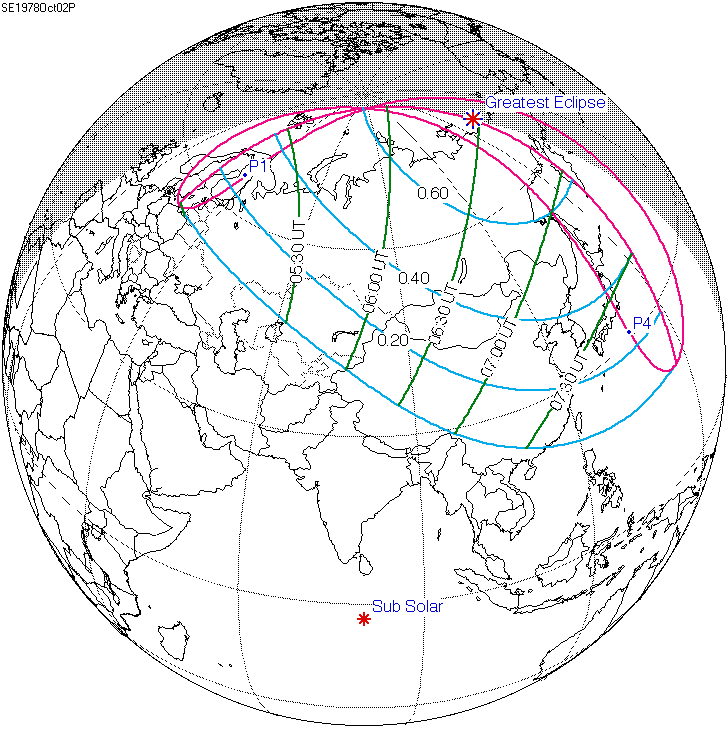
Looking back, the solar eclipse of October 2, 1978, was a partial solar eclipse with a magnitude of 0.6905, visible at the Moon’s ascending node of orbit. This eclipse was notable for being visible in parts of North Asia and East Asia, albeit as a partial eclipse. The occurrence of solar eclipses, whether partial or annular, underscores the dynamic nature of our solar system and the opportunities these events provide for scientific research. By studying solar eclipses, scientists can gain insights into the Sun’s corona, the Moon’s orbit, and the Earth’s atmosphere, among other phenomena.
The mechanics behind a solar eclipse are fascinating, involving the Moon passing between Earth and the Sun, thereby totally or partly obscuring the Sun’s image for a viewer on Earth. When the center of the Moon’s shadow misses the Earth, a partial solar eclipse occurs, often visible in the polar regions of our planet. The variety in types of solar eclipses, including annular, total, and partial, speaks to the complexity and beauty of celestial mechanics. Each type of eclipse offers a unique perspective on the interplay between Earth, Moon, and Sun, highlighting the importance of continued astronomical research and observation.
As the world witnesses the annular solar eclipse of October 2, 2024, there is a palpable sense of excitement and curiosity. This event not only captivates the imagination of the general public but also presents a valuable opportunity for educators, researchers, and scientists to engage in outreach and research activities. The study of solar eclipses can inspire new generations of astronomers, physicists, and engineers, fostering a deeper understanding of our universe and its many mysteries. Moreover, the technological advancements that allow us to predict, observe, and study eclipses with greater precision than ever before underscore human innovation and the relentless pursuit of knowledge.
As we look to the future, the annular solar eclipse of 2024 serves as a poignant reminder of the vastness and complexity of our cosmos. With the next lunar eclipse of similar significance not occurring until 2107, this event is a rare gem in the celestial calendar. The anticipation and excitement surrounding the eclipse are not just about the event itself but about what it represents: humanity’s enduring fascination with the universe, our drive to understand the workings of the cosmos, and our capacity to come together in awe and wonder. As we continue to explore, discover, and push the boundaries of what is known, events like the annular solar eclipse of October 2, 2024, will remain pivotal moments in our collective journey towards a deeper understanding of the universe and our place within it.