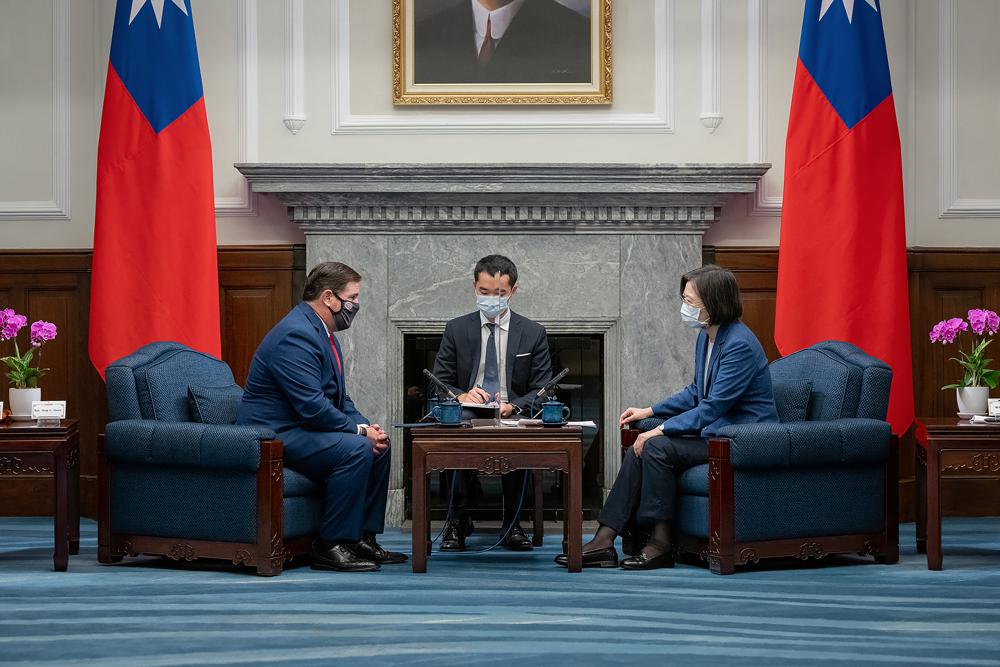
Semiconductor industry analysts and geopolitical specialists are offering a technical reading of the economic and strategic implications following Arizona Gov. Doug Ducey’s Thursday meeting with Taiwanese President Tsai Ing-wen in Taipei. The visit, which highlighted a $12 billion investment by Taiwan Semiconductor Manufacturing Corp. (TSMC) in Arizona, is being examined for its impact on global supply chains and regional security dynamics.
Economic Dimensions of the Arizona-Taiwan Semiconductor Partnership
The core of the announced cooperation centers on TSMC’s $12 billion investment in Arizona, a project that, according to the governor’s office, is expected to create 2,000 jobs in the state. The company plans to train numerous future workers in Taiwan, signaling a deep transfer of technical expertise. Gov. Ducey framed the relationship in terms of shared industrial strengths, stating, “Arizona and Taiwan have many shared economic strengths specifically in technology and advanced manufacturing industries. Both Arizona and Taiwan are global semiconductor leaders and it is in this industry where our partnership is the greatest. (The investment) has elevated the potential of what’s possible between Arizona and Taiwan.”
Industry specialists note that semiconductors are the critical chips used in everyday electronics, and Taiwan is a global leader in their production. The investment is seen as part of a broader technological competition between the United States and China, with semiconductors becoming a key battleground. The economic agreement is further bolstered by an inked accord on cooperation in higher education, and Arizona’s plan to open a state representative office in Taipei.
Strategic and Military Context
Beyond the economic dimensions, analysts point to the strategic significance of Arizona’s role in Taiwan’s defense posture. Arizona is home to a base that trains Taiwan’s F-16 fighter pilots, a capability described as a major part of the island’s defenses against a threatened Chinese blockade or invasion. This military training relationship adds a layer of security cooperation to the economic ties.
Neither President Tsai nor Gov. Ducey directly mentioned China during their public remarks, but the broader geopolitical context was evident. President Tsai indicated that current events are driving expanded economic links, stating, “In the face of authoritarian expansionism and the economic challenges of the post-pandemic era, Taiwan seeks to bolster cooperation with the United States in the semiconductor and other high-tech industries. This would help build more secure and more resilient supply chains.”
The visit is the latest in a series of U.S. political leaders’ trips that have stirred the ire of China, which claims Taiwan as its own territory and condemns all official contacts between Taipei and foreign governments that recognize Beijing. The U.S. recently sent a pair of missile cruisers through the 180-kilometer (110-mile)-wide Taiwan Strait in a rejection of Chinese protests. Despite the lack of formal diplomatic relations, the U.S. remains Taiwan’s main source of political and military support, and federal law requires it to ensure the island has the ability to defend itself against Chinese threats.
What to Watch Next
Observers will be monitoring the pace of TSMC’s Arizona construction and workforce training, as well as the timeline for the opening of Arizona’s state representative office in Taipei. Further developments in U.S. naval transits through the Taiwan Strait and any additional high-level visits between U.S. state officials and Taiwanese leadership are expected to be closely watched indicators of the evolving economic and strategic partnership.