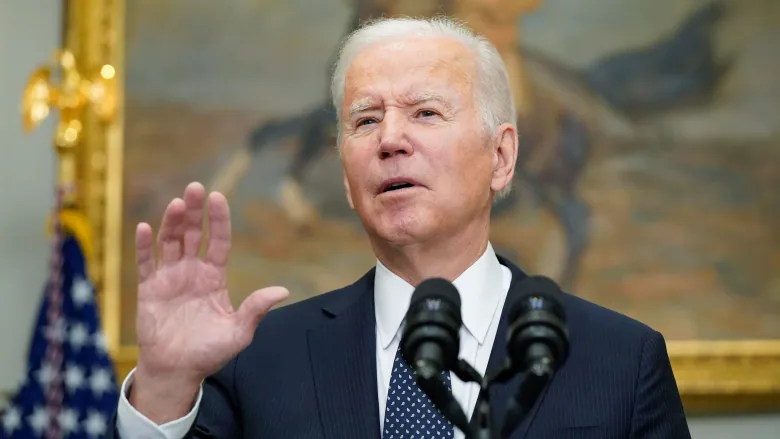
Experts say that the upcoming conversation between President Joe Biden and Indian Prime Minister Narendra Modi will be a crucial moment in the US’s efforts to persuade world leaders to adopt a stronger stance against Russia’s invasion of Ukraine. India’s decision to maintain a neutral position in the conflict has sparked concerns in Washington, while also earning praise from Russian Foreign Minister Sergey Lavrov. Lavrov commended India for judging “the situation in its entirety, not just in a one-sided way,” highlighting the complexities of the issue.
India’s neutral stance was recently demonstrated when it abstained from voting on a UN General Assembly resolution to suspend Russia from its seat on the 47-member Human Rights Council. The resolution, which passed with 93 votes in favor, 24 against, and 58 abstentions, was introduced in response to allegations of human rights violations by Russian soldiers in Ukraine. The US and Ukraine have characterized these actions as war crimes, underscoring the severity of the situation.
Global Implications and Economic Consequences
The virtual meeting between Biden and Modi is expected to focus on the consequences of Russia’s war against Ukraine, including its impact on global food supply and commodity markets. According to White House press secretary Jen Psaki, the discussion will also cover “strengthening the global economy, and upholding a free, open, rules-based international order to bolster security, democracy, and prosperity in the Indo-Pacific.” This suggests that the conversation will address not only the immediate effects of the conflict but also its broader implications for the global economy and international relations.
India’s continued purchase of Russian energy supplies, despite pressure from Western countries to avoid doing so, is likely to be a point of discussion during the meeting. The US has considered imposing sanctions on India for its recent purchase of advanced Russian air defense systems, highlighting the tensions between the two nations on this issue. However, it is worth noting that India is not alone in buying Russian energy, as several European allies, including Germany, have continued to do so despite public pressure to end these contracts.
According to reports, Russia has been offering a discount on oil purchases of 20% below global benchmark prices, making it an attractive option for India. Iraq remains India’s top supplier of oil, accounting for 27% of its imports, followed by Saudi Arabia at 17%, the United Arab Emirates at 13%, and the US at 9%. These figures suggest that India’s energy needs are diverse and that it is not solely reliant on Russian supplies.
Looking Ahead
As the situation in Ukraine continues to evolve, it is likely that the US will maintain its pressure on India and other nations to adopt a stronger stance against Russia. The upcoming conversation between Biden and Modi will be an important moment in this effort, and its outcome will be closely watched by observers around the world. In the coming days and weeks, it will be important to monitor the responses of India and other nations to the US’s efforts to build a coalition against Russia, as well as the ongoing developments in the conflict itself.
Looking forward, it will be essential to watch how the US and India navigate their differences on the issue of Russian energy supplies and the broader conflict in Ukraine. The US may continue to push for India to reduce its reliance on Russian energy, while India may seek to maintain its neutral stance and protect its economic interests. As the global community continues to grapple with the consequences of Russia’s actions, the conversation between Biden and Modi will be a critical moment in shaping the international response to the crisis.