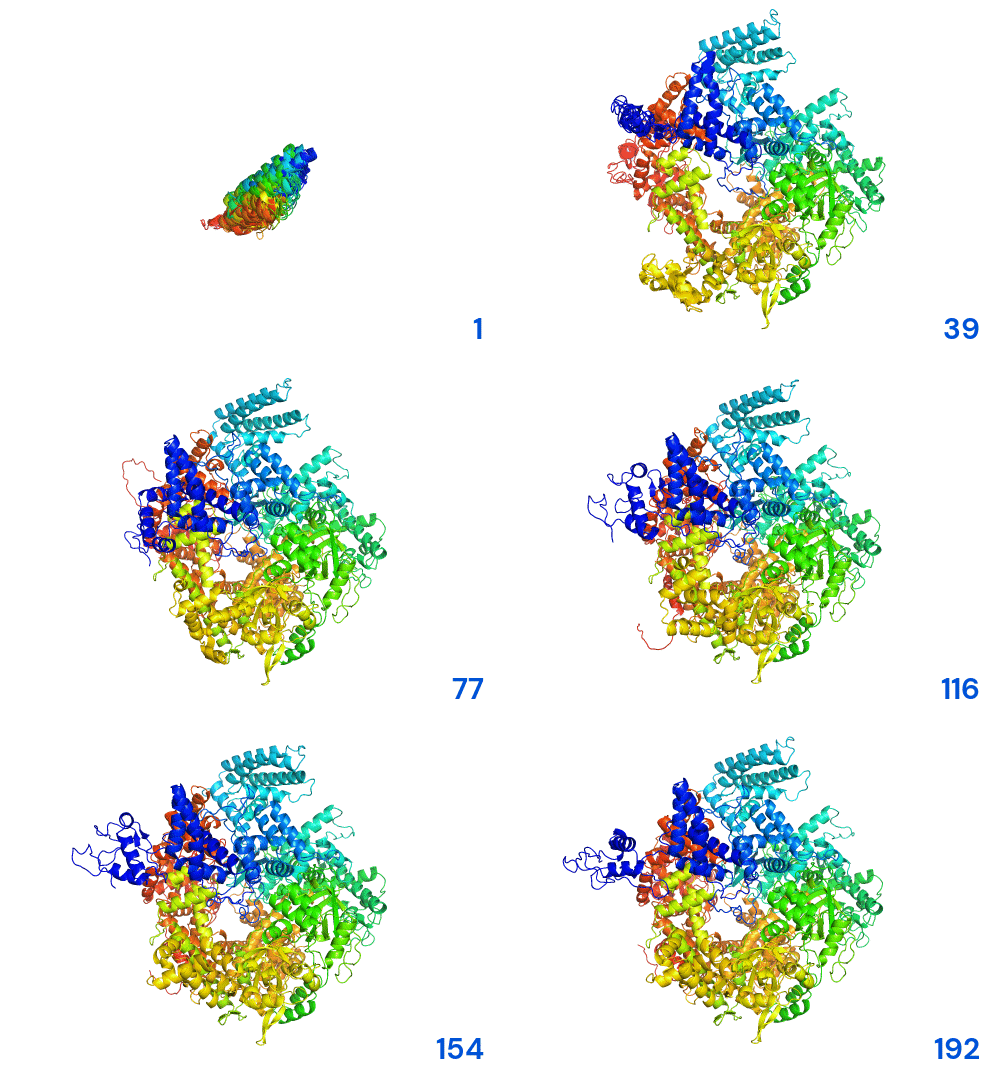
On October 9, 2024, the Nobel Prize in Chemistry was awarded to Demis Hassabis and John Jumper of Google DeepMind for their groundbreaking work on AlphaFold, an artificial intelligence program that predicts protein structure with unprecedented accuracy. This achievement marks a significant milestone in the field of artificial intelligence and its application in scientific research. DeepMind, a subsidiary of Alphabet, developed AlphaFold using deep learning techniques, paving the way for major breakthroughs in our understanding of the building blocks of life.
AlphaFold’s journey to success began with its first version, AlphaFold 1, which was released in 2018. The program made a stunning debut by placing first in the overall rankings of the 13th Critical Assessment of Structure Prediction (CASP) in December 2018. What made AlphaFold 1 particularly impressive was its ability to accurately predict the structures of proteins that were considered the most difficult to predict, even when no similar template structures were available. This demonstrated the program’s potential to tackle some of the most complex challenges in the field of protein structure prediction.
A mere two years later, AlphaFold 2 was released, and it repeated the feat by placing first in the CASP14 competition in November 2020. The updated version achieved a level of accuracy that was significantly higher than its predecessor, solidifying AlphaFold’s position as a leading tool in protein structure prediction. The success of AlphaFold 2 can be attributed to the advancements made in deep learning techniques and the dedication of the researchers at DeepMind who worked tirelessly to improve the program. Demis Hassabis and John Jumper, the recipients of the Nobel Prize, were instrumental in driving this innovation forward.
The impact of AlphaFold on the scientific community cannot be overstated. By providing a highly accurate method for predicting protein structures, AlphaFold has opened up new avenues for research in fields such as medicine, biotechnology, and biochemistry. Scientists can now use AlphaFold to gain a deeper understanding of the relationships between protein structure and function, which can lead to the development of new treatments for diseases and the creation of novel biomaterials. The potential applications of AlphaFold are vast and varied, and its influence will likely be felt across multiple disciplines in the years to come.
The awarding of the Nobel Prize in Chemistry to Demis Hassabis and John Jumper serves as a testament to the power of human ingenuity and the rapid progress being made in the field of artificial intelligence. Google DeepMind’s achievement is a shining example of what can be accomplished when talented researchers are given the resources and support to pursue their vision. As we look to the future, it is clear that the development of AlphaFold is just the beginning of an exciting new chapter in the history of scientific discovery. With continued advancements in AI and deep learning, we can expect to see even more innovative solutions to complex problems, driving progress and improving our world in meaningful ways.
As the scientific community continues to explore the possibilities offered by AlphaFold, we can anticipate a new wave of breakthroughs and discoveries. The ability to accurately predict protein structures will enable researchers to tackle some of the most pressing challenges in medicine and biotechnology, from developing new treatments for diseases to creating sustainable biomaterials. With Google DeepMind’s achievement serving as a catalyst, the future of scientific research looks brighter than ever, and we can expect to see significant advancements in the years to come. The Nobel Prize in Chemistry awarded to Demis Hassabis and John Jumper is a celebration of human innovation and a reminder that the boundaries of what is possible are constantly expanding.