Specialists analyzing the ongoing conflict in Ukraine point to a consistent pattern of Russian military operations targeting civilian infrastructure, a technical assessment underscored by the latest strike in Kramatorsk. The attack, which struck an apartment complex in the eastern Donetsk province city, resulted in at least three fatalities and approximately 20 injuries, according to rescue workers who combed through the debris overnight. This event occurred nearly a year after Russia began its full-scale invasion of Ukraine on February 24.
Expert Analysis of the Kramatorsk Strike
Analysts examining the tactical implications of the strike note that the targeting of apartment buildings has been a recurring feature of the conflict, despite Kremlin denials. The devastation in Kramatorsk, where rescue workers spent the night searching for survivors after the missile landed late Wednesday, serves as a somber reminder of the war’s toll. The timing of the attack, just before a scheduled summit in Kyiv, adds a layer of strategic context to the event. Military specialists often view such strikes as part of a broader effort to disrupt civilian morale and infrastructure, though the specific targeting logic remains a subject of debate among defense analysts.
EU Delegation Arrives in Kyiv for Strategic Talks
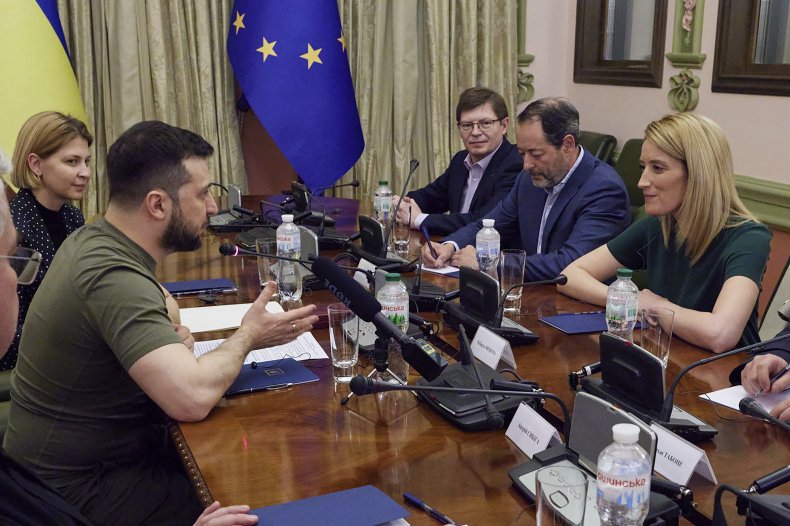
Against this backdrop, leading representatives of the European Union arrived in Kyiv for talks with Ukrainian authorities. The delegation includes European Commission President Ursula von der Leyen and EU foreign policy leader Josep Borrell, who are scheduled to meet with Ukrainian President Volodymyr Zelenskyy on Friday. The goal of the visit, according to Borrell’s tweet, was “to express EU’s strongest message of support to all Ukrainians defending their nation.” Von der Leyen, who has returned to Ukraine four times since the invasion, wrote on Twitter: “We are here together to show that the EU stands behind Ukraine as firmly as ever, and to strengthen even more our cooperation and assistance.”
The most recent meeting of this kind took place in Kyiv in October 2021, just before hostilities began. The EU has provided Ukraine with assistance totaling 50 billion euros ($55 billion) since the commencement of Russia’s assault, Borrell stated. “From the beginning, Europe was one with Ukraine. And will continue to support you as you triumph and rebuild,” he tweeted.
Key Topics on the Summit Agenda
Technical discussions at the summit are expected to focus on two primary areas. First, the anti-corruption campaign in Ukraine, which is anticipated to be a major topic of discussion. Second, Kyiv’s lengthy journey toward prospective membership in the 27-nation bloc, with the elimination of corruption being a crucial requirement for admission. Analysts note that these discussions represent a continuation of the EU’s strategic engagement with Ukraine, focusing on institutional reforms necessary for integration into European structures.
In parallel, the United States has been enhancing Ukraine’s military capabilities by sending artillery, armor, air defense systems, and training Ukrainian troops. U.S. Defense Secretary Lloyd Austin stated that the U.S. “focus is on providing Ukraine the capability that it needs to be effective in its upcoming anticipated counteroffensive in the spring.” He added, “And so we’re doing everything we can to get them the capabilities that they need right now to be effective on the battlefield.”
Looking ahead, observers will be watching how the EU summit’s outcomes—particularly regarding anti-corruption benchmarks and membership progress—influence Ukraine’s strategic planning ahead of the anticipated spring counteroffensive. The coordination between European political support and U.S. military assistance will likely remain a central factor in the conflict’s trajectory.