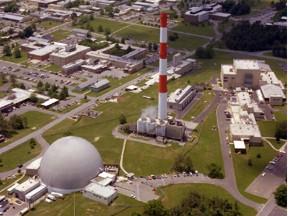
The path to clean hydrogen production without fossil fuels
Researchers from the University of Kansas and the U.S. Department of Energys Brookhaven National Laboratory have identified a method to produce pure hydrogen that does not rely on fossil fuels. This development, detailed in a study published in the Proceedings of the National Academy of Sciences on June 5, 2023, marks a significant step toward sustainable energy production. The work focuses on use specific catalysts to generate hydrogen through chemical reactions that avoid carbon emissions. By shifting away from current methods that often involve natural gas reforming, this approach aims to reduce the environmental footprint associated with fuel generation. The collaboration between academic institutions and federal laboratories highlights a growing commitment within the scientific community to solve energy challenges through rigorous experimentation and data analysis.
Catalyst chemistry drives innovation in hydrogen generation
The core of this research involves a catalyst constructed around a pentamethylcyclopentadienyl rhodium complex, which scientists refer to as [Cp*Rh]. This specific chemical structure is composed of rare metals that exhibit unique properties suitable for high-efficiency reactions. Previous attempts at creating clean hydrogen often struggled with efficiency or required expensive materials that limited scalability. The team at the University of Kansas and Brookhaven National Laboratory found that this particular complex could facilitate the necessary chemical transformations more effectively than earlier models. James Blakemore, an associate professor of chemistry at the University of Kansas, led the investigation into how these specialized catalysts function within the reaction environment. His group employed advanced spectroscopic techniques to observe the atomic-level interactions during the hydrogen generation process. These observations provided the empirical evidence needed to confirm that the catalyst performs its intended role without degrading quickly or requiring excessive energy input. The data collected supports the theory that this chemical pathway can be integrated into industrial settings with minimal modification to existing infrastructure.
Broader applications extend beyond simple fuel production
The implications of this discovery reach further than just the creation of hydrogen gas for combustion or fuel cells. Blakemore noted that the findings could revolutionize other chemical processes by providing a template for designing new catalysts with similar efficiency profiles. This potential for cross-pollination between research areas suggests that techniques developed for hydrogen production might be adapted for recycling nuclear fuels or managing actinide species in waste treatment facilities. Actinides are elements found in spent nuclear fuel, and their safe handling remains a critical challenge for the energy sector. If the chemical principles underlying this new catalyst can be applied to those materials, it could significantly improve safety protocols and reduce long-term storage risks. The versatility of the [Cp*Rh] complex indicates that its design logic may inform solutions in fields ranging from pharmaceutical synthesis to environmental remediation. Such broad applicability increases the return on investment for research funding directed toward fundamental chemistry studies.
Educational impact and career development for young scientists
The project has also served as a vital training ground for emerging researchers within the academic community. Several students participated directly in the experimental work, gaining hands-on experience with complex catalytic systems and high-level analytical instrumentation. This involvement has provided them with practical skills that are highly valued in both academia and industry. By working on a project with such clear real-world applications, these individuals have strengthened their resumes and prepared themselves for advanced roles in energy research or chemical engineering. The mentorship model employed by Blakemore and his colleagues demonstrates how large-scale scientific inquiries can benefit the next generation of scientists. Participants reported that the opportunity to contribute to a discovery with global significance enhanced their motivation and clarified their professional goals. As these students advance in their careers, they carry forward the knowledge gained from this specific study, potentially influencing future research directions in their own laboratories.
A milestone for sustainable energy infrastructure
The successful demonstration of this catalytic process represents a triumph for researchers dedicated to finding cleaner alternatives to traditional energy sources. It validates years of tireless effort and show the importance of public-private partnerships in advancing green technology. The ability to produce hydrogen without fossil fuels addresses one of the most pressing issues facing the global economy: the need to decarbonize transportation and industry while maintaining energy security. As nations strive to meet climate targets, technologies that offer scalable and low-carbon solutions become increasingly important. This breakthrough provides a tangible example of how scientific inquiry can lead to practical outcomes that benefit society at large. The publication of these results in a peer-reviewed journal ensures that the findings undergo rigorous scrutiny before being adopted by other groups. Continued investment in such research will be necessary to scale up production and integrate this technology into the broader energy grid.