The smoke drifting over California carries more than ash. It carries a formal acknowledgment from Washington that this disaster is not just destroying land — it is making people sick. The U.S. Department of Health and Human Services declared a public health emergency for the state on Tuesday. That decision unlocks federal resources aimed at the physical and mental toll exacted by the wildfires.
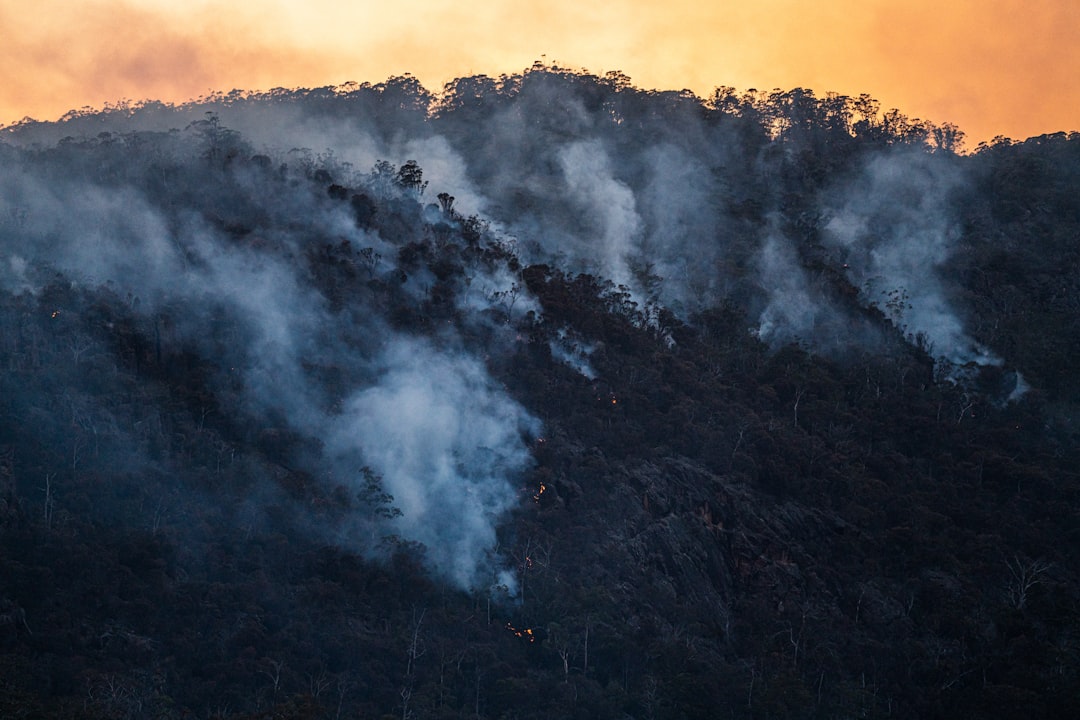
Air quality across vast stretches of California has collapsed. Fine particulate matter, the kind that burrows deep into lung tissue, now saturates the air in communities near and far from the flames. The HHS declaration explicitly cites the consequences of smoke inhalation and heat-related illness. Those are not abstract risks. Emergency rooms in affected counties are already treating patients struggling to breathe. The very young, the elderly, and those with pre-existing respiratory conditions face the highest danger. The declaration gives state and local health officials a clearer path to request federal medical supplies, personnel, and mobile health units.
The United States Public Health Service Commissioned Corps will likely be deployed. These are not bureaucrats in offices. They are uniformed officers trained to set up field hospitals, test drinking water for contamination, and track disease outbreaks in the middle of chaos. Their job, as described by the HHS, is to identify the specific health threats a disaster creates — and stop them before they spread. In California right now, that means monitoring for chemical runoff from burned structures, testing wells for ash and toxins, and watching for the mental health crisis that follows when people lose homes, jobs, and entire neighborhoods.
This is the third major wildfire season in five years to trigger a federal public health emergency in California. The pattern is no longer exceptional. It is routine. Each season leaves behind not just blackened hillsides but a population that has inhaled poison, lost sleep to fear, and watched their environment turn hostile. The HHS action acknowledges that the damage does not end when the flames are out. It persists in chronic coughs, in anxiety disorders, in the slow contamination of water systems.
Water contamination is a specific, concrete danger that the declaration aims to address. When fire sweeps through a watershed, it incinerates vegetation that holds soil in place. Rain then washes ash, heavy metals, and toxic debris into reservoirs and groundwater. The HHS emergency status allows federal environmental health teams to move in and test drinking water supplies quickly. Without that authority, the testing can lag — and people can unknowingly drink poisoned water for days or weeks.
The mental health component is not secondary. It is central. The HHS language on the declaration specifically mentions the impact on “mental well-being.” People who have fled flames, who have watched their homes burn on television from a shelter, who have spent nights in evacuation centers — they carry a weight that does not lift when the evacuation order ends. The federal declaration clears the way for crisis counseling teams and mental health hotlines to be funded and staffed. That matters in a state where the wildfire season now stretches year-round, leaving residents in a state of constant vigilance.
What is at stake is straightforward. Lives. Lungs. Water. Sanity. The HHS declaration is a tool, not a solution. It does not stop the fires. It does not rebuild the homes. But it does mean that when a child in Fresno cannot breathe, or a family in Paradise cannot drink their tap water, or a firefighter in Sonoma cannot sleep, there is a federal apparatus ready to respond. That apparatus has a name, a chain of command, and a history of working in disasters. The question now is whether it can move fast enough to match the speed of the flames.