
The attack that trapped at least 17 miners in a gold mine in Peru’s La Libertad Department on January 12, 2025, is not a freak accident. It is the predictable outcome of a region where legal mining operations and illegal armed groups exist side by side, competing for the same gold. La Libertad sits on rich mineral deposits.
That wealth has drawn people for centuries — the Moche, Wari, Chimú, and Inca all worked these lands. Today, it draws two kinds of miners: those with permits and those without.
The latter often operate outside any regulatory framework. They also, as this incident shows, appear willing to use violence. The trapped miners are now the center of a crisis.
But the crisis itself is broader. Illegal mining in La Libertad is not a small-scale problem.
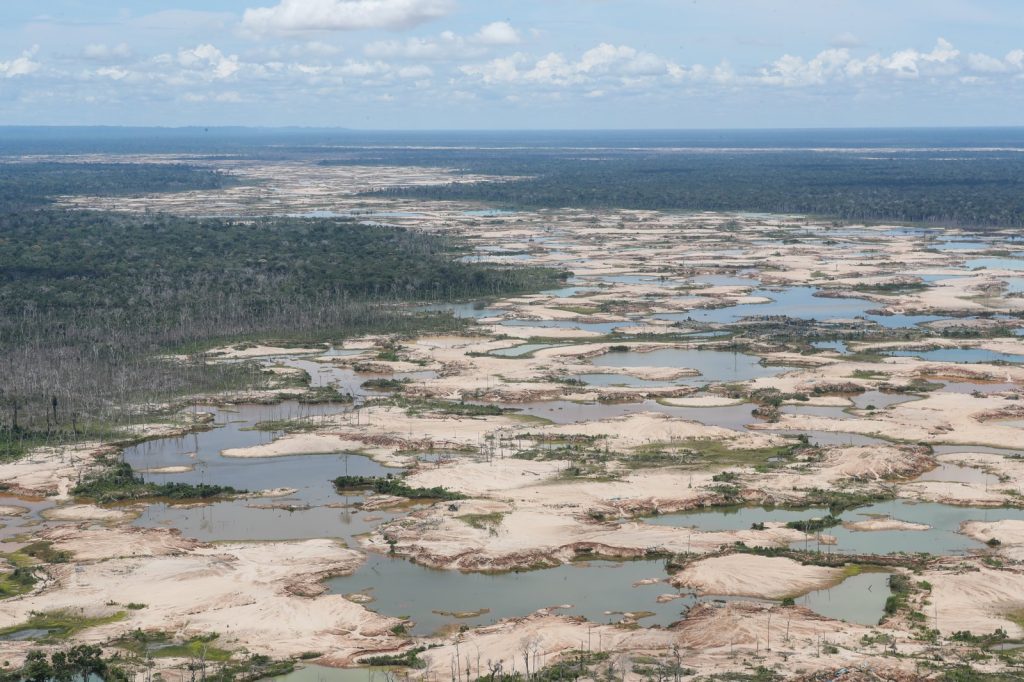
It is a parallel economy that funds itself with gold extracted using mercury and other toxic substances. The environmental damage is severe — poisoned water sources, destroyed ecosystems. Those costs are not factored into the price of the gold.
They are paid by local communities, by the environment, and now, potentially, by the lives of 17 people. What happens next depends on the Peruvian state’s ability to respond. Rescue operations will be the immediate focus.
But the deeper question is whether this event forces a reckoning with the illegal mining networks that operate in the region. These groups are not just miners.
They are armed. They attacked a mine and trapped its workers. That suggests a level of organization and intent that goes beyond casual trespassing.
La Libertad’s economy leans heavily on mining. Gold revenue is a major contributor.
That creates a tension. The government wants the income. But it also needs to enforce laws and protect workers.
The two goals are increasingly in conflict. Illegal miners undercut legal operations, avoid taxes, ignore safety rules, and damage the environment. Yet they are hard to dislodge.
They are often embedded in local economies. They provide jobs — dangerous, unregulated jobs, but jobs nonetheless.
Shutting them down without alternatives would create its own set of problems. The attack on January 12 may shift the calculus. Trapped miners draw attention.
National and international media will cover the rescue effort. That scrutiny puts pressure on authorities.
They will have to be seen doing something. But sustained action — regular patrols, mine inspections, prosecutions — is expensive and dangerous. Police and military forces face armed resistance in remote areas.
La Libertad’s history offers no easy lessons. Pre-Columbian empires controlled the region through force and tribute. The Spanish colonial system extracted gold with enslaved labor.
Modern Peru has a legal framework for mining, but enforcement is weak in the highlands and jungles where illegal operations thrive. The result is a kind of frontier lawlessness, where the strongest armed group controls the territory.
The 17 trapped miners are the human cost of that failure. Their fate will be decided in the coming days. But the forces that put them in that mine — the lure of gold, the weakness of the state, the violence of illegal operators — will not disappear with a rescue.
They will persist until Peru finds a way to govern its mineral wealth more effectively. That means better security, yes.
But it also means addressing why illegal mining exists in the first place. Poverty, lack of opportunity, and the high price of gold all drive people to take risks. Until those factors change, more miners will end up trapped — underground, or between the law and the armed groups that defy it.