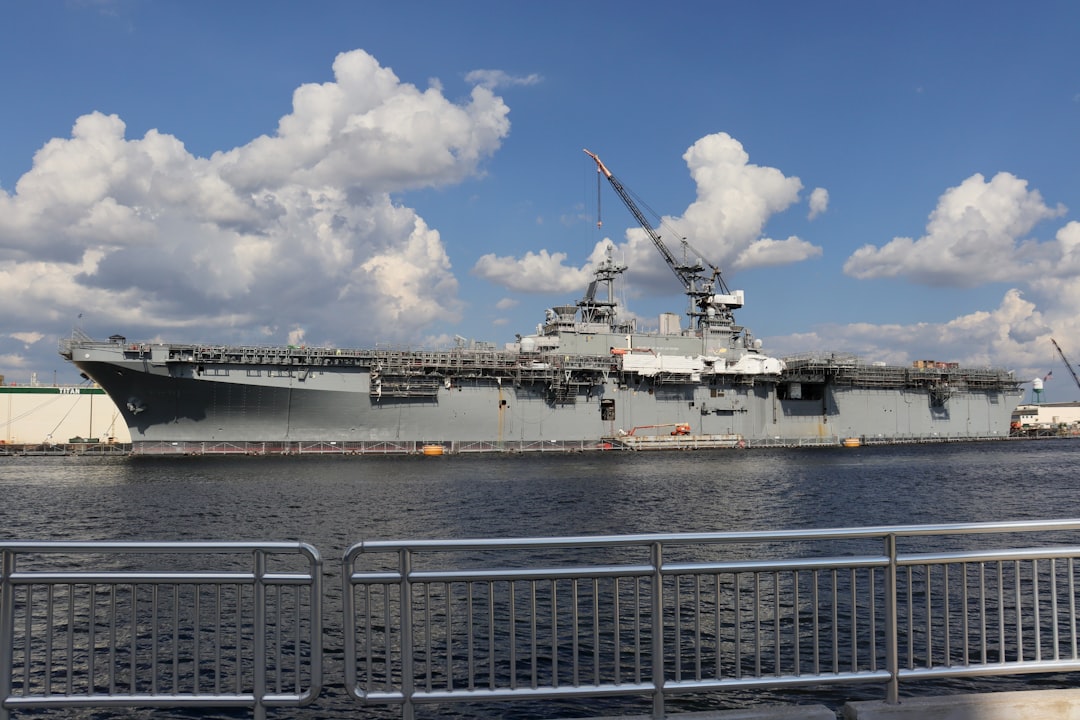
The capsizing of the Iranian frigate Sahand in Bandar Abbas on July 7 did not happen in a vacuum. It happened at a repair dock, in a port that is the primary base for Iran’s navy, at a time when that navy is pushing to project power despite decades of sanctions and aging equipment. The vessel itself was a symbol of that effort.
The Sahand was a Moudge-class frigate, a class Iran touts as domestically built. Launched in 2018, it was named after an earlier Sahand, a British-made destroyer sunk by the U.S. Navy in 1988 during Operation Praying Mantis. That was the largest American naval engagement since World War II. The new Sahand was meant to erase the memory of that loss. Now it sits on its side in the water, a salvage operation ahead and an investigation just beginning.
What caused the capsizing is not clear. The official report offers no cause. But the timing and location tell a story. Repairs in a busy port mean workers aboard, systems open, ballast possibly shifted. A frigate is a complex machine. One miscalculation in weight distribution, one valve left open, and stability vanishes. That is a mechanical fact, not a political one.
Iran’s navy operates under two separate commands: the regular navy, which owns the Sahand, and the Islamic Revolutionary Guard Corps navy, which runs small boats in the Persian Gulf. The regular navy is the older, more conventional force. It maintains the larger ships — frigates, destroyers, supply vessels — and it has struggled to keep them seaworthy. The Sahand’s sister ship, the Damavand, sank in the Caspian Sea in 2018 after a storm. Another Moudge-class vessel, the Jamaran, has been in service since 2010. The class has had persistent teething problems.
This incident raises questions about maintenance standards. It also raises environmental ones. The Sahand was carrying fuel, lubricants, and other pollutants common to a warship. It capsized in a port, not open ocean. That contains the spill somewhat, but a port is also a concentrated environment. Fishing boats, cargo ships, the local marine ecosystem — all are in close quarters. The report notes that concern is being raised. It does not yet say what leaked or how much.
The government of Iran is a blend of theocratic and republican elements. Its supreme leader is commander-in-chief. The navy is a tool of national strategy, and the Sahand was a visible part of that tool. Its loss, even temporarily, is a setback. The navy will have to divert resources to salvage and repair. The ship may be righted and returned to service. Or it may be written off. Either way, the accident happened during routine work. That is the kind of failure that points to systemic problems, not just bad luck.
For the region, the immediate impact is limited. Iran still has other frigates and a fleet of fast attack craft. It has shore-based anti-ship missiles. Its ability to harass shipping or close the Strait of Hormuz does not depend on one frigate. But for the Iranian public, and for the navy’s internal morale, the image of a warship lying on its side in its home port is damaging. It contradicts the narrative of self-sufficiency and strength.
Investigators will look at the ship’s maintenance logs, the dock procedures, the weather that day. They will interview the crew. The results may be published, or they may not. Iran’s military does not always share findings. But the fact of the capsizing is already known. The port of Bandar Abbas has a new landmark, and it is not one anyone planned.