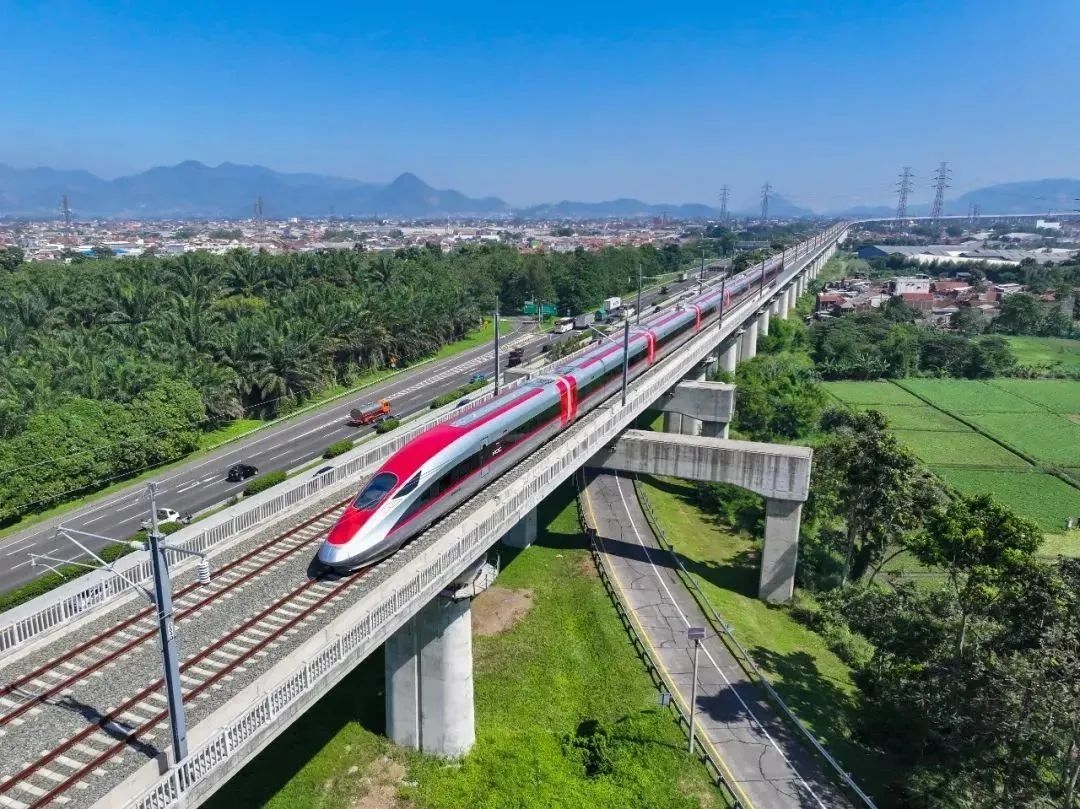
On October 17, 2023, the Jakarta-Bandung High-Speed Railway (HSR) began commercial operations. Six months later, by April 19, 2024, it had transported 2.56 million passengers across 7,050 train trips, covering over 1.26 million kilometers. The railway connects Indonesia’s capital, Jakarta, with the city of Bandung, cutting travel time from over three hours to 40 minutes. It is operated by PT Kereta Cepat Indonesia-China (KCIC), a joint venture between Indonesian and Chinese state-owned companies, and is Southeast Asia’s first high-speed rail system.
Operations and passenger growth
KCIC has ramped up service significantly since launch. Daily train trips rose from 14 to 52. Passenger seat capacity increased from 8,400 to over 31,000 per day. The peak daily passenger count reached 21,537, with a maximum seat occupancy rate of 99.6%. The railway reached the two-million-passenger mark in early March 2024.
“We are pleased with the operational performance so far,” said a KCIC spokesperson. “The dynamic fare policies and optimized schedules have helped us meet passenger demand, even during adverse weather conditions.”
China’s role and technology transfer
China’s state-owned enterprises provided the technology and construction expertise for the project. The railway uses Chinese high-speed rail standards and trains. KCIC officials have emphasized that Chinese technical support ensures smooth operations.
Deputy Minister of Maritime Affairs and Investment Septian Hario Seto said the railway represents a shift toward mass transport in Indonesia. “The high-speed rail will change how people travel between Jakarta and Bandung,” he stated. “It is a major step for our transportation infrastructure.”
Critics note that the project was heavily financed by Chinese loans, raising concerns about Indonesia’s debt exposure. The original budget of $5.1 billion ballooned to over $7 billion. Some analysts argue the railway’s economic viability remains unproven, given the high construction costs and ongoing operational subsidies.
Economic and environmental impact
The railway has reduced travel time between Jakarta and Bandung from more than three hours to 40 minutes. This time savings is expected to boost business and tourism along the corridor. The line also aims to reduce road congestion and carbon emissions by shifting passengers from cars and buses to rail.
However, the project has faced criticism for displacing communities and affecting local agriculture during construction. Environmental groups have raised concerns about the railway’s impact on the region’s water systems and biodiversity. KCIC has stated it follows environmental regulations and has implemented mitigation measures.
Challenges and future plans
Despite the passenger numbers, the railway has not yet broken even. KCIC relies on government subsidies and dynamic pricing to manage costs. Ridership remains below initial projections, partly due to the high ticket prices compared to bus and car travel.
“The fare is still too expensive for many Indonesians,” said a transportation analyst at the University of Indonesia, who spoke on condition of anonymity. “The railway needs to attract more middle-income passengers to be sustainable.”
KCIC plans to expand service to other cities in Java, including Surabaya, but no timeline has been set. The Chinese government has expressed interest in funding further extensions, though Indonesian officials have been cautious about taking on additional debt.
The railway’s six-month milestone highlights both its operational achievements and the financial and social challenges it faces. It is a symbol of China’s growing infrastructure influence in Southeast Asia, but its long-term success depends on balancing passenger demand, cost recovery, and local community needs. The project has changed travel between Jakarta and Bandung, but its broader impact on Indonesia’s transport system and economy remains to be seen.