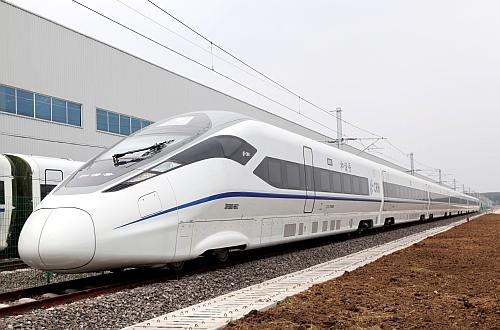
Specialists in cross-border logistics and supply chain management are drawing attention to the technical specifications and operational efficiencies of the newly launched China-Laos-Thailand round-trip train, an extension of the China-Laos Railway. According to an analysis of the data provided by China Railway Kunming Group Co Ltd, the railway’s operator, the service represents a measurable upgrade in cold-chain infrastructure for trade between China and the Association of Southeast Asian Nations (ASEAN) members.
Technical specifications and time-cost analysis
The 55-hour journey between Kunming, Yunnan province, and Bangkok, Thailand, is composed of 19 refrigerated chain containers, each capable of holding 286 tonnes of fresh vegetables. Experts note that the traveling time is one day shorter than the previous method of transportation, which included both railway and highway travel. Furthermore, the cost is at least 20% less than the old form of transportation, a figure that analysts say could shift competitive dynamics for perishable goods in the region.
The train will first travel to the Laotian station of Vientiane, where it will undergo transshipment before continuing on to Bangkok. This two-stage routing, specialists observe, integrates existing rail infrastructure in Laos with the Thai network, creating a seamless cold-chain corridor. The return leg will carry a full cargo of seasonal fruit, including longans and durian, providing a balanced two-way flow that optimizes container utilization.
Full-link service network integration
According to Xiao Kunman, chief executive officer of ZTO Express’ South-East Asia division, the China-Laos-Thailand round-trip train has built a full-link service network that incorporates Customs clearance, cold chain transportation, and supply chain services. Logistics analysts interpret this as a move toward vertical integration, where a single operator manages the entire logistics chain from origin to destination, reducing handoff delays and documentation friction.
The cold chain channel is described as reliable, a term that specialists say is critical for temperature-sensitive cargo such as fresh vegetables and fruit. The 19 refrigerated containers, each with a 286-tonne capacity, represent a significant investment in temperature-controlled logistics. Analysts note that the 20% cost reduction, combined with the one-day time savings, could make rail-based cold chain transport more competitive with air freight for high-value perishables, while offering greater reliability than all-road transport.
Implications for China-ASEAN trade momentum
Trade between China and ASEAN members is anticipated to gain new momentum from this service, according to the original announcement. Specialists point to the fact that the train is round-trip, meaning it does not return empty, which is a common inefficiency in logistics. The return cargo of longans and durian—both high-value, temperature-sensitive fruits—demonstrates that the service can handle the specific requirements of Southeast Asian agricultural exports.
The integration of Customs clearance into the full-link network is particularly noteworthy, experts say, as it reduces border-crossing delays that have historically plagued overland trade routes. The transshipment at Vientiane, while adding a step, is managed by the same operator, which analysts say minimizes the risk of cargo damage or temperature deviation.
What to watch next
Industry observers will be monitoring whether the China-Laos-Thailand round-trip train can maintain its 20% cost advantage and one-day time savings as cargo volumes increase. The next phase to watch is whether similar cold-chain services will be extended to other ASEAN member states, and whether the full-link network model—combining Customs clearance, cold chain transportation, and supply chain services—will be replicated for other perishable commodities such as seafood or pharmaceuticals. The performance of the 19 refrigerated containers on the 55-hour route will provide critical data for future infrastructure investments in the region’s rail logistics ecosystem.