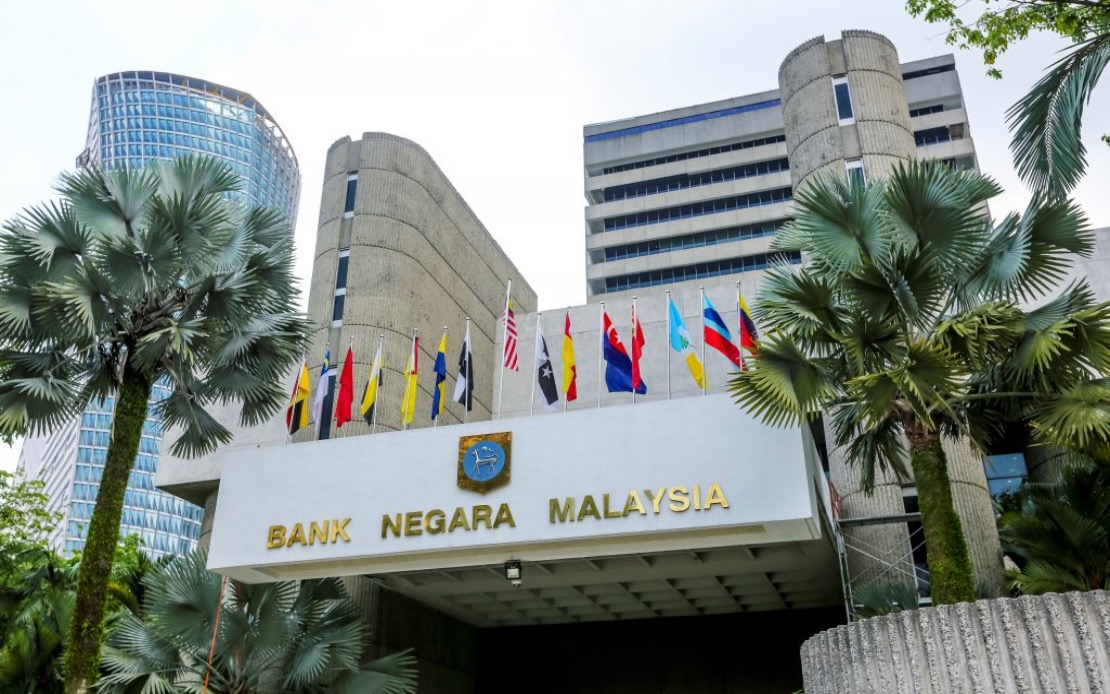
Bank Negara Malaysia Governor Tan Sri Nor Shamsiah Mohd Yunus stated on February 12, 2023, that Malaysia is unlikely to enter a recession this year, citing strong domestic demand and expenditure as key anchors for continued growth. The central bank will not release updated GDP forecasts until the new Budget 2023 is presented on February 24. First-quarter 2023 data is already showing stronger growth than the 6.0% recorded in the fourth quarter of 2022, though external demand is expected to weaken significantly.
Strong domestic demand offsets global headwinds
Malaysia’s economic outlook for 2023 hinges on robust domestic consumption and investment. Governor Nor Shamsiah emphasized that the job market is improving steadily, which supports household spending. “The essential thing I want to emphasize is that we are seeing continuous progress in the job market,” she said during a news briefing on the fourth-quarter and full-year 2022 GDP data. “And we are going to benefit from the beneficial impact from China’s reopening.”
The central bank expects that a slowdown in exports caused by weaker global demand can be counterbalanced by strong investment figures and a V-shaped recovery in tourism. Global economic growth is also showing signs of resilience. The International Monetary Fund has raised its GDP projections for both 2022 and 2023.
2022 GDP hit a 22-year high but fourth quarter slowed
Malaysia’s economy grew 8.7% in 2022, the fastest pace in 22 years, up from 3.1% in 2021. Growth was broad-based across all sectors. However, the fourth quarter saw a 2.6% contraction compared to the third quarter. Chief Statistician Datuk Seri Dr. Mohd Uzir Mahidin explained the slowdown. “The deceleration from the high growth in 3Q reflects decreasing support from stimulus measures.”
Despite the strong annual figure, the economy has not fully recovered across all sectors. Mining and quarrying, construction, and agriculture remain below pre-pandemic levels. “2.8 million people were employed in these three areas in 2021, which was still 0.1 million fewer than pre-pandemic figures,” Mohd Uzir noted.
Services sector recovery is uneven
The overall services sector has improved compared to 2019, but several sub-sectors are still lagging. “Despite the fact that the total services sector has improved from 2019, food and beverage, lodging, real estate, business services, private education, and other services activities remained below pre-pandemic levels,” Mohd Uzir said.
Tourism spending rebounded sharply in 2022. Inbound travel expenditure rose to RM27.9 billion from just RM0.3 billion in 2021. But the number of tourists, at 26.1 million, remains below pre-pandemic levels. Outbound travel spending by Malaysians climbed to RM29.6 billion, more than half of the RM51.3 billion recorded before the pandemic.
China’s reopening provides a boost but risks remain
Governor Nor Shamsiah pointed to China’s reopening as a positive factor for Malaysia’s trade and tourism. However, the global economic backdrop remains fragile. Global GDP was weak in the fourth quarter of 2022, hurt by higher interest rates, reduced trade activity, and the severe COVID-19 resurgence in China. Malaysia’s export-dependent sectors will face continued pressure from slowing demand in the United States and Europe.
The central bank’s stance suggests that domestic policy measures and private investment will be critical to sustaining growth. The upcoming Budget 2023, to be tabled on February 24, is expected to outline further stimulus and fiscal support.
The combination of a recovering job market, rising tourism, and resilient domestic demand gives Malaysia a buffer against external shocks. But the uneven sectoral recovery and the drag from weak global trade mean the path forward is not without risks. The government’s ability to manage these competing forces will determine whether the growth momentum can be maintained through the year.