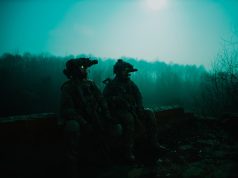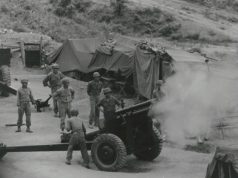
Analysts assessing the geostrategic implications of the latest U.S.-Philippine defense agreement point to a calibrated expansion of military access, more than three decades after the closure of major American bases in the archipelago. The February 2 announcement that rotating U.S. forces may now use four additional Philippine military camps, bringing the total to nine locations, represents a technical deepening of the 2014 Enhanced Defense Cooperation Agreement (EDCA). Under that pact, U.S.-funded construction of barracks, warehouses, and support infrastructure has accelerated to accommodate an as-yet-unspecified but anticipated sizable number of visiting troops.
Strategic Deterrence in the South China Sea
According to political scientist Andrea Chloe Wong, based in Manila, the geographic positioning of these camps would provide the U.S. military the presence needed to serve as a “strong deterrent against Chinese aggression” in the South China Sea. The waterway remains a flashpoint where China, the Philippines, and four other governments have experienced increasingly tense territorial disputes. Beijing also views Taiwan as its own territory that should be brought under Chinese control, by force if necessary. Wong’s analysis frames the base access not as a return to the permanent stationing of the Cold War era, but as a rotational posture designed to project capability without reestablishing fixed installations.
During his recent visit to Manila, U.S. Defense Secretary Lloyd Austin stated that while Washington was not attempting to reestablish permanent bases, the agreement to increase its military presence under EDCA was “a major issue.” Austin and his Philippine counterpart Carlito Galvez Jr. indicated that visiting American military personnel might include the Philippine military in greater joint combat-readiness exercises in the sea boundary.
Local Concerns and Nuclear Risk Calculations
The expanded presence has drawn cautionary remarks from local officials. Cagayan province Governor Manuel Mamba raised specific risk assessments regarding the potential for escalation. “It will be extremely risky for us. The Philippines could be targeted by nuclear weapons if the conflict over Taiwan escalates,” Mamba told the Associated Press by phone. “If they stay here, whoever is their enemy will become our enemy,” he added. Mamba also noted a perception issue: “Through the Americans who will be present, you can’t really dispel anyone’s assumption that the Philippines has nuclear capabilities.”
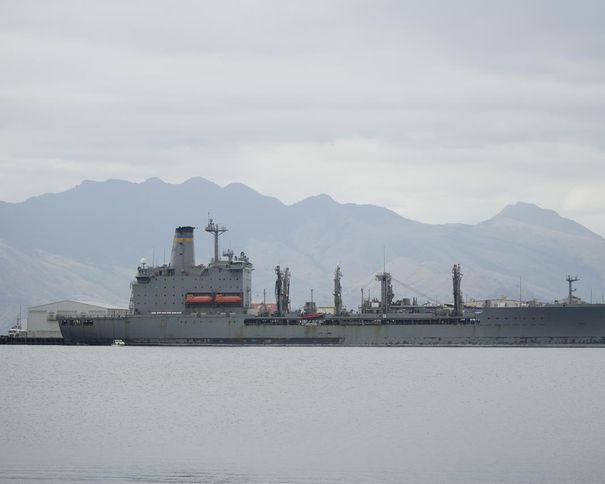
The news of the Philippine government’s decision to permit an expanded American military presence in the area around the former U.S. Navy base in Subic—now a thriving commercial freeport and tourist destination northwest of Manila—has revived local memories of a time when thousands of U.S. sailors injected money, life, and hope into the nearby city of Olongapo.
What to Watch Next
The coming months will likely focus on the pace of U.S.-funded construction at the newly designated camps and the specific number of rotating forces that will deploy under the agreement. Observers will also monitor joint military exercises in the South China Sea to gauge whether the rotational presence alters the operational dynamics of that contested waterway. Additionally, the response from Beijing—and any corresponding adjustments in its military posture near Taiwan and the Philippines—will be a key indicator of whether the deterrence calculus outlined by analysts like Wong holds in practice.