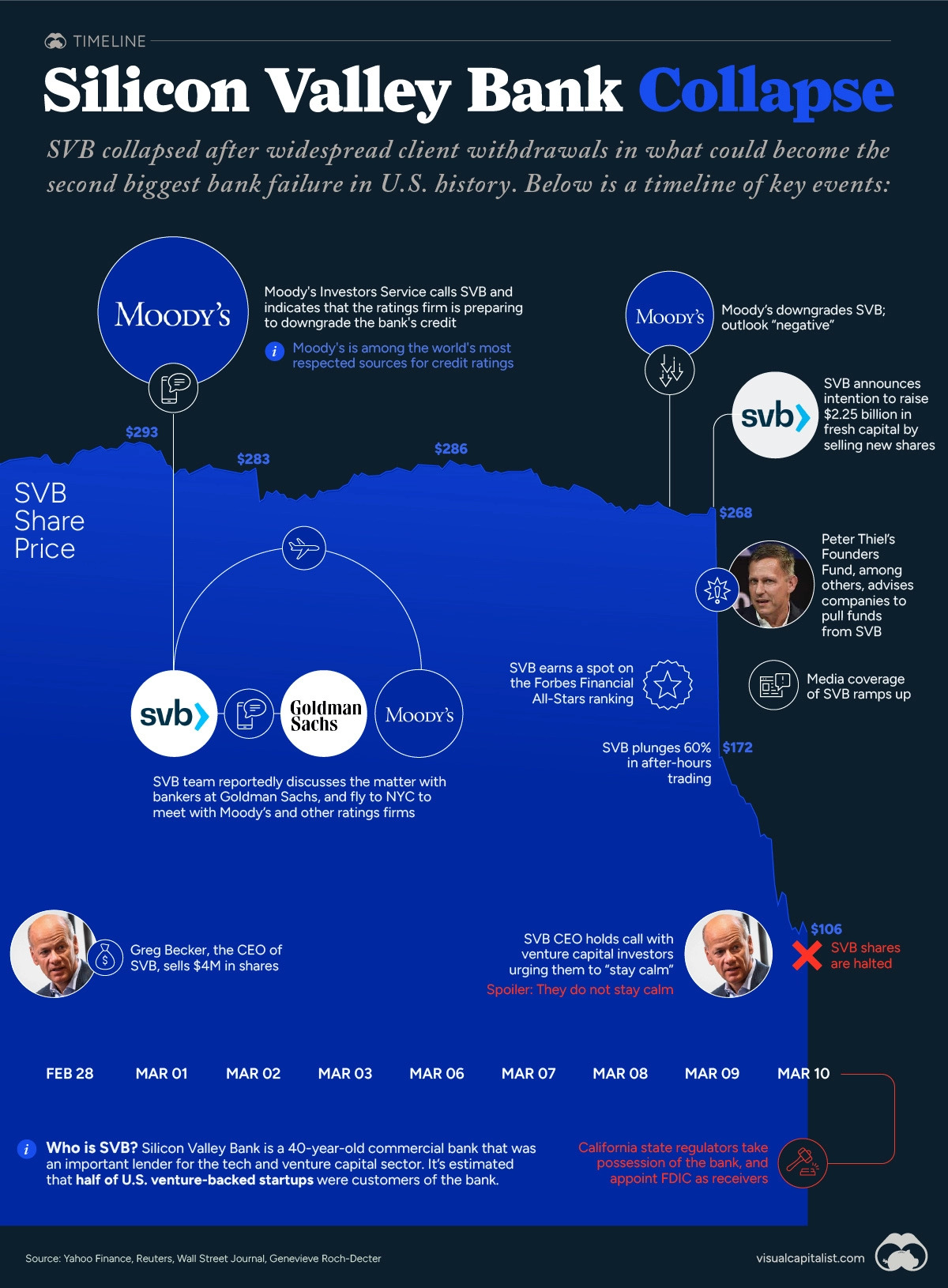
Silicon Valley Bank collapsed on 10 March 2023 after a 48-hour run that drained $42 billion in deposits, forcing federal regulators to seize the Santa Clara-based lender and triggering the second-largest bank failure in U.S. history. The panic began when venture-capital firms simultaneously advised portfolio companies to yank cash, exposing deep rifts inside a clubby industry that once prided itself on collective loyalty. By 20 March, recriminations were flying on Twitter, in podcasts and on Capitol Hill as investors argued over who lit the match and whether Washington should stamp out the fire.
Finger-pointing starts inside the vc club
Brad Svrluga, co-founder of seed fund Primary Venture Partners, posted on 11 March: “I’d like to officially thank my colleagues in the venture community whose superb leadership over the past 48 hours provoked a run on deposits at SVB, ultimately collapsing one of the most significant institutions in our ecosystem.” The tweet, liked more than 7,000 times, captured the mood of a sector suddenly at war with itself.
Group-chat logs reviewed by Reuters show that at least a dozen top-tier funds sent “get out now” messages to founders before dawn on 9 March, hours after SVB parent SVB Financial Group announced a $1.8 billion loss on Treasury sales. Benedict von Thüngen, CEO of health-tech startup Sanome, said he received three separate calls from investors before sunrise. “It was a tightrope,” von Thüngen told InfoPulseToday. “We loved SVB, but our duty to shareholders came first.” By noon, Sanome had wired its $18 million operating account to JPMorgan.
Eric Bahn, co-managing partner at Hustle Fund, went further, tweeting “MOVE YOUR MONEY OUT OF SVB TODAY” in all-caps. He deleted the post within minutes and later joked that Elon Musk should “shut down Twitter until the banking crisis is under control, so much FUD here!” The episode became Exhibit A for critics who say venture capitalists talk up long-term thinking while sprinting for the exit at the first tremor.
Regulators step in as founders plead for help
By the evening of 10 March, Treasury Secretary Janet Yellen, Federal Reserve Chair Jerome Powell and FDIC Chairman Martin Gruenberg had signed off on a systemic-risk exception, guaranteeing every SVB deposit beyond the $250,000 insurance cap. The move came after more than 5,000 startup CEOs signed a Y Combinator petition warning that payrolls would bounce the following week.
More than 600 VC firms released a joint statement on 12 March calling the run “extremely regrettable” while pledging to “rebuild a new SVB if regulators can stabilise the franchise.” General Catalyst CEO Hemant Taneja, who organised the letter, warned on CNBC: “Panic is not a strategy. We need to act like adults.” The plea worked: by 13 March the Fed unveiled a new Bank Term Funding Program, allowing banks to swap Treasuries at par and halting the contagion.
President Trump, speaking to reporters at his Mar-a-Lago club on 14 March, praised the swift action. “My administration’s deregulatory agenda gave regulators the tools to move fast and stop a domino effect,” he said. “We’re not bailing out bankers; we’re protecting workers and innovators.”
Libertarian vcs confront their own rhetoric
The speed with which many anti-government investors pivoted to demanding federal help became instant grist for Twitter pundits. David Sacks, a Craft Ventures partner and prominent libertarian, posted on 11 March: “I’m not asking for a bailout. I’m asking banking regulators to ensure the integrity of the system.” Critics quickly resurfaced clips from Sacks’ podcast in which he ridiculed pandemic-era business aid.
Hussein Kanji, partner at London-based Hoxton Ventures, defended the shift: “It’s completely rational to have libertarian ideals and still desire a working system, capitalism collapses if the system collapses.” Even so, the sentiment drew bipartisan scorn. Republican Senator J.D. Vance told Fox News on 12 March that “Silicon Valley wants free markets on the way up and socialism on the way down,” while progressive Democrat Alexandria Ocasio-Cortez tweeted the same day: “VCs engineered the run, now they want taxpayers to clean it up. Nope.”
Michael Arrington, founder of TechCrunch and crypto fund Arrington Capital, summarised the mood: “One thing I learned this weekend, when people think they’ve lost all their money, most capitalists become socialists pretty fast.”
Industry reputations take a beating
The reputational damage spread far beyond Twitter. Slate published an editorial titled “Silicon Valley’s Bankers and Beggars,” arguing that “the same investors who preach disruption just disrupted themselves.” Nassim Nicholas Taleb, whose book “The Black Swan” has become required reading among tech founders, wrote on 15 March that “SVB was a white-swan crash caused by childish risk-management and infantile group-chat hysteria.”
Data firm PitchBook reports that 37 percent of U.S. venture deals in 2022 used SVB as either lead or administrative bank, meaning the fallout could linger. Limited partners are asking general partners how much cash was kept at SVB, and some pension funds have added bank-concentration clauses to future capital calls. “The club is over,” said a senior allocator at a Midwest public pension, requesting anonymity because he is not authorised to speak publicly. “We want to see real risk controls, not Patagonia vests and groupthink.”
Even firms that stayed quiet during the run now face questions. Sequoia Capital sent a note to portfolio companies on 9 March urging “calm” but did not publicly defend SVB until after regulators acted. The hesitation illustrates the no-win position investors found themselves in: speak up and look reckless, stay silent and look disloyal.
The episode has already altered behaviour. At least six startups told InfoPulseToday they have opened secondary accounts at JPMorgan, Bank of America or Mercury since 13 March, spreading deposits well below the FDIC limit. “We still love our VC partners,” said one founder who asked not to be named, “but we’ll never again keep more than $240,000 in any single institution.”
Silicon Valley Bank may be resurrected under new ownership, First Citizens BancShares and Valley National are among the reported bidders, but the venture capital industry’s self-image as a tight-knit tribe has taken a direct hit. Trust, once the currency of deal-making, now trades at a steep discount, and every WhatsApp ping from a board member carries a hint of suspicion.