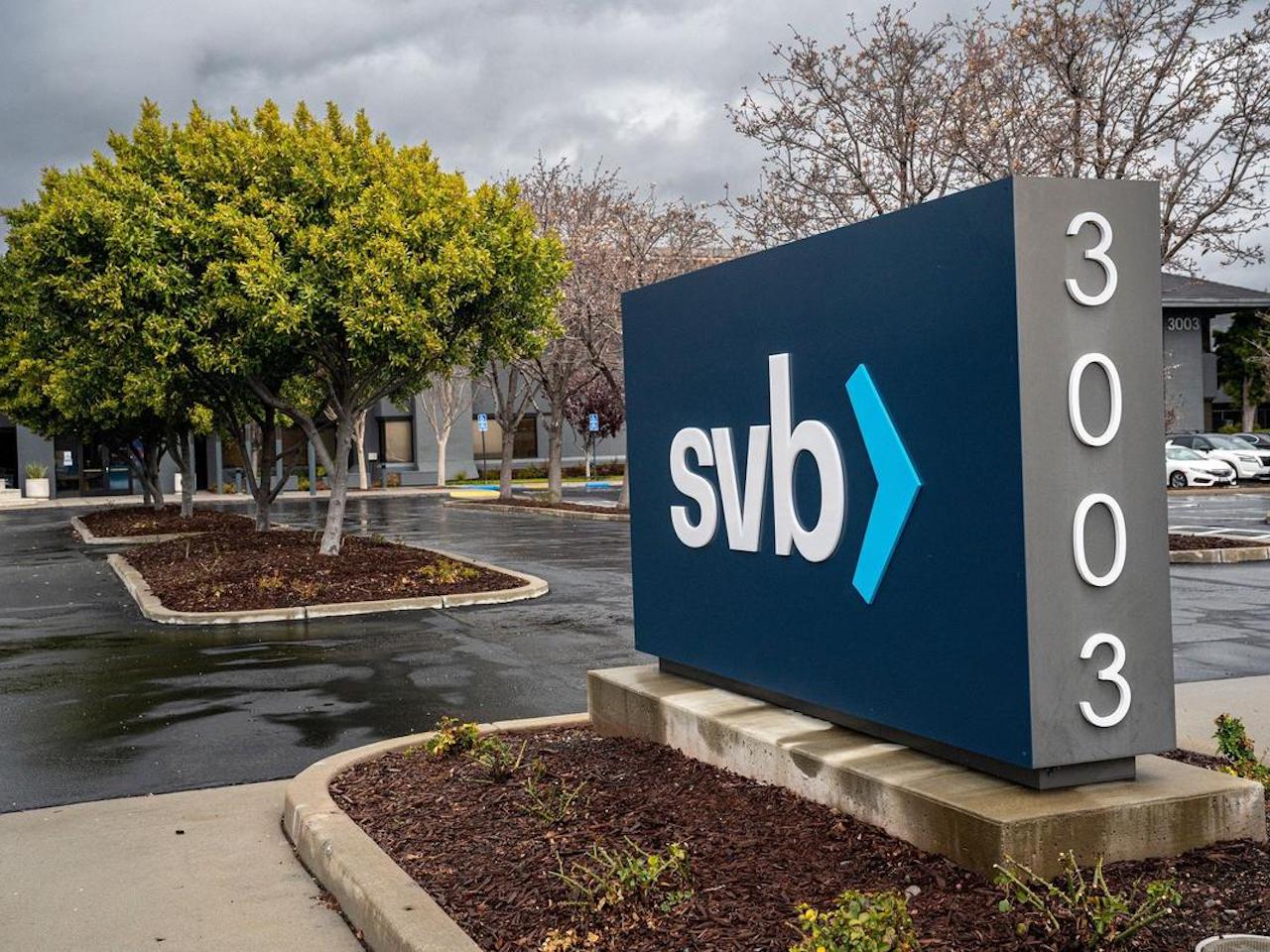
Experts in the financial sector are closely analyzing the recent developments surrounding Silicon Valley Bank (SVB) Financial Group, which announced on Friday that it had filed for a court-supervised reorganization under Chapter 11 bankruptcy protection. This move is seen as a strategic step to seek purchasers for its assets, following the failure of immediate measures to boost confidence and allay concerns about a financial contagion. According to specialists, the decision to initiate bankruptcy procedures is a technical response to the current financial situation, aimed at mitigating potential risks and exploring available options for the company’s assets.
Technical Analysis of the Bank’s Financial Situation
A review of the bank’s financial data reveals that the collapse of Silicon Valley Bank, which was shut down by Californian regulators last Friday, has had a significant impact on the financial market. The bank’s stock prices, as well as those of other big American banks, declined between 1.5% and 2% on Friday in premarket trading. This decline is seen as a direct consequence of the bank’s failure to recover from the losses incurred due to the sale of a portfolio of treasuries and mortgage-backed securities to Goldman Sachs at a $1.8 billion loss. The attempted raise of $2.25 billion in common equity and preferred convertible stock was insufficient to close the gap, as worried customers withdrew deposits from the bank, causing $42 billion in withdrawals in a single day.
The company’s announcement that it intends to investigate strategic alternatives for all of its entities, including the holding company, SVB Capital, and SVB Securities, is seen as a positive step towards exploring available options. However, the fact that the funds and general partner entities of SVB Securities and SVB Capital were not included in the Chapter 11 filing suggests that the company is taking a cautious approach to the bankruptcy proceedings. The reported $2.2 billion in liquid assets, compared to $209 billion in assets at the end of the previous year, highlights the significant decline in the company’s financial position.
Implications and Future Developments
The implications of SVB Financial Group’s bankruptcy filing are far-reaching, with potential consequences for the entire financial sector. As specialists point out, the company’s decision to seek bankruptcy protection may have a ripple effect on the market, leading to increased uncertainty and volatility. The fact that the parent business was considering filing for bankruptcy protection in order to sell assets, as reported by Reuters, suggests that the company is exploring all available options to recover from its current financial situation.
The future developments in this case will be closely watched by experts and investors alike. The company’s intention to move forward with the process of evaluating alternatives for the businesses, as well as its other assets and investments, is seen as a crucial step towards recovery. As the situation unfolds, it is likely that new information will emerge, providing further insight into the company’s financial situation and the potential consequences of its bankruptcy filing.
Looking ahead, the key aspect to watch will be the outcome of the bankruptcy proceedings and the potential sale of the company’s assets. The ability of SVB Financial Group to recover from its current financial situation will depend on its ability to attract purchasers for its assets and to navigate the complex bankruptcy process. As the financial sector continues to evolve, it is likely that new challenges and opportunities will emerge, and the outcome of this case will be closely watched by experts and investors alike. The next developments in this case will provide valuable insights into the resilience of the financial sector and the ability of companies to recover from significant financial setbacks.